
English 
T: +86-571-8663-6649
E: hzbjys@hzbjys.com
E: hzbjys@hzbjys.com
7/F, 1st Building Of ZhongHao WangJiang International Center, NO.332 East WangJiang Road, HangZhou, ZheJiang, China.
Views: 0 Author: Site Editor Publish Time: 2026-10-07 Origin: Site


Will galvanized steel rust? Yes, it can, but only under certain conditions. The zinc coating makes galvanized steel highly resistant to corrosion, so it lasts far longer than untreated steel. That coating is the key difference.
You may also wonder, can brass rust? Brass contains no iron, so it does not rust the way steel does. The same holds for copper parts such as a Tinned Copper Busbar for Grounding Systems or a Custom Brass Busbar. Galvanised steel still earns its place outdoors because zinc shields the steel beneath it. Galvanised steel resists rust well, yet it is not immune.
Galvanized steel fights rust but is not rust-proof; the zinc coating slows corrosion but can fail.
Salt, chemicals, heat, and physical damage can wear down the zinc coating and cause rust.
Zinc protects steel by forming a barrier. It also sacrifices itself to protect areas where the steel is exposed.
Checking galvanized steel often and fixing scratches and damage fast helps it last longer.
Pick galvanized steel for mild settings; in harsh conditions, plan on more upkeep.
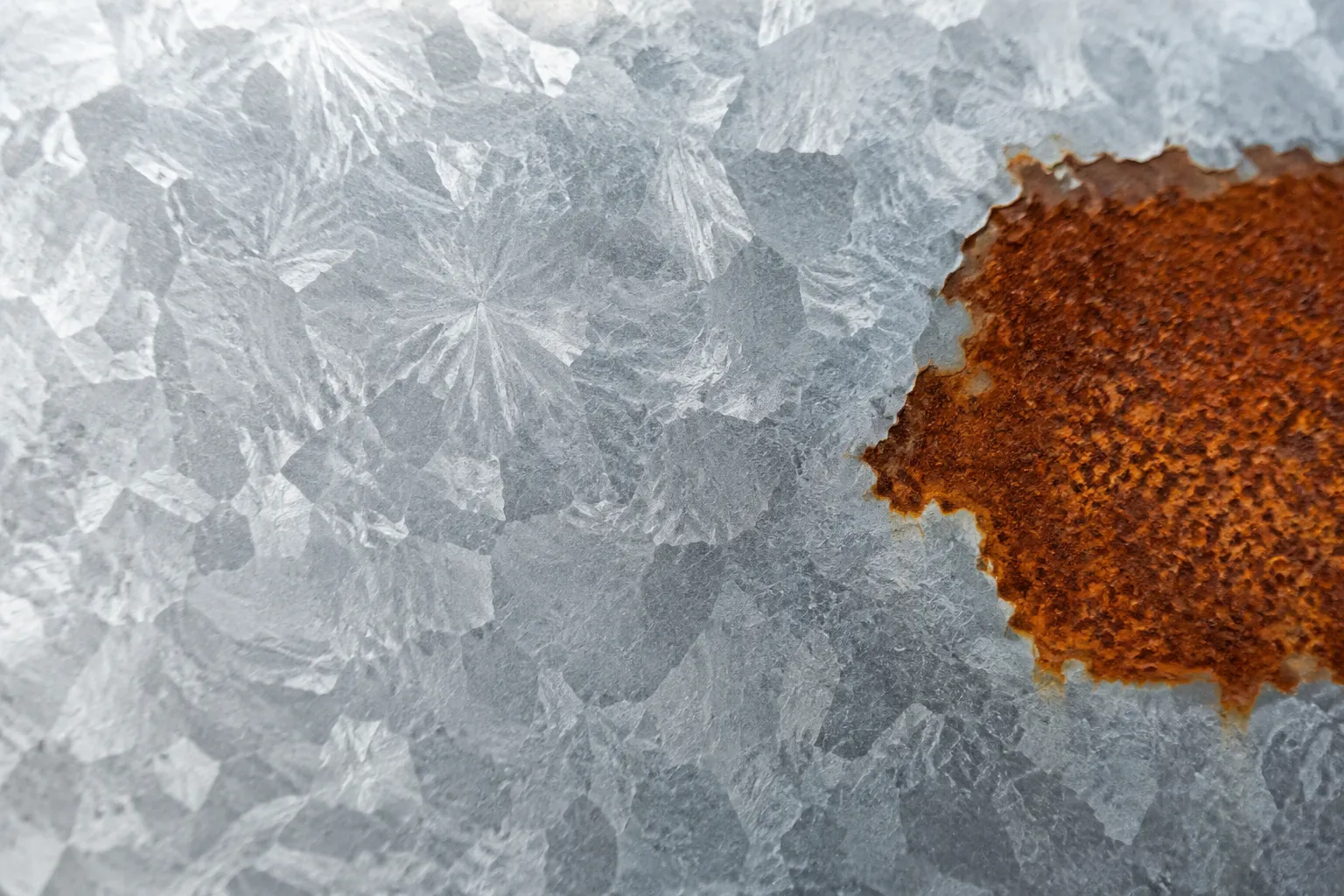
Yes — will galvanized steel rust? It can, but only when conditions are too much for the zinc coating. Galvanization puts off rust much longer than bare steel ever could. Think of the coating as a shield, not a promise. Fabricators and homeowners ask will galvanized steel rust before they commit to an outdoor project. The honest answer: it can resist rust very well, and that is why the material is common in fencing, guardrails, and structural frames. That one difference shapes every choice that follows.
These two terms sound alike. They mean very different things. A rust-proof metal has no iron at all, so it cannot corrode — aluminum and silicon bronze are examples, according to Peak Home Furnishings. Galvanized steel has iron. Its zinc coating slows corrosion, but the steel underneath is still at risk once that layer wears thin. Peak Home Furnishings notes that even stainless steel, which forms its own protective surface layer, can still corrode in extreme environments. Galvanised steel is in the same group: highly resistant, never immune. That rust resistance has limits you should plan around. Galvanized steel resistance to rust corrosion depends on the coating staying intact. A thick, even layer buys you time. A thin or damaged layer shortens the clock. Coating thickness and coating type both shape the outcome. A heavier coating lasts longer in the same setting. A lighter one suits gentler conditions. You get years of dependable service, not a permanent promise. Many buyers choose galvanised steel for exactly this reason — performance you can predict and measure.
Attribute | Rust-Proof | Rust-Resistant (Galvanized Steel) |
|---|---|---|
Iron content | None | Contains iron |
Susceptibility | None | Possible if coating fails |
Maintenance | Minimal | Periodic inspection and touch-up |
The zinc coating does not fail overnight. Several things wear it down. Heat is one. Hot-dip galvanizing experts describe the Kirkendall Effect: zinc atoms move into the alloy layers faster than iron atoms move outward, leaving voids at the interface. Those voids grow into a gap, and the outer layer peels away. This becomes a real risk when galvanised steel serves above roughly 400 F, per hotdipgalvanizing.com. Slow cooling after galvanizing makes peeling more likely on heavy sections. Flaking is a separate problem. Whole shards of the alloy layers can separate from the steel, and hotdipgalvanizing.com reports that flaked areas often measure near zero coating thickness. Mechanical damage is another path. A deep scratch or a worn edge exposes bare steel, and that spot becomes the first place galvanized steel corrodes. Galvanic corrosion also plays a role. Contact with copper or plain steel in wet conditions drains the coating too soon. Moisture trapped against the surface speeds the process, and coastal air adds salt that attacks the coating. Each failure mode shares one trait: it removes the barrier. Once the barrier goes, red rust takes hold. Regular inspection lets you catch breakdown early. Rinse salt and dirt away. Touch up small breaches before they widen. Inspect welds and cut edges closely, since those areas carry thinner protection. Galvanised steel performs well when you watch for scratches, heat exposure, and dissimilar metal contact.
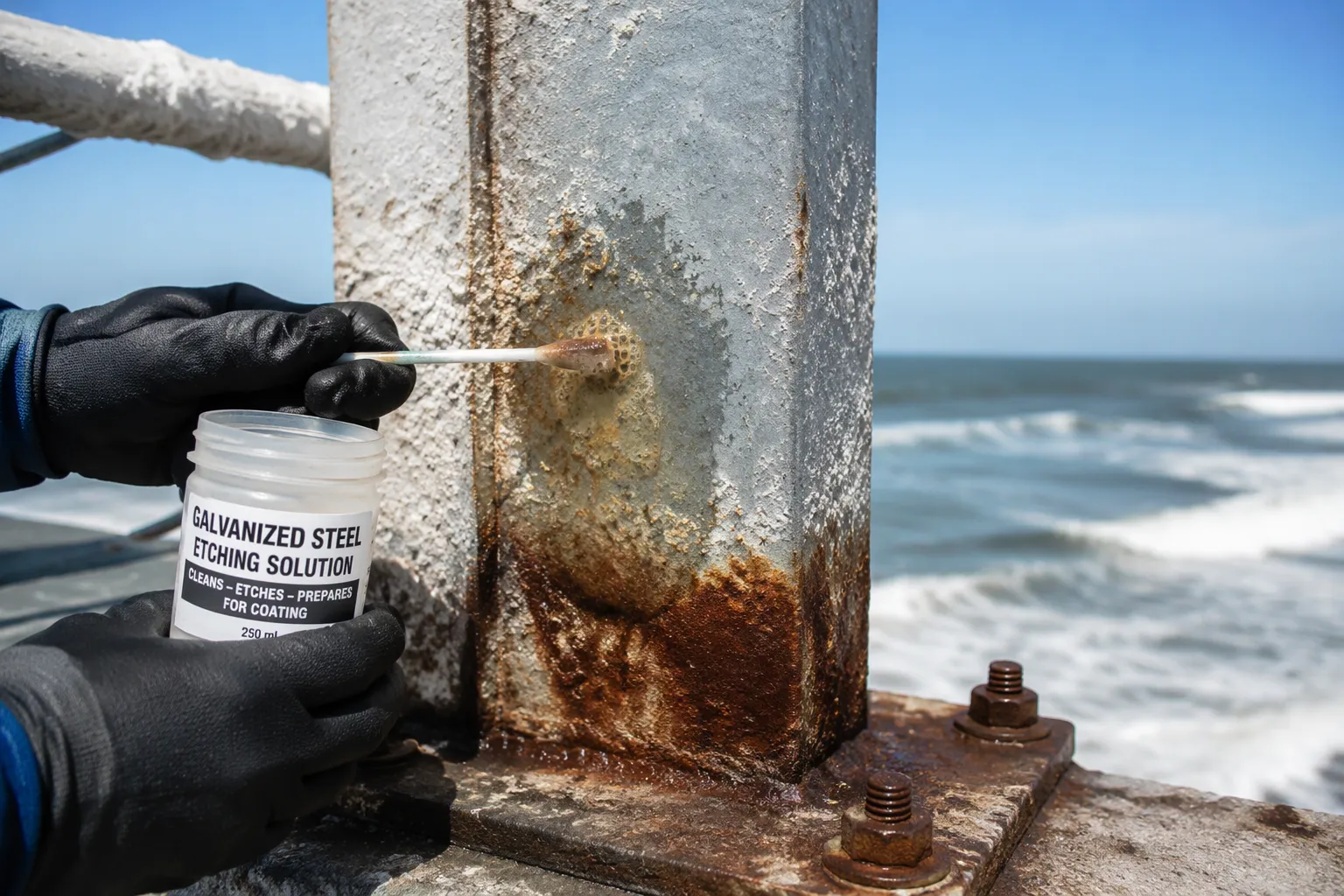
How long galvanised steel lasts depends on two things: the type and thickness of its zinc coating, and how harsh the nearby environment is. A thick coating in a dry, rural area may last for decades. A thin coating near the ocean faces a much harder fight. Knowing the main causes of rust helps you judge which conditions your project will face.
Salt is the most constant threat. Salt air makes metals oxidize and acts as an electrolyte in galvanic corrosion. Coastal salts also mix with city pollutants, which makes the environment even more corrosive.
How far you are from the shore matters a great deal. Hot-dip galvanizing experts report that structures within one mile of the shoreline, especially within 250 feet, face aggressive chloride deposits. Galvanized steel exposed directly to salty winds can start to show rust within 5 to 7 years. Sheltered areas often do well for 15 to 25 years longer.
Factor | Detail |
|---|---|
Distance from shoreline | Within one mile, especially 250 feet, means aggressive chloride deposits |
Direct salt spray | Rust can appear within 5–7 years |
Sheltered areas | Often perform well 15–25 years longer |
The washing motion of waves and tide lines speeds up zinc loss. Moving water strips away the passive scales that form on the surface and exposes fresh zinc, which then tries to rebuild its patina. Warmer water speeds up the reaction between oxygen and zinc. In tropical waters that stay warm year-round, protective magnesium and calcium salts have trouble forming. Even so, the high magnesium and calcium content of seawater strongly blocks zinc corrosion, according to Galvanize It.
Chemical contact breaks down the zinc coating fast. Bleach, even diluted to 1 percent or less, is corrosive to galvanized steel, and chlorine attacks it too. Strong acids such as hydrochloric, sulfuric, and muriatic acid aggressively attack the zinc itself, not just surface dirt. Acidic foods like tomatoes and fruit juices damage the coating, which is why the FDA restricts galvanized steel in contact with acidic foods. Fertilizers, road salts, quicklime, and aluminum cleaners all add to the corrosion risks.
Physical damage opens the door to rust. Scratches, cuts, and worn edges expose bare steel, and that spot becomes the first place corrosion takes hold. Trapped moisture is just as harmful. When newly galvanized sheet is stacked and condensation forms between the layers, white rust can develop. This chalky white substance is zinc hydroxide, not the red iron oxide you see on bare steel. It forms when zinc meets water and oxygen in a space with too little oxygen, according to AZoM and Metal Supermarkets. Long exposure to saltwater, chemical spills, and constant damp all shorten coating life. Watch these factors that rust and corrode galvanized steel, and you can catch problems early.
Hot-dip galvanizing dips cleaned steel into a kettle of melted zinc at about 450 °C, according to a study in PMC. The zinc and steel react and form iron–zinc alloy layers on the surface. AZZ reports that the kettle runs at 830°–850° F, and the zinc bonds with the steel through a diffusion reaction. That metallurgically bonded layer gives hot-dipped galvanized steel its natural corrosion protection and adds surface strength.
The first job is simple isolation. AZZ describes the coating as a tough, metallurgically bonded layer that completely covers the steel surface and seals it from the environment. That protective zinc layer physically separates steel from oxygen and moisture, per hotdipgalvanizing.com. The zinc coating also builds its own defense. Galvanize It explains that zinc corrosion products form a dense, adherent zinc patina during natural wet and dry cycles, and this patina corrodes up to 10–100 times more slowly than steel.
The second job is electrochemical. Zinc is more active than steel, so the two metals form a galvanic couple when moisture is present. Zinc becomes the anode and corrodes first, which gives you a sacrificial layer of protection. Pavco calls this dual-action system one of the most cost-effective corrosion protection methods available. Even a scratched panel stays protected by zinc at the exposed spot. This is true sacrificial corrosion protection, and it is why galvanised steel tolerates minor damage so well.
Zinc does not heal like skin. It protects exposed steel through cathodic action, and that action has a reach limit. Hot-dip galvanizing experts measured how far protection extends from a scratch edge:
Condition | Protection Distance (approx.) |
|---|---|
Thin electrolyte layer, narrow damage | Slightly over 1/4 in. (7 mm) |
Damage wider than the critical threshold | Just over 1/8 in. (4 mm) |
Fully weathered, passivated zinc | Essentially zero |
Moisture drives the process. In completely dry conditions, no ionic path exists, so cathodic protection does not function. A fully passivated surface may offer almost none. In dry, low-corrosivity settings, zinc corrosion products can creep over small exposed areas and add some barrier cover. Treat that as a bonus, not a repair. In coastal, marine, or chemical exposure, repair every scratch that exposes bare steel. Watch for galvanic corrosion where the protective galvanized zinc coating touches copper or plain steel in wet conditions.
You now know how it works. The real question is where galvanised steel rusting becomes a true problem on a job site. The answer comes down to matching the material to its setting.
Galvanized steel does great in rural areas. Bucket Outlet reports that rural air and rain carry low levels of sulfur and other corrosive emissions, which makes this the gentlest atmosphere. Suburban areas come next, since they see less pollution than industrial zones. Mild marine environments also treat the zinc coating gently, because lower temperatures and humidity slow the reaction.
The pH scale gives you a clear guide. Hot Dip Galvanizing reports that galvanized steel works best between pH 5.5 and 12. In that range, the zinc oxide and zinc carbonate layers stay stable, and corrosion rates stay low. You will find hot-dipped galvanized steel all over outdoor construction: handrails, guardrails, stair stringers, and exterior framing, per Ram Steel Co. Farm structures, roofing panels, trailer frames, and highway sign posts all depend on it too. Solar racking and utility poles complete the list.
Some settings push the coating past what it can handle. Strongly acidic conditions below pH 3 and extremely alkaline conditions above pH 13.5 cause fast corrosion of the zinc layer, according to Hot Dip Galvanizing. Moderately acidic or strongly alkaline ranges between pH 3 and 5.5 or pH 12 and 13.5 offer only limited protection, lasting a few years. A duplex system with paint or epoxy extends service life there.
Heat matters as well. American Galvanizers sets 392 F as the top recommended temperature for long-term continuous exposure. Above 480 F, the alloy layers break down mechanically, per Hot Dip Galvanizing. Constant moisture and exposure to saltwater in marine and coastal environments also shorten coating life. In those harsh environments, inspect often and repair damage early. Galvanised steel still earns its place in coastal work, yet you should plan for more upkeep. That is the honest answer to whether galvanised steel ever rusts in real use: it can, when salt, chemicals, heat, or trapped moisture overwhelm the zinc. Watch for rust in galvanised steel at cut edges and scratches first.
There is no single answer to how long galvanized steel lasts. Two things set the clock: the type and thickness of the zinc coating, and how harsh the environment is. Galvanize It says coating thickness drives corrosion resistance first, and local conditions then adjust the result. A thick coating in mild air outlasts a thin coating near the sea by a wide margin.
Coating thickness and setting work together. FMSPA pairs typical rural and urban air with an 80-micron coating and reports up to 50 years of service. Drop that coating to 50 microns in the same air, and the number falls to around 30 years. Marine settings with high salt and humidity shorten the span further: 100 microns gives around 20 years, and 50 microns gives less than 10 years.
Service Life = Initial Coating Thickness ÷ Average Annual Zinc Corrosion Rate
That formula from hotdipgalvanizing.com explains the pattern. Double the zinc coating thickness under the same conditions, and you roughly double the time to first maintenance. Soil tells a similar story. South Atlantic reports 10–20 years in the ground depending on conditions, 35–50 years in the most aggressive soils at 3.9 to 5 mils, and 75 years or more in less aggressive soils at the same thickness.
Timely care extends the life of any galvanised steel part. Rust takes up more space than the original steel. That swelling can crack or lift a paint or powder coating applied later, so fix damage early.
Check for white rust, dark spots, scratches, and trapped moisture, especially after heavy rain.
Clean with mild soap and water; skip harsh acids and strong alkaline cleaners.
Fix damaged areas by cleaning, applying a zinc-rich primer, and adding a compatible topcoat.
Wash galvanised steel more often in coastal and industrial zones.
Store galvanized steel dry, off the ground, with airflow around each piece.
Keep track of your inspections in a simple log. Then repeating problems show up before they spread.
Will galvanized steel rust? Yes, it can, but the zinc coating makes that outcome unlikely for a long time. Galvanized steel resists corrosion well, but it is not immune. Coating condition and environment decide the result.
Four factors drive your decision. Salt speeds up breakdown near coastlines. Chemicals attack the zinc coating directly. Trapped moisture invites white rust. Physical damage exposes bare steel. Weigh each one against your site.
Check your conditions first, then inspect regularly and repair scratches early. That habit keeps galvanised steel working for decades. Galvanised steel rewards that care with dependable service.
Yes, it can. The zinc coating slows corrosion, yet it wears down with age. Galvanized steel in mild air may serve for decades. Near the coast, salt speeds the breakdown. Inspect the surface each year and repair scratches early.
Lifespan depends on coating thickness and your local environment. A thick coating in rural air lasts far longer than a thin coating near the sea. Galvanised steel in marine settings needs more frequent checks. Track the coating condition and plan touch-ups before bare steel shows.
White rust is zinc hydroxide. It forms when moisture traps against the surface with little oxygen. This condition is not the red rust of bare steel. Dry the piece, restore airflow, and clean the area. Galvanised steel recovers well when you catch this early.
Yes. Clean the surface first and remove any white rust. Apply a zinc-rich primer, then add a compatible topcoat. Paint adds a second barrier over the zinc. Galvanized steel with a duplex coating lasts longer in harsh settings. Recoat when you see chalking or bare spots.
Neither wins everywhere. Stainless steel resists corrosion without a coating, yet it costs more. Galvanised steel suits outdoor structures, fencing, and framing at a lower price. Choose based on salt, chemicals, and budget. Both materials serve well when you match them to the job.


