
English 
T: +86-571-8663-6649
E: hzbjys@hzbjys.com
E: hzbjys@hzbjys.com
7/F, 1st Building Of ZhongHao WangJiang International Center, NO.332 East WangJiang Road, HangZhou, ZheJiang, China.
Views: 0 Author: Site Editor Publish Time: 2026-06-02 Origin: Site


Choosing between copper and brass goes far beyond just surface color aesthetics. For metal crafters and fabricators, this crucial decision dictates tooling requirements, project durability, and overall workflow efficiency. Unfortunately, improper material selection frequently leads to costly fabrication failures. You might experience material tearing during deep drawing phases. You could face excessive tool wear when machining, or even struggle with frustratingly weak solder joints.
This guide acts as an objective, evidence-based evaluation tool for your workshop. We designed it to help fabricators, jewelers, and craftspeople confidently match the right alloy to specific structural and aesthetic requirements. You will learn exactly how to evaluate malleability, manage tooling impacts, and specify the perfect material for your next major project. Ultimately, mastering these properties transforms unpredictable crafting hurdles into highly repeatable manufacturing successes.
Malleability vs. Rigidity: Pure copper excels in deep forming, hammering, and fold-forming, whereas brass (a copper-zinc alloy) offers superior rigidity and structural integrity.
Tooling Impact: Brass is significantly easier to drill, mill, and machine without gumming up tools, while copper requires more frequent annealing during manual shaping.
Finishing & Patina: Copper oxidizes rapidly and accepts chemical patinas (like liver of sulfur) predictably; brass resists corrosion better but requires specialized treatments for forced antiquing.
Specification Reality: Buying the correct temper (e.g., dead soft vs. half-hard) and gauge is just as critical as choosing the base metal itself.
Every successful metalworking project begins by clearly defining the physical demands placed on the finished piece. Failing to match material properties to these demands introduces hidden manufacturing costs. Choosing the wrong sheet metal directly increases wasted material expenses. It spikes scrap rates and severely compromises the structural integrity of your finished goods. You must evaluate the functional reality of your design before making a purchasing decision.
Start by evaluating anticipated load and wear. Determine if the crafted piece will bear significant weight. Ask yourself if it requires rigid hinges or will undergo repeated handling by end-users. These aggressive mechanical environments strongly favor brass. Conversely, your project might require complex, organic curves. It may demand high thermal conductivity or electrical conductivity. For these delicate and specialized applications, you should heavily favor copper.
You must also address specific implementation risks early in the design phase. A major risk involves galvanic corrosion. This destructive process occurs when you mix dissimilar metals incorrectly. Placing copper directly against active metals in outdoor or high-moisture environments accelerates degradation. You must plan for protective coatings or electrical isolation if your design requires mixing metals. Understanding these environmental vulnerabilities saves you from premature product failure and unhappy clients down the road.
Prototype complex forms in cheap aluminum first to test bending radii.
Calculate load-bearing requirements before ordering final materials.
Document the expected environmental exposure (indoor vs. marine).
Consult the galvanic series chart when combining different alloys.
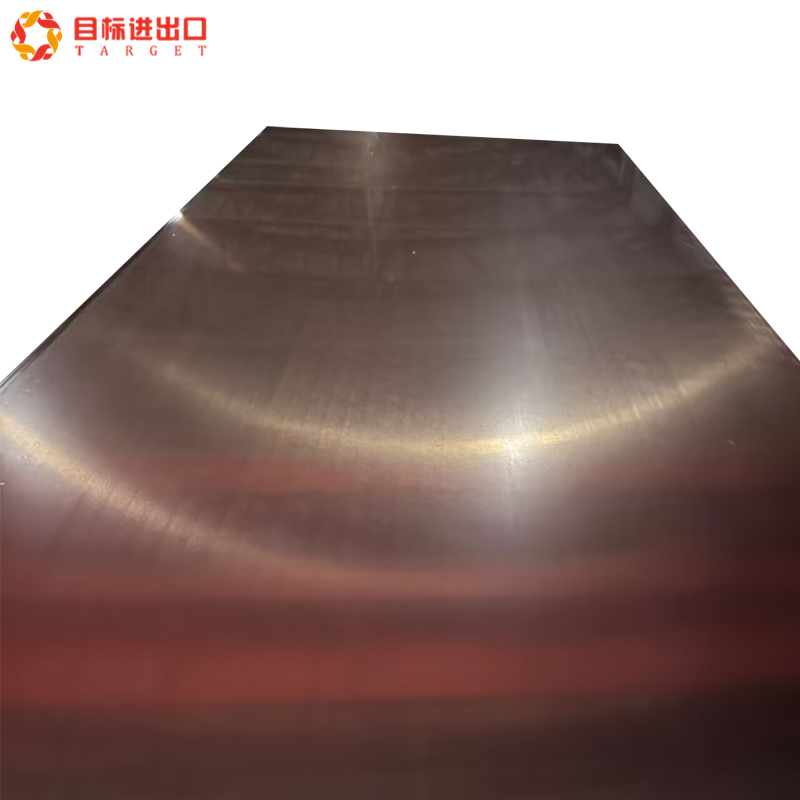
To master copper fabrication, you need a basic understanding of its molecular structure. A standard High-Purity Copper Sheet Plate is typically 99.9% pure. This extreme purity creates an exceptionally uniform crystal lattice. As a result, the metal becomes highly ductile and incredibly malleable under pressure. The atoms slide past one another easily when struck by a hammer. This allows radical shaping without immediate fracturing.
The primary advantages of copper make it a staple in artistic workshops. Here are the main benefits you can expect:
Unmatched Workability: Copper handles repoussé, chasing, and deep vessel raising beautifully. It stretches seamlessly to form intricate, high-relief designs.
Superior Thermal Conductivity: It spreads heat rapidly and evenly. This makes it the ultimate base for vitreous enameling and complex soldering applications.
Rich Aesthetic Profile: Copper delivers a warm, glowing finish. It also features highly predictable oxidation behavior, taking on rich chemical patinas flawlessly.
However, working this pure metal carries specific limitations and known risks. Pure copper is highly prone to rapid "work hardening." As you hammer or bend the metal, the crystal structure compresses and locks up. You must implement a strict, frequent annealing schedule to soften it again. If you skip annealing, the metal will develop micro-fractures and eventually tear.
Furthermore, copper remains far too soft for load-bearing structural components. You should never use it for rigid clasps, heavy-duty hinges, or weight-bearing brackets. Machining copper also presents unique challenges. Its sticky, non-chipping nature grabs drill bits aggressively. High-speed milling tools easily gum up, causing friction spikes and ruined workpieces. You must use sharp tools, proper cutting fluids, and adjusted feed rates to machine it effectively.
Brass behaves entirely differently in the workshop. We define brass as an alloy, most commonly blending 70% copper and 30% zinc to create standard cartridge brass. The addition of zinc completely alters the internal grain structure. Zinc introduces significant tensile strength. It limits how easily the atoms slide past each other, creating a notably stiffer and tougher material.
This structural change provides several distinct advantages for fabricators:
High Machinability: Brass cuts exceptionally cleanly. It drills without grabbing the bit and holds crisp, sharp threads for mechanical fasteners.
Higher Yield Strength: The added rigidity makes it ideal for structural frames. It perfectly suits mechanical parts, durable hardware, and functional kinetic pieces.
Aesthetic Versatility: Polished brass closely mimics the look of solid gold. It also boasts a slower natural tarnish rate compared to pure copper.
Despite these benefits, brass introduces unique workshop risks. It is far less forgiving during manual forming processes. If you attempt to bend brass sharply without proper relief, it will readily crack or tear. You must carefully calculate bend radii and apply strategic annealing.
Safety is also a paramount concern when heating brass. Overheating brass during brazing or welding releases highly toxic zinc fumes. Inhaling these fumes causes a severe acute condition known as metal fume fever. Symptoms mimic a severe flu and can last for days. You must use adequate localized ventilation systems and appropriate respirators anytime you apply a high-temperature torch to a brass workpiece.
Evaluating both metals side-by-side helps clarify their practical applications. When it comes to forming and shaping, they react oppositely under a hammer. Copper actively moves and flows into complex dies. It embraces organic manipulation. Brass, conversely, resists the hammer. It frequently springs back after bending, demanding over-bending to achieve a true 90-degree angle.
Joining and fabrication reveal further differences. We must carefully evaluate silver soldering compatibility. Both metals accept silver solder extremely well. However, copper acts as a massive thermal heat sink. It aggressively pulls heat away from the joint. You will require much larger torch setups to bring a copper piece up to flow temperature. Brass reaches flow temperature faster because it dissipates heat slower, making small-torch soldering much easier.
Finishing and surface treatments dictate the final lifespan of your artwork. Contrast the finishing steps carefully. Copper requires dedicated sealing using high-quality waxes or clear lacquers to prevent rapid greening. Brass maintains its polished finish much longer under normal indoor conditions. However, brass proves significantly harder to darken chemically. Standard liver of sulfur barely touches it, forcing you to buy specialized brass-darkening acids.
Finally, you must assess cost and scalability. Keep a close eye on current market volatility. Raw copper is generally more expensive by weight than standard brass alloys. Zinc is a cheaper metal, bringing the overall alloy cost down. For large-scale production runs, this price difference significantly impacts your bottom line.
Feature / Property | Copper Sheet | Brass Sheet |
|---|---|---|
Formability | Excellent (Flows easily) | Moderate (Resists, springs back) |
Machinability | Poor (Sticky, grabs tools) | Excellent (Cuts cleanly) |
Thermal Behavior | High heat sink (Harder to heat) | Moderate heat sink (Easier to heat) |
Natural Oxidation | Rapid, turns brown/green | Slow, turns dull gold/brown |
Cost Efficiency | Higher material cost | Lower material cost |
Buying the correct material involves decoding complex industry specifications. You must accurately specify Brown & Sharpe (B&S) or American Wire Gauge (AWG) thickness to match your desired outcomes. Using the wrong gauge guarantees project failure. For example, 24-gauge material cuts effortlessly with hand shears, making it perfect for delicate jewelry. However, building structural boxes or weight-bearing brackets demands robust 18-gauge or 16-gauge sheets.
Understanding temper designations is equally critical. You must recognize the vital difference between ordering "dead soft," "quarter-hard," and "half-hard" sheets. Temper directly dictates the immediate workability of the metal straight out of the box. Dead soft metal bends by hand but scratches easily. Half-hard metal resists bending but holds a rigid, flat plane perfectly. Ordering half-hard metal for a deep-drawing project forces you to spend hours annealing before you can even begin working.
Transitioning from small craft projects to large-scale production requires strategic supplier partnerships. Moving into bulk manufacturing often means upgrading to Flat Copper Sheet for Industrial Fabrication. When you scale up, you must account for bulk tolerance variations across large orders. Always specify sheets with applied surface protective films, like PVC masking. This masking prevents deep scratches during transit and initial guillotining. Finally, thoroughly vet your supplier's reliability and shipping practices to avoid costly production delays.
Ordering thin foil when structural sheet metal is required.
Failing to specify "dead soft" for projects requiring immediate hammer forming.
Accepting unmasked industrial sheets for high-polish cosmetic projects.
Ignoring dimensional tolerances when designing interlocking mechanical parts.
Mastering material selection elevates the quality and durability of your metalcraft. The decision logic is clear. You should choose a pure copper sheet for extreme formability, organic aesthetics, and superior thermal conductivity. Conversely, you should utilize brass when your project demands reliable machinability, high yield strength, and structural rigidity. Understanding these fundamental mechanical differences eliminates guesswork from your workflow.
Take action before starting your next build. First, review your workshop's tooling capabilities to ensure you can handle your chosen metal. Second, precisely define your project's physical structural needs and environmental exposure. Finally, consult your trusted supplier catalog to select the exact gauge and temper required to bring your vision to life safely and efficiently.
A: Yes, you can successfully join them using silver solder. You must use the proper flux designed for high-temperature brazing. Ensure you match the solder flow temperatures correctly. Keep in mind that copper acts as a massive heat sink and dissipates heat much faster than brass. Always direct the majority of your torch flame onto the copper side to bring both metals to the flow temperature simultaneously.
A: Cracking occurs due to a process called work-hardening. As you hammer, bend, or roll the metal, its internal crystal structure compresses and becomes brittle. To fix this, you must implement proper annealing cycles. Heat the metal to a dull red glow and quench it. This relaxes the grain structure, restoring full malleability for further bending.
A: Brass is structurally stiffer, but it actually saws and drills cleaner than pure copper. Copper is a very "gummy" metal. It tends to grab drill bits and frequently binds jeweler's saw blades. Brass creates clean, distinct chips when cut, making manual sawing and power machining significantly smoother and more predictable.
A: The choice depends entirely on your desired visual patina. Over time, pure copper exposed to the elements will oxidize rapidly, turning a distinct verdigris green. Brass resists this greening process much better. Instead, outdoor brass will slowly tarnish and darken into a dull, earthy brown or black finish. Neither metal rusts like steel.


