
English 
T: +86-571-8663-6649
E: hzbjys@hzbjys.com
E: hzbjys@hzbjys.com
7/F, 1st Building Of ZhongHao WangJiang International Center, NO.332 East WangJiang Road, HangZhou, ZheJiang, China.
Views: 0 Author: Site Editor Publish Time: 2026-10-27 Origin: Site


Raw aluminum naturally forms a thin, self-passivating oxide film. Commercial, industrial, and architectural applications demand engineered surface treatments to withstand environmental degradation, mechanical wear, and aesthetic demands. Specifying an incompatible finish triggers catastrophic project failures. You might see UV-induced chalking, filiform corrosion, or micro-cracking during post-forming. These failures cause severe delays and material rejections in coastal or industrial microclimates. This guide provides an engineering-level evaluation of industrial aluminum finishes. We cross-reference AAMA and Qualicoat performance standards, alloy substrate metallurgy, and fabrication sequencing. You will learn how to align fabrication sequencing with lifecycle durability. We break down the exact mechanisms behind anodic coatings, fluoropolymer paints, and mechanical polishing. This streamlines specification and prevents common surface treatment pitfalls on the job site.
Substrate Alloy Dictates Outcome: Finishing success is inextricably linked to the aluminum alloy series (e.g., 5005 for consistent architectural anodizing vs. 6063 for structural extrusions vs. 3003 for high-speed continuous coil coating).
AAMA Standards as Baseline Benchmarks: Performance expectations must be tied to verified standards (AAMA 2603, 2604, or 2605) rather than generic paint descriptions to guarantee color retention, gloss retention, and salt-spray resistance.
Conversion and Pre-Treatment Determine Adhesion: The mechanical and chemical durability of organic coatings (powder and PVDF) is fundamentally governed by the pre-treatment layer (e.g., trivalent chromium conversion or non-chrome zirconium systems).
Integrated vs. Mechanical Adhesion: Anodizing electrochemically converts the surface into a sapphire-hard aluminum oxide layer that cannot delaminate, while PVDF and powder systems form applied barrier films optimized for extreme UV resilience and broad color palettes.
Geometry Controls Process Viability: Complex extrusion geometries introduce process-specific constraints, such as the Faraday cage effect in electrostatic powder application and die-line visibility in anodizing.
Engineers evaluate surface treatments against rigorous international frameworks. Relying on generic paint descriptions leads to premature coating failure on the job site. The American Architectural Manufacturers Association (AAMA) and Qualicoat provide the definitive benchmarks for architectural coatings. These standards dictate exact performance thresholds for weathering, corrosion, and chemical resistance.
AAMA 2603 (Qualicoat Class 1): This standard governs interior and light commercial applications. Coatings must endure one year of South Florida weathering. The specification ensures basic color and gloss retention under moderate environmental stress. It requires a minimum dry film thickness of 20 microns for liquid paints.
AAMA 2604 (Qualicoat Class 2 / Superdurable): Designed for high-traffic commercial environments. These coatings undergo five years of South Florida weathering. They exhibit high resistance to chalking, erosion, and ultraviolet degradation. Gloss retention must remain above 30 percent after the five-year exposure period.
AAMA 2605 (Qualicoat Class 3 / Fluoropolymer Standard): This is the premier standard for high-rise exteriors and coastal zones. Coatings must survive ten years of South Florida exposure. They deliver superior resistance to chemical attack and chalking. Color change must remain strictly under a Delta E of 5, and gloss retention must exceed 50 percent.
Anodizing specifications prioritize functional durability over aesthetic variety. The MIL-A-8625 specification remains the global baseline for anodic coatings. It classifies treatments by chemical process and operational purpose.
Type I: Chromic acid anodizing produces ultra-thin, highly ductile films. Aerospace components utilize this for fatigue resistance. It generates a coating thickness typically between 1.2 and 7.6 microns.
Type II: Sulfuric acid anodizing serves as the architectural standard. It balances corrosion resistance with excellent dye absorption. Bath temperatures sit around 20 degrees Celsius, producing a porous oxide layer ideal for coloring.
Type III: Hardcoat anodizing operates at low temperatures, usually between 0 and 4 degrees Celsius. It generates thick, dense oxide layers for extreme industrial wear resistance. Thicknesses range from 25 to 100 microns, achieving Rockwell C hardness levels of 60 to 70.
Laboratory testing validates coating integrity before field deployment. Manufacturers rely on specific ASTM protocols to simulate decades of environmental abuse.
ASTM B117 (Neutral Salt Spray): Evaluates baseline corrosion resistance. Technicians place scribed samples in a fog chamber with a 5 percent sodium chloride solution. Standard powders endure 1,000 hours. Multi-coat PVDF and hardcoat anodizing routinely exceed 4,000 hours without blistering or undercutting at the scribe line.
ASTM D3359 (Cross-Hatch Adhesion): Verifies mechanical adhesion. Technicians score the coating in a grid pattern and apply aggressive pressure-sensitive tape. They pull the tape off rapidly at a 180-degree angle. This test often follows boiling water immersion to simulate extreme moisture exposure.
ASTM D523 & ASTM D2244: These standards measure specular gloss and calculate color difference. Technicians use multi-angle spectrophotometers to ensure acceptable optical tolerances across massive fabrication lots.
Surface treatments interact directly with the underlying metal chemistry. Trace elements like silicon, iron, and magnesium alter the final finish. Selecting the wrong alloy guarantees visual defects.
Alloy Series | Common Grades | Primary Characteristics | Optimal Finishing Processes |
|---|---|---|---|
1xxx Series | 1050, 1085, 1100 | High purity (99%+ aluminum), excellent thermal conductivity, low structural strength. | Chemical bright dipping, mechanical polishing, clear anodizing. |
3xxx Series | 3003, 3004, 3105 | Manganese alloyed, excellent ductility, moderate strength, highly formable. | Continuous coil coating, liquid spray painting, powder coating. |
5xxx Series | 5005, 5052, 5083 | Magnesium alloyed, high marine corrosion resistance, excellent weldability. | Architectural color anodizing (5005 specifically), hardcoat anodizing. |
6xxx Series | 6061, 6063, 6101 | Magnesium and silicon alloyed, heat treatable, excellent extrudability. | Architectural anodizing, powder coating, PVDF liquid coating. |
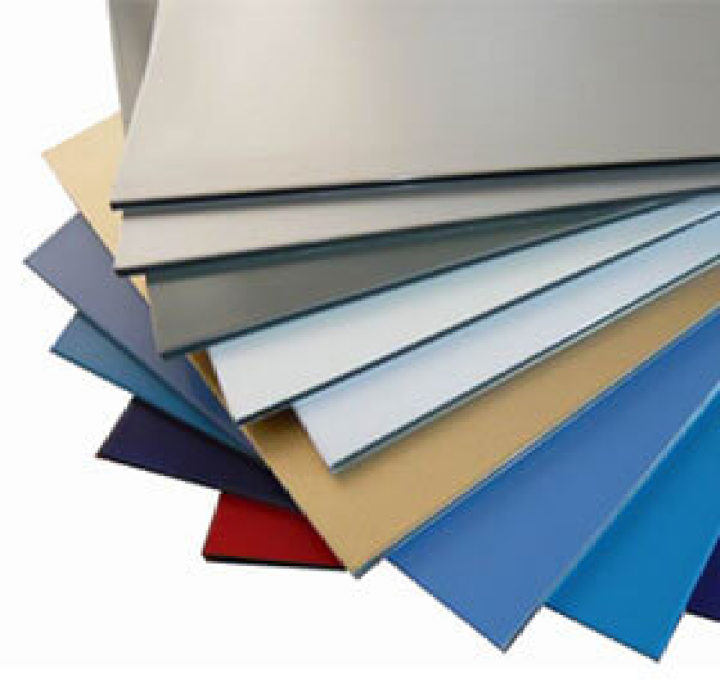
Different applications demand specific finishing technologies. Each process alters the aluminum surface through distinct mechanical, chemical, or electrochemical mechanisms. Understanding these mechanisms ensures proper specification and prevents costly rework.
Mechanical finishes physically alter the aluminum surface profile. Fabricators use grinding, polishing, linishing, and directional brushing. These processes impart specified textures and exact root-mean-square (RMS) roughness values. Sandblasting and bead-blasting create uniform matte profiles by bombarding the surface with abrasive media like glass beads or aluminum oxide grit.
Producing an aluminum mirror sheet requires extreme precision. Manufacturers start with high-purity aluminum alloys, typically 1085 or 1050. The metal undergoes multi-stage mechanical buffing using progressively finer abrasive compounds. This is followed by chemical bright-dipping in a heated phosphoric and nitric acid bath. This achieves a specular reflectance exceeding 86 percent. For advanced applications, engineers apply Physical Vapor Deposition (PVD). This integrates super-reflective dielectric layers onto the polished substrate in a vacuum chamber. PVD enhancement is mandatory for concentrated solar power collectors and architectural lighting louvers.
Mechanical finishing introduces specific vulnerabilities. It increases the total surface area and removes the natural passivated oxide layer. The raw metal requires immediate secondary protection. Fabricators must apply conversion coatings, ultra-thin anodizing, or clear lacquers to prevent rapid atmospheric pitting and oxidation.
Organic coatings cannot bond reliably to raw aluminum. Chemical pre-treatment modifies the surface to guarantee mechanical and chemical adhesion. The process begins with aggressive cleaning to remove rolling oils and extrusion lubricants, followed by etching.
Alkaline Etching: Sodium hydroxide baths generate a standard matte finish. The chemical dissolves surface imperfections and removes minor die marks. This produces a diffuse, light-scattering surface ideal for architectural applications. It generates significant aluminum sludge, requiring continuous bath filtration.
Acid Etching: Fluoride-based acid etching offers an advanced alternative. It reduces hazardous sludge creation and masks extrusion micro-defects effectively. Acid etching removes less metal and yields lower gloss variation across batches, making it highly desirable for premium architectural extrusions.
Following etching, the metal receives a conversion coating. The industry is transitioning away from toxic hexavalent chromium due to environmental regulations. Modern facilities utilize RoHS-compliant Trivalent Chromium Pre-treatments (TCP). Non-chrome Zirconium and Titanium silane technologies also dominate the market. These advanced systems deposit a nanoscale inorganic layer that delivers superior dry and wet paint adhesion for powder and liquid coatings.
Anodizing does not apply a coating over the metal. It electrochemically converts the base aluminum into an integrated ceramic layer. Technicians immerse the aluminum as the anode in a temperature-controlled sulfuric acid bath. Direct current passes through the electrolyte. The oxygen ions react with the aluminum, converting the metal surface into an open-pore, cellular hexagonal aluminum oxide matrix.
Specifying anodized aluminum requires strict adherence to thickness grades. Type II architectural anodizing features two primary classes. Class I mandates a minimum thickness of 18 microns. It protects external building envelopes exposed to severe pollution and marine salt. Class II ranges from 10 to 18 microns. It serves interior components and light exterior applications. The anodic layer is fully integrated with the substrate, meaning it cannot blister, peel, or flake under mechanical stress.
The open-pore structure allows for permanent coloring. Electrolytic two-step coloring deposits inorganic metallic salts into the pore bases. Alternating current drives cobalt, tin, or nickel into the oxide matrix. This creates UV-stable architectural bronze, champagne, and black tones. Finally, sealing chemistry closes the porous structure. Hot deionized water hydration promotes boehmite crystal growth, swelling the pore walls shut. Cold nickel fluoride sealing also effectively passivates the surface against chemical staining and acid rain.
High-performance liquid coatings rely on advanced fluoropolymer chemistry. The premium standard utilizes 70 percent Polyvinylidene Fluoride (PVDF) resin. Manufacturers blend this resin with acrylic binders and durable inorganic ceramic pigments. This architecture delivers unrivaled chemical resistance, flexibility, and color retention.
Engineers specify a PVDF coated aluminum sheet based on multi-coat build configurations. Standard 2-coat systems include a corrosion-inhibiting primer (typically 5 to 7 microns) and a PVDF color coat (25 to 30 microns). This achieves a minimum total dry film thickness of 30 microns. Metallic and mica flake pigments require 3-coat or 4-coat systems. These incorporate a dedicated barrier clear coat. The clear layer locks the metallic flakes in place and shields them against oxidation, moisture penetration, and acid deposition.
PVDF systems offer exceptional elongation against thermal cycling. They remain impervious to severe urban pollutants, bird droppings, and intense UV radiation. These coatings easily meet the stringent AAMA 2605 mandates for monumental architectural facades, ensuring the building retains its original aesthetic for decades.
Powder coating eliminates liquid solvents entirely. The process utilizes electrostatic fluid-spray application. Guns apply corona or tribo charging to dry organic polymer particles. The charged powder clings to the grounded aluminum substrate. The metal enters a curing oven at 180 to 200 degrees Celsius. The heat melts the powder, causing it to flow and cross-link into a dense thermoset protective film.
Polymer formulations dictate field performance. Standard architectural polyesters meet AAMA 2603. They provide cost-effective protection for interior fixtures and warehouse partitions but lack high UV resistance. Superdurable polyesters meet AAMA 2604. Modified isophthalic resin backbones deliver reliable five-year Florida weatherability. They are ideal for commercial windows and railings. Fluoropolymer powders utilize FEVE resins to meet AAMA 2605. They deliver ultra-durable performance equivalent to liquid PVDF without the associated VOC emissions.
Powder coating offers massive commercial advantages. Facilities achieve near-zero VOC emissions. Overspray reclamation allows for 95 percent material utilization. Thick single-coat applications range from 60 to 100 microns. This thickness easily hides minor substrate surface defects that thin-film liquid paints would highlight.
Coil coating represents the most efficient method for finishing flat rolled aluminum. High-speed continuous strip processing automates the entire finishing line. Massive aluminum coils unwind and pass through accumulator towers. The strip moves through automated alkaline cleaning and chemical conversion stages. Reverse roll-coating applies primer and topcoats with exact precision using polyurethane applicator rolls. High-velocity gas floatation ovens cure the paint instantly. The metal is then rapidly cooled in a water quench tank. These lines operate at staggering speeds up to 200 meters per minute.
A color coated aluminum sheet serves high-yield production environments. Applications include Aluminum Composite Material (ACM) facades, standing-seam roofing, and insulated cold-storage panels. Coil coating achieves exceptional thickness uniformity. Tolerances hold at plus or minus one micron, far surpassing manual or robotic post-spray operations.
Forming tolerances define coil coated products. Chemists formulate high-flexibility polyesters and modified PVDF resins specifically for post-forming. These paints achieve zero-to-2T bend ratings. Fabricators can brake-form, roll, and stamp the painted sheet without triggering paint delamination or edge crazing.
Extruded profiles present unique finishing challenges. Complex geometries interact unpredictably with electrostatic fields and chemical baths. Engineers must account for these variables when specifying aluminum extrusion surface treatments to avoid bare spots and uneven film builds.
The Faraday cage effect severely impacts powder coating on complex extrusions. Electrostatic fields cannot penetrate deep internal cavities, sharp interior angles, or narrow slots. The charged powder actively repels from these recessed zones, seeking the closest grounded edge. Applicators mitigate this through manual pre-touching, optimized gun angles, and adjusting the kilovolt settings on the spray equipment. In extreme cases, liquid immersion or electrocoating serves as a necessary alternative.
Die lines present another geometric hurdle. Extrusion dies create longitudinal friction lines along the aluminum surface as the billet pushes through the steel tooling. Anodizing highlights these microscopic imperfections. Fabricators mitigate die lines through heavy alkaline or acid etch cycles prior to anodizing. Alternatively, applying a medium-gloss powder coat effectively masks these longitudinal striations.
Modern fenestration requires structural thermal barriers to meet energy codes. Integrating polyamide insulation strips dictates the finishing sequence. Finishing before assembly prevents chemical trap zones. Wet anodizing chemicals can become trapped in the polyamide strut cavities, bleeding out later and ruining the finish. High heat distortion during powder bake cycles can also warp unpainted assemblies. Finishing after assembly requires strict temperature profiling. Ovens must not exceed the degradation threshold of the polyamide 6.6 structural strips during powder curing.
Extrusion finishes require mechanical electrical contact points. Clamps and racks hold the profiles during anodizing or powder coating to provide grounding and electrical current transfer. These contacts leave small unpainted or unanodized marks at the profile ends. Project managers must calculate scrap-length allowances, typically 50 to 100 millimeters per profile end. Furthermore, complex hollow profiles require engineered air-relief and chemical-drainage weep holes. These holes eliminate air locks and prevent aggressive chemical entrapment inside anodizing tanks.
Selecting the correct finish requires balancing environmental resistance against mechanical formability. The following matrix outlines the baseline performance metrics for industrial aluminum finishes.
Finish Type | Standard Specification | Typical Dry Film Thickness (DFT) | Salt Spray Resistance (ASTM B117) | UV / Color Stability | Formability Post-Finish | Primary Use Cases |
|---|---|---|---|---|---|---|
Mill Finish | N/A | Natural Oxide (<0.01 μm) | <100 Hours | Poor (oxidizes/spots) | Maximum | Hidden structural framing, internal brackets |
Type II Anodized | AAMA 611 Class I | 18–25 μm | 3,000 Hours | Excellent (Inorganic salts) | Nil (Crazes if bent) | High-traffic storefronts, handrails, luggage frames |
Type III Hardcoat | MIL-A-8625 Type III | 25–75 μm | 4,000+ Hours | N/A (Functional/Industrial) | Nil | Wear plates, marine fittings, hydraulic pistons |
Standard Powder | AAMA 2603 | 60–80 μm | 1,500 Hours | Moderate (Chalks in 1–3 yrs) | Moderate | Interior partitions, modular office frames, furniture |
Superdurable Powder | AAMA 2604 | 60–90 μm | 3,000 Hours | High (5-Year Florida) | Moderate | Educational facilities, residential windows, louvers |
PVDF Liquid Coating | AAMA 2605 | 30–50 μm | 4,000+ Hours | Maximum (10-Year Florida) | Good (Pre-cure/Coil) | High-rise curtain walls, monumental cladding |
Color Coated Sheet | AAMA 2605 / 2604 | 25–35 μm | 3,000–4,000 Hours | Superior (System dependent) | Superior (0T–2T bend) | Standing seam roofing, ACM facade panels, gutters |
Aluminum Mirror Sheet | DIN 5036-3 | Varies (PVD / Anodized) | 1,000–2,000 Hours | High (Indoor/Enclosed) | Low to Moderate | Architectural lighting, solar concentrators, optics |
Architects and engineers increasingly prioritize long-term environmental impact and maintenance cycles. Evaluating finishes purely on initial application metrics often leads to premature facade failure. A sustainable building envelope must minimize maintenance interventions over its fifty-year lifespan.
Initial Application vs. Long-Term Maintenance: Standard polyester powder coatings require intensive recoating or replacement at year seven to ten in exterior environments. Conversely, high-performance PVDF systems deliver thirty-plus years of maintenance-free durability. This extended lifecycle drastically reduces the carbon footprint associated with scaffolding, chemical stripping, and field repainting.
LEED v4.1 and Environmental Product Declarations (EPDs): Modern construction demands strict adherence to green building standards. Anodizing preserves 100 percent infinite recyclability. The process does not require pyrolytic paint removal during re-melting, preserving embodied carbon metrics.
VOC Elimination: Powder coatings produce zero volatile organic compound emissions. This eliminates hazardous air pollutants from the factory environment. Specifying powder finishes facilitates project LEED low-emitting material credits and supports broader sustainability mandates.
Even premium finishes fail if fabrication and assembly protocols are ignored. Recognizing implementation risks prevents catastrophic site failures.
Anodizing color consistency relies on exact metallurgical and chemical uniformity. Fluctuations in intermetallic alloy phases, specifically magnesium-silicide ratios, alter the oxide layer. Bath electrolyte temperature shifts of just one degree Celsius cause visible color banding. Variations in current density further exacerbate the issue. To mitigate this, engineers must enforce single-lot casting and billet requirements for contiguous facade zones. Establish strict boundary retain samples using three-tier Delta E color limits under D65 daylight illuminants.
Corrosion often originates at mechanical connections. Contact with stainless steel or carbon steel fasteners in conductive electrolyte conditions triggers galvanic corrosion. Cut-edge moisture creep underneath paint layers causes filiform corrosion. Mitigation requires strict isolation protocols. Mandate EPDM or neoprene isolation washers for all dissimilar metal contacts. Seal raw punched or sheared edges immediately. Use chromate or zirconium edge-seal daubers on all field-modified components to re-establish the chemical barrier.
Attempting to bend or roll anodized sheet post-application shatters the ceramic oxide layer. Bending cured brittle powder coatings beyond their elasticity parameters causes severe micro-crazing. Moisture penetrates these invisible cracks, leading to rapid delamination. To prevent this, specify pre-finished coil coated sheet engineered with flexible polyester or PVDF backbones for post-forming operations. Utilize route-and-return techniques instead of sharp press-brake bends for composite panel edges. Furthermore, protect finished aluminum on the job site from wet concrete and mortar. Alkaline materials will permanently etch and stain both anodized and painted surfaces upon contact.
Streamline the specification process by following a rigid, sequential evaluation framework.
Environmental Severity Assessment: Measure the distance to the coast. Projects within 1.5 kilometers require AAMA 2605 fluoropolymers or Class I Anodizing. Evaluate high UV insolation exposure and extreme industrial chemical presence.
Substrate Geometry & Physical Demands: Deep recessed extrusions favor anodizing or liquid spray over standard powder due to Faraday cage effects. High contact and abrasion zones require hardcoat anodizing or AAMA 2604/2605 superdurable systems.
Color, Texture, and Reflectance Demands: Projects requiring a monolithic metallic luster demand clear or color anodizing. Applications needing vibrant, high-gloss brand colors, exact RAL matching, or ultra-dark solid tones require PVDF or Fluoropolymer Powder Coating.
Fabrication Sequencing Review: If forming occurs after coating, specify continuous coil coated sheet. If the project involves welding, complex milling, or pre-assembled structures, specify post-fabrication batch immersion anodizing or manual spray coating.
Selecting the optimal aluminum finish dictates the long-term success of any architectural or industrial project. Follow these actionable steps to ensure flawless execution:
Audit your site environment to determine the required AAMA or MIL-A-8625 specification before selecting a coating system.
Specify the exact aluminum alloy series in your procurement documents to ensure metallurgical compatibility with the chosen finish.
Map out your fabrication sequence early to decide between pre-painted coil and post-fabrication batch coating.
Mandate isolation washers and edge sealants in your assembly drawings to prevent galvanic and filiform corrosion.
Request physical boundary retain samples from your finisher to establish acceptable color variation limits prior to full-scale production.
A: Anodizing transforms the aluminum substrate into an integrated ceramic layer that cannot flake, peel, or chip. Powder coating is an electrostatically applied polymer shell. Powder offers a virtually limitless color palette and higher resistance to harsh alkaline and acid chemical cleaning agents.
A: PVDF coatings certified to AAMA 2605 routinely exceed 30 to 40 years of service life in coastal environments. They exhibit minimal chalking, negligible gloss drop, and a color shift of less than 5 Delta E units over 10 to 20 years.
A: Yes, provided the material was finished via continuous coil coating using flexible resins specifically formulated for post-forming. These paints feature T-bend ratings of 0T to 2T. Anodized or batch-powder-coated sheets will craze or crack if formed sharply after coating.
A: Color variations result from slight differences in alloy composition between mill batches, such as silicon and iron trace levels. Differential heating during extrusion, inconsistent bath current densities, and minute temperature variations in the electrolytic coloring tank also cause visible color shifts.
A: Extrusions are typically surface-treated in standard mill stock lengths and then cut. However, high-specification marine or architectural components should have all drilling, punching, and milling completed before finishing. This ensures all exposed holes and cut edges are protected against corrosion.
A: Clean mirror sheets using non-abrasive, deionized water rinses and pH-neutral surfactants with lint-free microfiber cloths. Avoid alkaline cleaners, solvent-based degreasers, and mechanical scrubbing. These methods micro-scratch the optical surface and permanently reduce specular reflectivity.
A: Anodizing is the most environmentally benign finish regarding circular economy metrics. It produces no VOCs, uses non-toxic inorganic electrolytes, and does not contaminate the metal substrate. This enables direct remelting into high-grade alloys without requiring paint stripping or carbon-intensive thermal slagging.


