
English 
T: +86-571-8663-6649
E: hzbjys@hzbjys.com
E: hzbjys@hzbjys.com
7/F, 1st Building Of ZhongHao WangJiang International Center, NO.332 East WangJiang Road, HangZhou, ZheJiang, China.
Views: 0 Author: Site Editor Publish Time: 2026-09-15 Origin: Site


Aluminum is one of the most widely used engineering metals because it combines low density, good corrosion resistance, useful electrical and thermal conductivity, and excellent manufacturing flexibility. It appears in aircraft structures, transportation equipment, electrical systems, building frames, heat sinks, packaging, industrial machinery, and countless machined components.
However, its magnetic behavior often creates confusion. A magnet normally sticks strongly to carbon steel, while the same magnet shows almost no obvious attraction to a clean aluminum sheet, extrusion, or bar. At the same time, powerful magnets can interact visibly with aluminum when they move nearby, which seems to contradict the idea that aluminum is non-magnetic.

So, is aluminum a magnetic material?
For normal engineering purposes, aluminum is generally considered non-magnetic. The Royal Society of Chemistry describes aluminum as non-magnetic and non-sparking, while also highlighting its low density, electrical conductivity, corrosion resistance, and ease of forming.
From a physics perspective, however, aluminum is more precisely classified as weakly paramagnetic. It responds slightly to an external magnetic field, but the response is far too weak to resemble the strong attraction produced by iron, nickel, cobalt, or common ferromagnetic steels. University physics demonstrations likewise classify aluminum as paramagnetic.
Understanding this distinction helps engineers and buyers interpret magnet tests correctly, select suitable alloys, diagnose unexpected magnetic attraction, and choose aluminum products for electrical, structural, transportation, and precision-manufacturing applications.
For available grades and product forms, you can also explore Hangzhou Target's aluminum product range, including sheets, plates, coils, strips, foil, pipes, wire, bars, profiles, extrusions, and other aluminum products.
Aluminum is not ferromagnetic like iron or carbon steel.
In practical engineering, aluminum is usually called non-magnetic.
Scientifically, aluminum is weakly paramagnetic.
A normal stationary magnet does not stick firmly to clean aluminum.
Aluminum does not normally retain useful permanent magnetization.
Moving magnets can interact strongly with aluminum through eddy currents.
6061, 6063, 5052, 7075, and other common aluminum alloys remain effectively non-magnetic in ordinary use.
Strong magnetic attraction from an aluminum assembly often comes from steel inserts, fasteners, bearings, or contamination.
A magnet test can support material identification, but it cannot confirm that a part is aluminum.
Alloy grade, temper, dimensions, processing method, and final application matter more than magnetic behavior when sourcing aluminum products.
The practical answer is usually no. Aluminum does not behave like a conventional magnetic metal, and an ordinary permanent magnet placed against a clean aluminum surface will not attach in the same way it attaches to steel.
However, the scientifically precise answer requires more explanation. Aluminum has a weak positive magnetic response when exposed to an external field, meaning it is paramagnetic rather than completely magnetically inert. The effect is so small under ordinary conditions that engineers, fabricators, and buyers generally treat the metal as non-magnetic.
In normal industrial terminology, aluminum is considered non-magnetic.
This classification is useful because it describes what engineers actually experience during fabrication, assembly, sorting, and inspection. If you place a typical workshop magnet against aluminum plate, foil, extrusion, or bar, you will not feel the strong attraction expected from carbon steel.
The Royal Society of Chemistry specifically describes aluminum as non-magnetic, and RSC educational material also notes that a magnet attracts a steel can but not an aluminum one.
This practical classification does not mean aluminum has absolutely zero interaction with magnetic fields. It means its intrinsic magnetic response is extremely weak compared with ferromagnetic materials.
Yes. Aluminum is weakly paramagnetic.
Paramagnetic materials experience a small attraction toward an applied magnetic field. Unlike ferromagnetic materials, however, they do not develop the strong collective magnetic ordering responsible for powerful attraction and useful permanent magnetization.
A physics demonstration using suspended aluminum can show this weak response under a sufficiently strong magnetic field, but the effect is far smaller than the attraction produced by iron or steel.
This explains why the statements “aluminum is non-magnetic” and “aluminum is paramagnetic” can both appear in reliable technical sources. The first is an engineering description; the second is a more precise materials-physics classification.
Normally, no.
Place a typical permanent magnet against:
Aluminum sheet
Aluminum plate
Aluminum foil
Aluminum extrusion
Aluminum tubing
Aluminum wire
Aluminum bar
and you should not experience strong static attachment.
Even a powerful neodymium magnet does not make aluminum behave like steel. A stronger magnet can make weak magnetic or eddy-current effects easier to observe, but it does not transform aluminum into a ferromagnetic material.
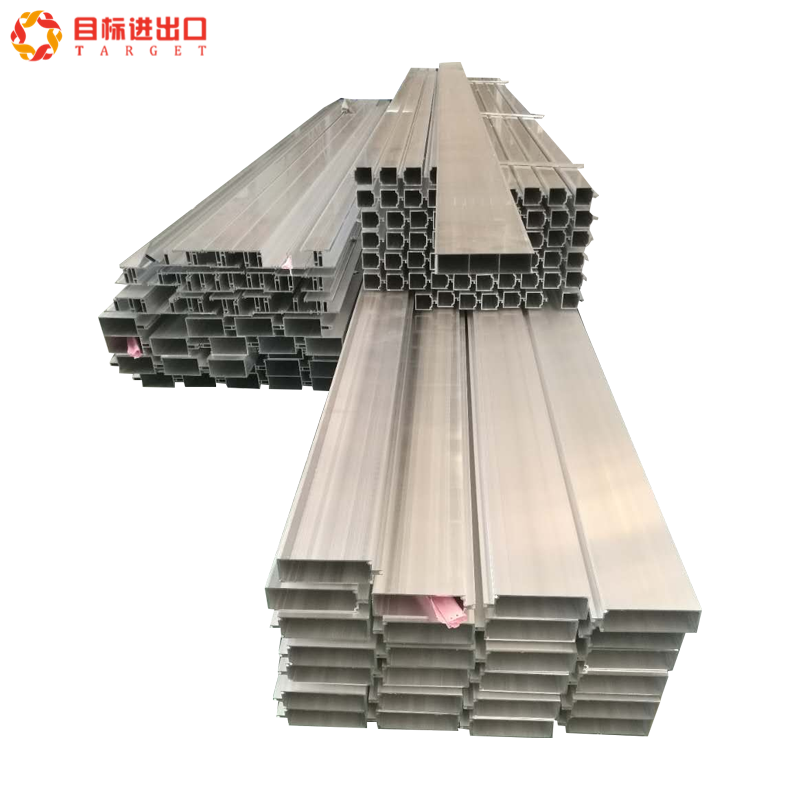
Technically, aluminum experiences extremely weak paramagnetic attraction.
Practically, the force is usually too small to notice during ordinary manual testing.
This distinction becomes important because the phrase “a magnet interacts with aluminum” can refer to two different phenomena:
Weak paramagnetic attraction, which exists even when the aluminum is stationary.
Electromagnetic induction, which becomes important when the magnetic field changes relative to the conductive aluminum.
The second effect can be much more obvious, which explains many demonstrations where strong magnets appear to “push,” “drag,” or slow down near aluminum.
Aluminum can develop a weak induced magnetic response while it is inside an external magnetic field.
However, it does not normally retain useful magnetization once that field is removed. This differs fundamentally from ferromagnetic materials, which can preserve significant magnetic ordering and become permanent magnets.
Therefore, aluminum is not a practical material for manufacturing ordinary permanent magnets.
Not scientifically.
A better summary is:
Engineering classification: effectively non-magnetic.
Physics classification: weakly paramagnetic.
Permanent magnet behavior: no useful retained magnetization.
Dynamic magnetic-field behavior: can show strong eddy-current effects because it conducts electricity.
This distinction is the key to understanding aluminum magnetic properties.
Question | Practical Answer |
|---|---|
Is aluminum magnetic? | Not in the ferromagnetic sense |
Is aluminum paramagnetic? | Yes, weakly |
Will a magnet stick to aluminum? | Normally no |
Does aluminum attract magnets? | Only extremely weakly |
Can aluminum be permanently magnetized? | Not in normal engineering use |
Can a moving magnet interact with aluminum? | Yes |
Are aluminum alloys usually magnetic? | No, not ferromagnetic |
Can steel inside an aluminum part attract a magnet? | Yes |
Note: When a drawing or specification describes aluminum as “non-magnetic,” it normally means the material does not exhibit significant ferromagnetic attraction under ordinary operating conditions.
The difference between aluminum and iron cannot be explained simply by saying that one metal is magnetic and the other is not. Magnetic behavior depends on electronic structure, interactions between atoms, crystal structure, and whether the material can develop stable collective magnetic ordering.
Aluminum has atomic number 13 and the electron configuration [Ne]3s23p1[Ne]3s^23p^1. The Royal Society of Chemistry lists both values in its elemental data.
However, electron configuration alone is not enough to predict the full behavior of a solid engineering material. What matters is how the electronic magnetic moments interact throughout the crystal.

Electrons possess magnetic moments associated with spin and orbital motion.
When a material enters an external magnetic field, these magnetic moments can respond. In aluminum, the resulting response is weakly aligned with the applied field, producing paramagnetism.
The effect remains small because aluminum does not develop the powerful cooperative magnetic ordering seen in ferromagnetic metals.
Ferromagnetism requires strong interactions that allow large numbers of atomic magnetic moments to align cooperatively.
In metals such as iron, this behavior produces magnetic domains. Inside each domain, many moments align in a common direction.
When an external field is applied, domain structures can reorganize, producing strong attraction. Some of that alignment may remain after the field disappears, allowing permanent magnetization.
Aluminum does not form comparable ferromagnetic domain structures. Consequently, although it can respond weakly to a field, it does not produce steel-like magnetic attraction.
Magnetic susceptibility describes how strongly a material responds to an external magnetic field.
A positive susceptibility generally corresponds to paramagnetic behavior, while a negative value corresponds to diamagnetism. Ferromagnetic materials exhibit a much stronger and more complex response.
Aluminum has a small positive magnetic susceptibility. In practical engineering terms, that means the magnetic response exists but is usually negligible compared with structural, electrical, thermal, and corrosion properties.
Property | Aluminum | Iron |
|---|---|---|
General magnetic behavior | Weakly paramagnetic | Ferromagnetic |
Static attraction to magnets | Extremely weak | Strong |
Magnet normally sticks | No | Yes |
Useful permanent magnetization | No | Possible |
Ferromagnetic domains | No | Yes |
Electrical conductivity | Good | Conductive, but lower |
Eddy-current interaction | Significant | Also possible |
Magnetic separation | Not directly effective | Highly effective |
Tip: If incoming material inspection requires distinguishing aluminum from steel, a magnet test is useful as a first screening step, but it should not be the only identification method.
This is one of the most common sources of confusion.
A stationary magnet may show almost no attraction to an aluminum plate, yet moving the same magnet rapidly over the plate can produce noticeable resistance. Similarly, a strong magnet dropped through an aluminum tube can fall surprisingly slowly.
The explanation is not ferromagnetism. It is electromagnetic induction.
Aluminum conducts electricity well and is widely used in transmission lines and electrical systems. RSC specifically identifies aluminum as a good electrical conductor.
That conductivity allows changing magnetic fields to generate electric currents inside the metal.
These circulating currents are called eddy currents.
When a magnet moves relative to an aluminum conductor, the magnetic flux passing through the metal changes.
That changing flux induces circulating electrical currents.
Those currents then create magnetic fields of their own. According to Lenz's law, the induced field acts in a direction that opposes the change that produced it.
The result may feel like:
Drag
Braking
Resistance to motion
Repulsion during rapid field changes
Slower falling motion
The effect can be substantial even though the aluminum remains non-ferromagnetic.
Consider a strong magnet dropped through a vertical aluminum tube.
Gravity pulls the magnet downward, but its changing magnetic field induces currents around the tube. Those currents generate opposing magnetic fields, which create an upward electromagnetic braking force.
The magnet therefore falls much more slowly than an identical non-magnetic object.
Once the magnet stops moving relative to the conductor, the induced current decreases dramatically.
This experiment illustrates an important principle:
A material does not need to be ferromagnetic to interact strongly with a changing magnetic field.
Situation | Main Effect |
|---|---|
Stationary magnet near aluminum | Very weak paramagnetic attraction |
Magnet moving past aluminum | Eddy currents |
Aluminum moving through magnetic field | Eddy currents |
Magnet falling through aluminum tube | Electromagnetic braking |
Aluminum near iron magnetically | No steel-like attraction |
Steel object near permanent magnet | Strong ferromagnetic attraction |
This distinction is particularly important when evaluating machinery, rotating systems, electromagnetic brakes, sensors, induction equipment, or metal-separation technology.
Note: Magnetic braking in aluminum demonstrates conductivity and electromagnetic induction; it does not prove that aluminum is ferromagnetic.
Pure aluminum is relatively soft, so most engineering applications use alloys that contain elements such as magnesium, silicon, copper, manganese, or zinc.
Alloying can dramatically change strength, hardness, machinability, weldability, corrosion resistance, fatigue performance, and heat-treatment response. However, standard commercial aluminum alloys generally remain effectively non-magnetic.
Hangzhou Target's aluminum range includes 5xxx, 6xxx, and 7xxx series materials for marine, structural, transportation, extrusion, and aerospace-related applications.
Most common aluminum alloys do not exhibit strong ferromagnetic behavior.
Examples include:
3003
3004
5052
5083
5754
6061
6063
6082
7075
An ordinary magnet normally will not attach strongly to clean stock made from these alloys.
The exact magnetic susceptibility may vary slightly because alloying changes composition and microstructure, but the practical result remains similar: standard aluminum alloy products are generally treated as non-magnetic.
6061 and 6063 are widely used 6xxx-series aluminum alloys.
Both use magnesium and silicon as their principal alloying additions. 6061 is commonly selected when higher structural strength and machinability are important, while 6063 is widely used for extrusion because it combines good extrudability, surface finish, and corrosion resistance.
Neither behaves like ferromagnetic steel.
For structural frames, machinery, architectural applications, and transportation components, Hangzhou Target also offers 6xxx Series aluminum sheet and plate, including 6061-T6 and 6063-T5 options.
5052 and 5083 are magnesium-containing 5xxx-series alloys.
They are widely used where corrosion resistance, weldability, and moderate-to-high strength matter, particularly in marine, transportation, pressure-vessel, and fabricated applications.
Like other standard aluminum alloys, they remain effectively non-ferromagnetic.
For thin-gauge manufacturing or stamping applications, 5xxx Series Aluminum Foil Coil provides an example of commercially available 5052-based material offered for customized widths and processing requirements.
7075 is a high-strength aluminum-zinc-magnesium-copper alloy.
Its much higher mechanical strength sometimes leads users to assume it behaves more like steel, but mechanical strength and ferromagnetism are unrelated properties.
A high-strength 7075 aluminum component is still not expected to attract a normal magnet like steel.
This distinction matters in aerospace, tooling, high-stress machinery, and precision components, where aluminum may provide very high strength while maintaining low density and non-ferromagnetic behavior.
Alloy composition can influence magnetic response, but standard commercial aluminum alloys normally remain non-ferromagnetic.
A more common reason for unexpected attraction is the presence of a separate ferromagnetic component.
For example, an aluminum housing may contain:
Steel screws
Threaded inserts
Bearings
Pins
Springs
Reinforcement plates
Steel shafts
Magnetic contamination
A magnet may therefore appear to stick to an “aluminum part” even though the base material itself is not responsible.
If an aluminum assembly shows strong localized attraction, test multiple areas.
Strong attraction only near a fastener or bearing suggests another metal is responsible. Attraction across the entire bare surface requires further material verification.
Contamination from steel grinding dust can also create misleading results, particularly in fabrication environments where aluminum and ferrous metals are processed nearby.
Tip: For incoming inspection, perform magnet testing on clean bare stock before machining or assembly whenever possible.
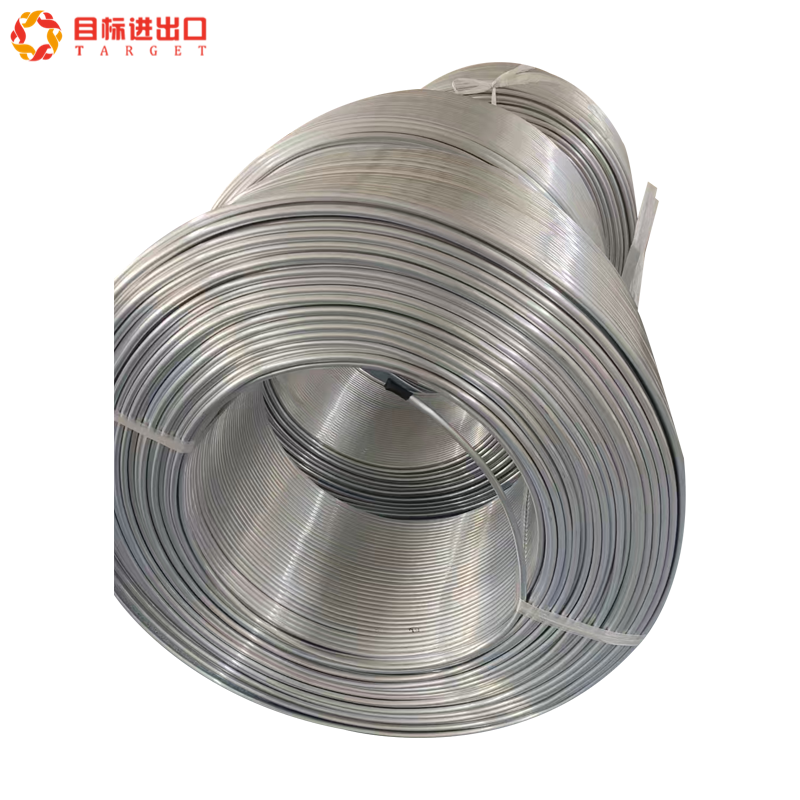
Magnet testing is useful because it quickly separates many ferrous metals from non-ferrous materials.
However, failure to attract a magnet does not prove that a material is aluminum. Copper, brass, titanium, and several stainless steel grades can also show little or no ordinary attraction.
Iron and many carbon steels are strongly ferromagnetic.
Aluminum is only weakly paramagnetic.
This makes a simple magnet test useful for distinguishing many aluminum parts from carbon-steel equivalents.
However, coatings or mixed-material assemblies can complicate the result.
Stainless steel requires more careful interpretation.
Ferritic and martensitic stainless steels are generally magnetic, while many austenitic stainless grades are much less magnetic. Cold working can also alter the magnetic response of some stainless steels.
Therefore, a magnet test cannot reliably determine whether an unknown non-magnetic metal is aluminum or stainless steel.
Copper is also non-ferromagnetic in ordinary use.
Unlike aluminum, however, copper is diamagnetic rather than paramagnetic.
Both metals conduct electricity extremely well, so both can exhibit noticeable eddy-current effects when exposed to changing magnetic fields.
If you are comparing conductive non-ferrous metals, Hangzhou Target also supplies a broad range of copper products for electrical, thermal, and industrial fabrication applications.
Brass is a copper-zinc alloy and is generally non-ferromagnetic.
A magnet usually will not stick firmly to clean brass, which means magnet testing alone cannot distinguish aluminum from brass.
Color, density, alloy markings, conductivity, and chemical analysis provide better differentiation.
Material | General Magnetic Behavior | Does a Magnet Normally Stick? |
|---|---|---|
Aluminum | Weakly paramagnetic | No |
Iron | Ferromagnetic | Yes |
Carbon steel | Ferromagnetic | Usually yes |
Copper | Diamagnetic | No |
Brass | Generally non-ferromagnetic | No |
Austenitic stainless steel | Usually weak/non-magnetic | Often no or weak |
Ferritic stainless steel | Ferromagnetic | Yes |
Nickel | Ferromagnetic | Yes |
Titanium | Weakly paramagnetic | No |
A magnet test is useful for quick sorting, but it should be treated as a screening method rather than a definitive identification technique.
If a magnet strongly sticks to a bare component, the part is unlikely to be ordinary aluminum. If the magnet does not stick, however, several possible materials remain.
Start with a clean, accessible metal surface.
Avoid testing directly above:
Screws
Welded steel hardware
Bearings
Hidden mounting plates
Inserts
Embedded reinforcement
Move the magnet across several locations.
A clean aluminum surface should not show strong static attraction.
The material could be aluminum.
It could also be:
Copper
Brass
Titanium
Some stainless steels
Certain nickel-free alloys
Non-metallic material with metallic coating
Therefore, “magnet does not stick” is not sufficient evidence for aluminum identification.
If attraction is strong, inspect the construction carefully.
Ask:
Is the entire component magnetic?
Is attraction limited to one point?
Are steel fasteners present?
Is there a hidden backing plate?
Is the component plated or coated?
Could ferrous contamination be present?
Localized attraction usually suggests mixed materials.
Aluminum has a density of approximately 2.70 g/cm³. RSC lists this value in its elemental data.
That makes aluminum substantially lighter than common steels.
A combination of:
Low weight
Silvery appearance
No strong magnet attraction
can provide useful preliminary evidence.
However, professional verification may still be necessary.
More reliable options include:
Alloy markings
Mill test certificates
Supplier traceability records
X-ray fluorescence for suitable alloy systems
Optical emission spectroscopy
Laboratory chemical analysis
Controlled density measurement
For specification-critical material, certification is far more reliable than workshop testing.
Tip: B2B buyers should request alloy grade, temper, chemical certification, and mechanical-property documentation when material identity affects product performance.
Non-ferromagnetic behavior is rarely the only reason engineers choose aluminum, but it can become an important secondary advantage when combined with low weight, electrical conductivity, thermal conductivity, corrosion resistance, and manufacturability.
Aluminum combines good conductivity with low density and a lack of strong ferromagnetic attraction.
This makes it useful for:
Power transmission
Electrical conductors
Bus systems
Enclosures
Heat sinks
Electronic structures
Cable-related components
However, non-magnetic does not mean electromagnetically invisible.
Because aluminum is electrically conductive, changing electromagnetic fields can induce eddy currents. Engineers working with high-frequency fields, inductive systems, rotating magnets, or sensitive electronics must therefore consider geometry, conductivity, frequency, and shielding requirements together.
For thermal-management applications, aluminum extrusion heat sinks are one example of how aluminum combines thermal conductivity, lightweight construction, corrosion resistance, and customizable geometry.
Aluminum is widely used in aircraft, automobiles, rail systems, and lightweight structural assemblies because its density is only about 2.70 g/cm³, while modern heat-treatable alloys can provide substantial mechanical strength.
Its low ferromagnetic response can be useful in specialized equipment, but in most transportation designs the primary reasons for selecting aluminum are:
Weight reduction
Strength-to-weight ratio
Corrosion resistance
Formability
Machinability
Recyclability
High-strength 6xxx and 7xxx alloys allow designers to reduce mass without relying on conventional steel structures in every location.
6061 and 6063 aluminum are widely used in structural framing and extruded profiles.
Extrusion allows manufacturers to create complex cross-sections that integrate:
Mounting channels
Screw bosses
Ribs
Heat-dissipation fins
Cable paths
Reinforcement webs
For engineers developing custom profiles, Hangzhou Target's guide on custom aluminum extrusion profile design discusses alloy choice, wall thickness, tooling, structural geometry, and downstream manufacturing considerations.
Conventional magnets are excellent for separating ferrous materials.
They cannot simply lift clean aluminum in the same way.
Industrial recycling systems therefore often use eddy-current separators.
These machines create rapidly changing magnetic fields. The fields induce currents in conductive non-ferrous metals such as aluminum, and the resulting electromagnetic forces help eject those materials from the waste stream.
This is another example where aluminum interacts strongly with magnetic fields without being ferromagnetic.
A magnetic fixture designed for steel will not normally hold directly against an aluminum panel or extrusion.
Designers who require magnetic attachment can introduce:
Steel inserts
Steel backing plates
Mechanical fasteners
Bonded ferromagnetic plates
Threaded steel components
This should be planned during product design rather than discovered during final assembly.
Tip: If your assembly depends on magnetic mounting, state this requirement before finalizing the aluminum profile or enclosure design.
When low magnetic attraction is important, selecting “aluminum” is only the first step. The grade, product form, temper, manufacturing process, dimensions, service conditions, and joining method still determine whether the final component will perform correctly.
Do not select an alloy only because it is non-magnetic.
Consider:
Requirement | Common Aluminum Consideration |
|---|---|
General forming | 1xxx or 3xxx series |
Marine corrosion resistance | 5xxx series |
Structural framing | 6061, 6063, 6082 |
Extrusion | 6063, 6061 |
High strength | 7075, 7050 |
Sheet fabrication | 3003, 5052, 6061 |
Machined parts | 6061, 7075 |
Decorative extrusion | 6063 |
Heat dissipation | Suitable extrusion-grade aluminum |
Hangzhou Target's aluminum portfolio includes 3xxx sheets, 5xxx marine materials, 6xxx structural alloys, and high-strength 7xxx products for different industrial applications.
Aluminum is available as:
Sheet
Plate
Coil
Strip
Foil
Pipe
Tube
Wire
Bar
Rod
Disc
Profile
Extrusion
Forged ring
Tread plate
Corrugated sheet
Cast product
Using a product form already close to the final geometry can reduce scrap, machining time, tooling, and production cost.
For precision machining, for example, an extruded aluminum round bar may be more efficient than cutting the same part from thick plate.
The same alloy can behave very differently in different tempers.
Examples include:
O
H14
H32
T4
T5
T6
T651
Temper affects hardness, yield strength, ductility, machinability, and forming behavior.
It does not normally change a standard aluminum alloy into a ferromagnetic material, but it can determine whether the component survives bending, machining, loading, or assembly.
If magnetic behavior is critical, do not evaluate only the aluminum alloy.
Consider the complete assembly.
Potential ferromagnetic parts include:
Fasteners
Inserts
Shafts
Springs
Retaining rings
Bearings
Brackets
Reinforcement
Steel tooling left inside assemblies
A component described commercially as an “aluminum assembly” may therefore contain several strongly magnetic parts.
Customized aluminum products may require:
Cutting
Punching
Bending
Pressing
Corrugating
Wire cutting
Polishing
Anodizing
Machining
Hangzhou Target provides these types of custom aluminum processing services, allowing dimensions and downstream operations to be integrated with material sourcing.
For industrial procurement, a strong aluminum RFQ should include:
Requirement | Why It Matters |
|---|---|
Alloy | Controls strength, corrosion resistance, and processing |
Temper | Controls hardness and formability |
Product form | Affects manufacturing efficiency |
Dimensions | Determines material utilization |
Tolerance | Controls fit and assembly |
Surface finish | Important for appearance and corrosion performance |
Processing method | Influences alloy and temper selection |
Joining method | May introduce ferromagnetic components |
Magnetic requirement | Important for specialized equipment |
Quantity | Influences production route and cost |
Certification | Supports traceability |
Packaging | Protects surfaces during transport |
A complete specification is much more reliable than simply requesting “non-magnetic aluminum.”
Tip: If magnetic performance matters in the finished assembly, specify the requirement for both the aluminum base material and any fasteners, inserts, bearings, or secondary components.
A: Aluminum is not ferromagnetic and is treated as non-magnetic in normal engineering use. Scientifically, it is weakly paramagnetic.
A: Aluminum does not develop the strong ferromagnetic domain structure responsible for steel-like magnetic attraction.
A: Yes. Aluminum is weakly paramagnetic, meaning it experiences a small attraction in an applied magnetic field.
A: Normally no. A standard permanent magnet does not attach firmly to clean aluminum sheet, plate, bar, foil, or extrusion.
A: Static attraction remains very weak, but moving a powerful neodymium magnet near aluminum can create noticeable eddy-current forces.
A: The moving magnetic field induces eddy currents in the conductive aluminum tube, and those currents create an opposing magnetic field that slows the magnet.
A: 6061 is generally treated as non-magnetic. It does not show the strong ferromagnetic attraction associated with carbon steel.
A: No in ordinary engineering terms. 6063 aluminum remains effectively non-ferromagnetic and is widely used for extruded profiles.
A: 7075 is a high-strength aluminum alloy but remains effectively non-ferromagnetic. High mechanical strength does not imply magnetic behavior.
A: Steel screws, inserts, bearings, reinforcement, contamination, or another ferromagnetic component may be responsible.
A: Aluminum does not normally retain useful permanent magnetization, so it is not used like iron-based magnetic materials.
A: No. A magnet test can exclude many ferrous metals, but copper, brass, titanium, and some stainless steels may also show little attraction.
A: Usually not directly. Alloy grade, temper, dimensions, quantity, machining, surface treatment, and certification have a much larger effect on aluminum cost.
Aluminum is not magnetic in the conventional ferromagnetic sense. A stationary permanent magnet normally does not stick to clean aluminum, which is why the metal is commonly classified as non-magnetic in engineering and manufacturing. Scientifically, however, aluminum is weakly paramagnetic, meaning it experiences a small attraction in an applied magnetic field but does not retain useful permanent magnetization.
The apparent contradiction becomes easier to understand once static magnetism is separated from electromagnetic induction. Aluminum is a good electrical conductor, so moving magnets or changing magnetic fields can generate eddy currents that produce noticeable drag, braking, or repulsive forces. Those effects can be strong enough to observe easily, even though the aluminum itself has not become ferromagnetic.
For industrial buyers, magnetic behavior is only one part of material selection. Alloy grade, temper, strength, corrosion resistance, dimensions, product form, processing route, joining method, certification, and service environment should be evaluated together, particularly when aluminum is used in structural frames, electrical systems, transportation equipment, heat-management components, or precision-machined assemblies.
Hangzhou Target Import & Export Co., Ltd. supplies aluminum sheet, plate, coil, strip, foil, pipe, wire, bar, profiles, extrusions, and other non-ferrous metal products. Its aluminum portfolio includes 3xxx, 5xxx, 6xxx, and 7xxx series materials for structural, marine, transportation, architectural, electrical, and high-strength applications.
The company also provides customized aluminum processing, including punching, corrugating, pressing, bending, cutting, wire cutting, polishing, and anodizing, while its technical service team supports material selection, processing guidance, application planning, and cost optimization.
For B2B projects where low weight, corrosion resistance, conductivity, manufacturability, and low ferromagnetic response are all important, selecting the correct alloy and processing route from the beginning can reduce production risk, improve assembly consistency, and provide better long-term value.


