
English 
T: +86-571-8663-6649
E: hzbjys@hzbjys.com
E: hzbjys@hzbjys.com
7/F, 1st Building Of ZhongHao WangJiang International Center, NO.332 East WangJiang Road, HangZhou, ZheJiang, China.
Views: 0 Author: Site Editor Publish Time: 2026-04-10 Origin: Site


Have you ever fixed a loose wire, only to see it fail again soon after? Many people face this issue when working with Copper Wire. A weak or messy joint can lead to poor performance or even safety risks. Soldering copper wire is a practical skill used in repairs, electronics, and DIY projects. It helps restore connections, build circuits, and keep devices running smoothly. When done correctly, it creates a clean and durable joint that lasts over time.
In this article, you will learn how to solder Copper Wire step by step. We will cover proper preparation, heating techniques, and ways to create strong connections. You will also see how material quality, including options from suppliers like Target, can improve consistency and results.
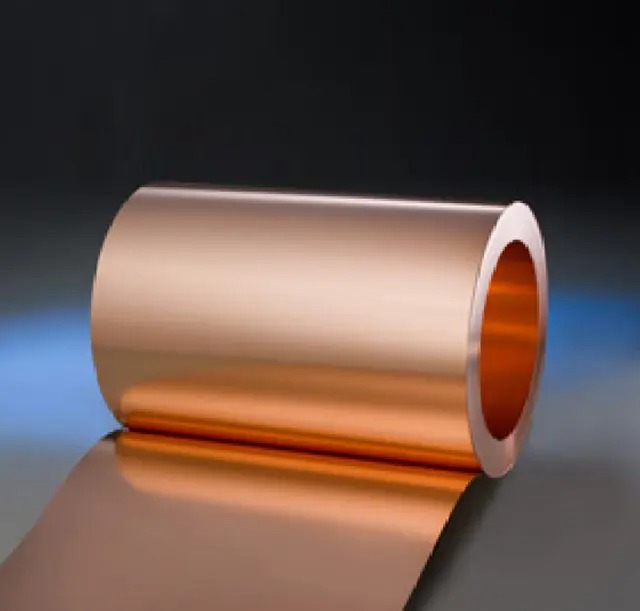
Before starting, gather all tools in advance to avoid interruptions during the process. A well-prepared setup helps maintain focus and improves efficiency once the soldering iron is heated. Each tool has a specific role, and using them correctly supports a clean and reliable result.
Tool / Material | Function | Why It Matters |
Soldering iron & stand | Provides controlled heat | Ensures safe and stable soldering |
Rosin-core solder | Forms the electrical connection | Creates strong and conductive joints |
Flux paste | Improves solder flow | Helps achieve cleaner, smoother bonding |
Wire stripper | Removes insulation | Prepares copper wire without damage |
Damp sponge | Cleans soldering tip | Maintains heat efficiency and precision |
Heat shrink tubing | Insulates finished joint | Protects and strengthens the connection |
Arrange your workspace before you begin. Keep tools within easy reach and place the soldering iron securely on its stand. A structured setup reduces mistakes and helps you work more smoothly and safely.
Preparation directly affects solder quality. Start by stripping the insulation carefully. Expose only the necessary length of copper wire. Too little exposure makes soldering difficult, while too much leaves unnecessary bare wire. Next, inspect the copper. It should look clean and undamaged. If the wire is stranded, keep the strands intact. Avoid cutting or fraying them. Lightly twist them only if needed to maintain shape.
Before soldering, slide heat shrink tubing onto one side of the wire. This step is often forgotten. Without it, you may need to redo the entire joint later.
Tip: Always prepare insulation and positioning before heating—this saves time and avoids rework.
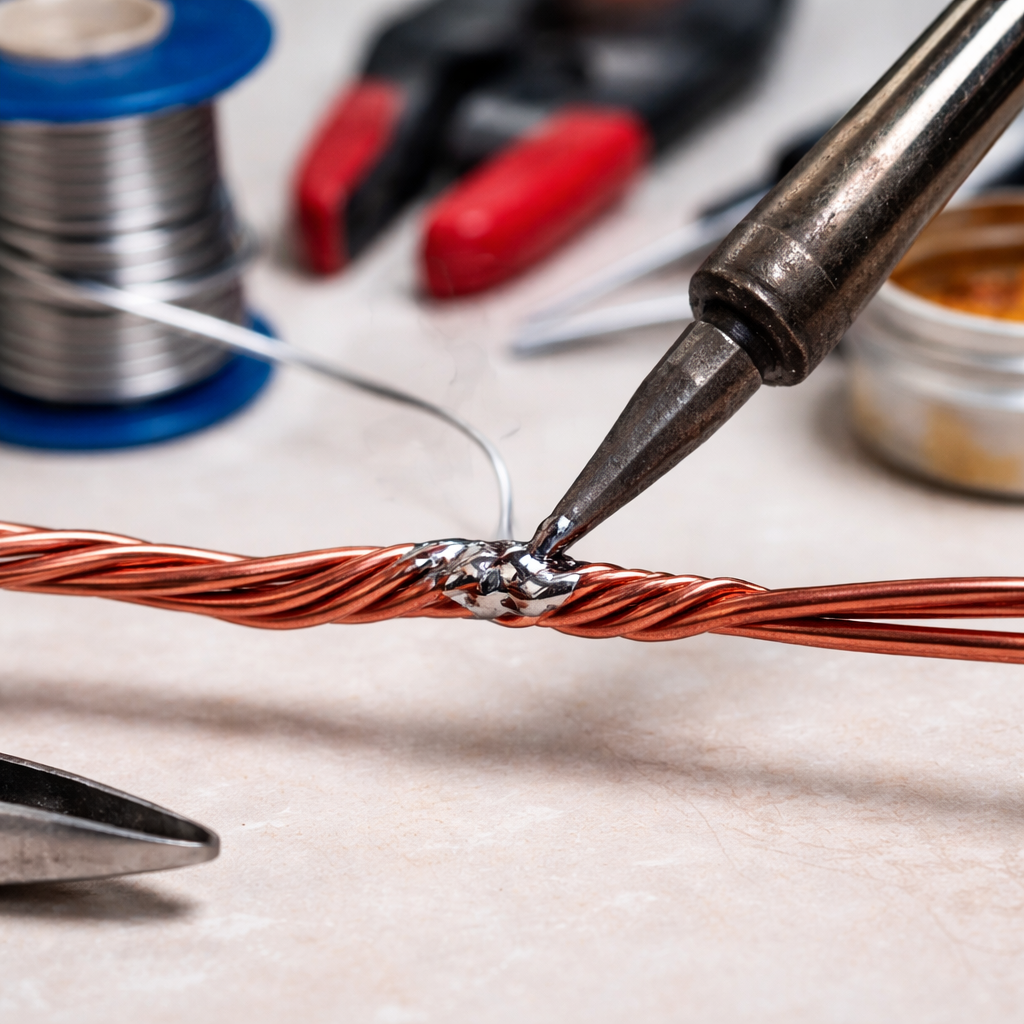
Heating is the most important part of soldering. Instead of melting solder directly on the iron, heat the copper wire joint itself. Place the iron where the wires meet and allow the metal to warm up. Once heated, apply solder to the joint—not the tip. The solder should melt and flow naturally into the connection. This creates a stronger bond.
Keep the iron steady. Do not overheat the wire. Excess heat can damage insulation and affect joint quality. Remove the iron once the solder has flowed evenly.
A strong joint shows clear visual signs. It appears smooth, bright, and evenly shaped. The solder should fully cover the connection without forming thick layers.
We also check stability after cooling. A proper joint remains firm when touched lightly. If it shifts or looks rough, it may need correction. These signs help us judge quality without special tools.
● Smooth surface indicates proper heat distribution
● Shiny finish shows correct bonding
● Compact shape reflects controlled solder usage
These simple checks help us maintain consistency across multiple joints.
After the joint cools, move the heat shrink tubing into place. Cover the exposed copper completely. Apply heat evenly until the tubing shrinks tightly around the wire.
This step protects the joint from moisture, contact, and mechanical stress. It also improves the appearance of the finished work.
Finally, organize the wire layout. A neat arrangement helps with inspection and future maintenance.
Crossing wires is the simplest method. One wire is placed over another, and solder is applied at the intersection. This method works well for quick or temporary fixes.
However, it provides limited mechanical strength. The wires may shift or become exposed. It is best used when speed matters more than durability.
Parallel joints align wires side by side. This increases contact area and allows solder to flow more evenly. The result is a cleaner and more stable connection.
This method is commonly used in repairs where both strength and appearance matter. It also fits well with heat shrink tubing, making insulation easier.
Wrapping wires before soldering adds mechanical strength. We twist or wrap them together so they hold firmly even before applying solder.
This method distributes stress more evenly across the joint. It works well in situations where wires may move or bend slightly.
● End-to-end wrapping provides strong alignment
● Side-by-side wrapping simplifies handling
● Combined structure supports long-term use
Stranded copper wire requires extra attention. Align the strands carefully and interweave them slightly. Do not twist them too tightly, as this can block solder flow.
Use flux to help solder penetrate the strands. This ensures even bonding across the entire joint.
Proper preparation improves both strength and appearance.
Flux plays a key role in soldering. It helps solder flow smoothly across the copper surface and improves bonding.
It also reduces oxidation, which can interfere with the connection. Even when using rosin-core solder, a small amount of additional flux can improve results.
Use it sparingly. Too much is unnecessary, but the right amount can make soldering much easier.
Temperature control determines how solder behaves. If heat is too low, solder will not flow correctly. If heat is too high, it may damage insulation or create uneven joints.
Balanced heat allows solder to move naturally into the connection. It improves both appearance and strength.
Temperature Condition | Effect on Solder | Result |
Too low | Poor flow | Weak joint |
Balanced | Smooth flow | Strong joint |
Too high | Overheating | Damaged insulation |
Note: If solder melts on the tip but not on the wire, the joint needs more heat—not more solder.
Overlap increases contact area between the wires. A longer overlap creates a stronger connection because the solder bonds across a wider surface. This allows both electrical flow and mechanical strength to improve at the same time.
Short overlaps often result in weak joints that may fail under slight stress. Adding just a few millimeters can significantly improve durability and stability. In practice, a slightly longer overlap gives better support without making the joint bulky or difficult to manage.
Movement during soldering can ruin a joint quickly. Even small shifts can create uneven surfaces or weak bonding points that affect long-term reliability. Stability is just as important as heat and solder control.
Use clips, clamps, or simple holders to keep wires in place. This improves precision and frees your hands for better control during heating. A stable setup leads to more consistent results and helps maintain a clean joint shape.
More solder does not mean a stronger joint. Excess solder creates bulky connections and can hide poor bonding underneath. It may also affect the appearance and make insulation more difficult later.
Use just enough solder to cover the joint evenly. The result should look smooth, compact, and well-formed. Consistent copper quality also plays a role. Materials from reliable suppliers like Target often allow more uniform solder flow, which supports cleaner and more professional results.
Soldering is often used in home repairs where small connections fail over time. It helps fix loose wires in toys, small appliances, and basic household devices. These situations usually require quick but reliable solutions.
These repairs also demand compact and clean joints. Space is often limited inside devices, so neat work becomes essential. A properly soldered copper wire joint not only restores function but also helps extend the life of the device. With careful handling, even simple repairs can achieve long-lasting results.
In electronics, precision plays a key role in performance. Soldering copper wire is widely used for circuit connections, prototypes, and custom builds. Each joint must be accurate to ensure proper electrical flow.
A clean joint improves both performance and appearance. It reduces resistance and helps maintain stable connections across components. Consistency becomes more important when working on multiple connections, especially in projects that require repeated soldering steps or detailed assembly work.
In many practical situations, choosing the right connection method makes a clear difference. Soldering is often preferred when both performance and appearance matter. It provides a controlled way to join copper wire while keeping the result compact and reliable.
Scenario | Why Soldering Works Well | Resulting Benefit |
Limited space applications | Creates a compact connection | Saves space and improves layout |
Precision-required environments | Allows controlled and accurate work | Enhances connection reliability |
Clean finish requirements | Produces smooth and neat joints | Improves appearance and inspection |
Electrical connection stability | Ensures consistent conductivity | Supports long-term performance |
Compared to many mechanical methods, soldering offers a more refined and stable solution. It helps maintain both structural integrity and a clean visual result in various copper wire applications.
Safe soldering starts with simple habits and a well-organized setup. Paying attention to protection, workspace conditions, and cleanup steps helps reduce risks and improves overall results. When these practices become routine, both safety and efficiency improve during copper wire work.
Safety Area | Key Practice | Why It Matters |
Personal protection | Wear eye protection and avoid touching hot parts | Prevents burns and eye injuries |
Work surface | Use a heat-resistant and stable area | Reduces fire risk and accidents |
Tool handling | Handle soldering iron carefully | Maintains control and avoids contact |
Workspace setup | Keep area ventilated and organized | Improves safety and working efficiency |
Cable and material arrangement | Avoid clutter and tangled cords | Prevents interference and mistakes |
Post-work cleanup | Clean tip with damp sponge after use | Maintains heat transfer and performance |
Storage | Store tools properly after cooling | Extends tool life and ensures safety |
A clean and controlled environment supports better soldering results. Regular tip cleaning, careful handling, and organized storage help maintain both tool performance and work quality over time.
Soldering Copper Wire becomes simple once you follow the right process. Careful preparation, steady heating, and proper finishing all work together to form clean and strong connections. When each step is handled with attention, the joint stays reliable and looks neat in both repairs and new builds. With regular practice, we improve speed and consistency over time. Using the right tools and stable techniques helps reduce errors and creates better results in daily work. High-quality copper materials also play an important role in achieving smooth solder flow and durable performance.
Hangzhou Target Import & Export Co., Ltd. provides reliable copper products designed for stability and efficiency. Their materials support consistent soldering results, making them suitable for various applications and helping users achieve long-lasting connections.
A: The best way to solder Copper Wire is to strip it cleanly, heat the joint instead of the solder, and let the solder flow naturally into the connection. This creates a smoother and stronger bond.
A: Flux helps Copper Wire accept solder more evenly. It improves flow, reduces surface oxidation, and helps create a cleaner joint.
A: A good Copper Wire joint should look smooth, bright, and even. It should also stay firm after cooling and show no loose or rough areas.
A: You can, but stranded Copper Wire needs more care. The strands should be aligned neatly, and they should not be twisted too tightly, or solder may not flow through them well.
A: This usually happens because the wire is dirty, the joint is not hot enough, or the tip is not clean. Using flux and improving heat transfer often solves the problem.
A: Yes. Twisting may hold wires together for a short time, but soldering creates a cleaner and more reliable electrical connection when done correctly.


