
English 
T: +86-571-8663-6649
E: hzbjys@hzbjys.com
E: hzbjys@hzbjys.com
7/F, 1st Building Of ZhongHao WangJiang International Center, NO.332 East WangJiang Road, HangZhou, ZheJiang, China.
Views: 0 Author: Site Editor Publish Time: 2026-05-14 Origin: Site


Procurement engineers face a relentless mandate. You must reduce raw material expenses without compromising electrical performance. Replacing heavy copper conductors serves as the most effective lever you can pull to achieve massive financial savings. The current market reality is straightforward yet technically demanding. Aluminum offers a massive one-third weight advantage over pure copper. This physical trait yields significantly more functional length per pound. However, you cannot simply swap these metals blindly on the assembly line.
Achieving long-term component reliability requires intense scrutiny. You must mandate strict adherence to base purity standards. You also need to verify proper insulation class ratings and demand precise manufacturing tolerances from your supply chain. Navigating these engineering shifts requires a highly strategic approach to global sourcing. Buying cheap materials often leads to catastrophic field failures.
This technical guide provides a complete framework for analyzing the global market. We explore how to evaluate pricing structures and assess distinct alloy grades. You will also learn how to vet factory-direct suppliers properly. We designed this roadmap specifically for high-stakes OEM and ODM manufacturing projects.
Cost Efficiency: Aluminum's low density yields roughly three times the footage per pound compared to copper, fundamentally altering unit-cost calculations for high-volume winding projects.
Material Selection: High-purity Aluminum Wire 1xxx Series (minimum 99.7% purity) is the industry baseline for conductivity, while specific use-cases may require the mechanical resilience of 3xxx Series Ductile Aluminum Wire for Electrical Use.
Thermal Management: Because aluminum dissipates heat differently than copper, upgrading the insulation resin (e.g., to Class H or Class C) is a mandatory risk-mitigation strategy.
Supplier Vetting: Reliable procurement requires verifying tight diameter tolerances (1–3%) and mandatory compliance certifications (UL, RoHS, ISO9001).
When you analyze a wholesale aluminum wire price, you must first understand base metal indices. Wholesale factory quotes always peg directly to raw commodity markets. Suppliers watch the London Metal Exchange (LME) daily. They provide commercial quotes strictly per kilogram or metric ton. They rarely quote materials per meter. This weight-based model dictates how you calculate your manufacturing return on investment.
The true economic advantage of aluminum lies entirely in its length-to-weight ratio. Aluminum possesses roughly one-third the density of pure copper. Think about the basic physics behind this. When you buy a one-kilogram spool of aluminum, you get nearly triple the functional winding length of a similar copper spool. This massive yield difference drastically reduces your cost-per-unit. Transformer and motor manufacturers rely on this exact ratio to maintain their profit margins.
Several distinct variables add to your final landed cost. A raw per-kilo baseline quote never tells the full story. You must account for these crucial pricing factors:
Insulation Resin Tier: High-performance coatings carry a distinct premium. Polyimide resins cost significantly more upfront than basic Acetal. However, they prevent costly meltdowns in demanding environments.
Processing Services: Value-added factory capabilities save considerable money downstream. Services like custom decoiling, precise cutting, bending, and pre-tinning increase the initial supplier invoice. They simultaneously streamline your final assembly lines.
Volume and MOQ: Factory-direct OEM orders unlock the best wholesale discounts. Manufacturers reward large bulk purchases. However, these factories usually demand minimum order quantities (MOQs) affecting your immediate cash flow.
Procurement Best Practice: Never compare copper and aluminum quotes strictly on a per-kilogram basis. Procurement teams frequently make this mistake. Always convert your supplier quotes to a strict cost-per-meter basis. This conversion reveals the actual financial savings for your specific bill of materials.
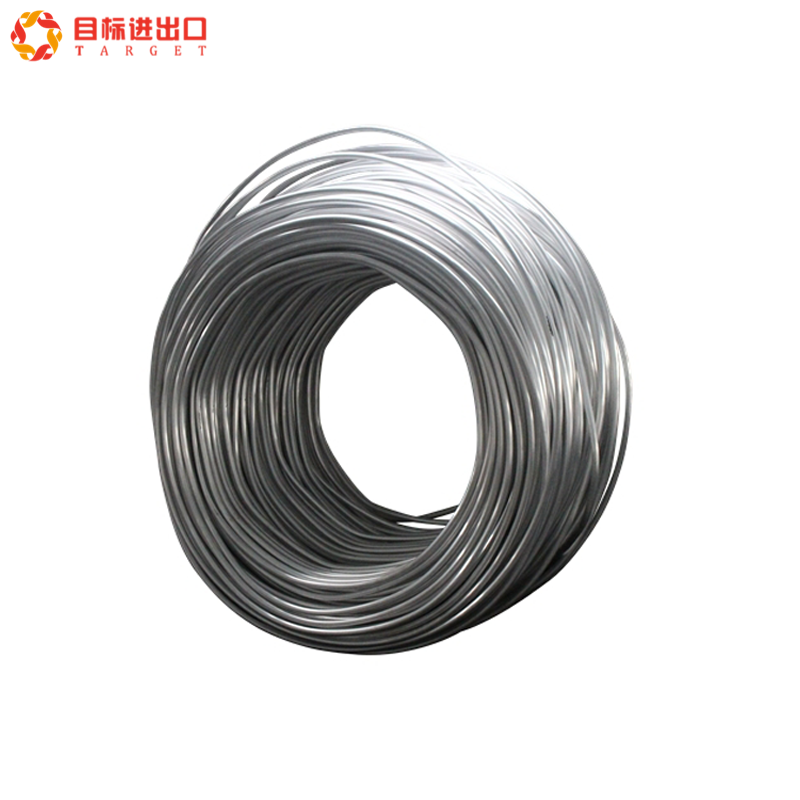
Choosing the correct base alloy determines your electrical and mechanical success. The conductor market primarily splits between pure electrical grades and specialized ductile alloy blends. You must match the metallurgy directly to your final application.
The industry baseline for maximum high conductivity is Aluminum Wire 1xxx Series. Engineers focus specifically on the 1350 and 1370 alloy grades. A minimum aluminum purity of 99.7% remains completely non-negotiable here. Trace elements make up the remaining 0.3%. This extreme purity minimizes direct current (DC) resistance in standard electrical winding. If a supplier substitutes lower purity stock, you risk excess heat generation. Your finished coils will suffer from poor overall conductivity.
Some applications demand rugged mechanical resilience over absolute peak conductivity. This scenario is where 3xxx Series Ductile Aluminum Wire for Electrical Use excels. We frame this specific alloy as the definitive solution for high-stress winding environments. Manufacturers blend manganese into the aluminum to alter its physical properties. It offers elevated tensile strength. It provides superior flexibility. It delivers excellent vibration resistance. Automotive alternators and complex micro-motors rely heavily on the 3xxx series. It handles aggressive automated winding speeds without snapping. Crucially, it accomplishes this durability without severe drops in electrical conductivity.
Many buyers also explore Copper Clad Aluminum (CCA) as a temporary bridge solution. CCA combines the lighter physical weight of an inner aluminum core with the direct solderability of a copper outer skin. It leverages the high-frequency skin-effect conductivity of pure copper. CCA costs more than standard pure aluminum. However, it solves immediate soldering challenges on legacy assembly lines.
Conductor Alloy Type | Primary Engineering Advantage | Ideal Application Scenarios | Required Composition Rules |
|---|---|---|---|
1xxx Series (1350/1370) | Maximum electrical conductivity | Standard transformers, large industrial motors | ≥ 99.7% Pure Aluminum minimum |
3xxx Series | High ductility & intense vibration resistance | Automotive alternators, power tools, micro-motors | Aluminum heavily alloyed with Manganese |
Copper Clad Aluminum (CCA) | Direct solderability & high-frequency skin-effect | Audio equipment, high-frequency coil windings | Aluminum core bonded to Copper exterior |
Aluminum dissipates heat much differently than pure copper. You must objectively acknowledge this fundamental heat dissipation challenge. Under identical current loads, aluminum conductors will inherently run hotter. Failsafe thermal management relies entirely on your choice of enameled resin. You cannot cut corners on insulation.
Because aluminum runs hotter, upgrading your insulation resin acts as a mandatory risk-mitigation strategy. Choosing the correct enamel prevents high-voltage corona breakdown. It stops long-term chemical corrosion inside the motor casing. You must map your operational thermal requirements precisely.
Use this technical decision matrix to evaluate your necessary resin upgrades:
Class E (120°C) / Class B (130°C): These tiers utilize basic Acetal or standard Polyester liquid coatings. They suit low-demand consumer electronics. Heat buildup remains minimal in these simple daily use scenarios.
Class F (155°C): Polyurethane serves as the standard go-to resin for general-purpose applications. It offers a highly reliable balance of thermal protection and manufacturing cost.
Class H (180°C - 200°C): Polyesterimide dominates this high-heat tier. It serves as the absolute gold standard for demanding industrial motors. Dry-type transformers operate safely using this robust class.
Class C (220°C+): Polyimide resins protect against the most extreme environments. Automotive designers heavily mandate this specific resin. New Energy Vehicle (NEV) traction motors require Class C to survive intense operational heat.
Common Mistake: Engineers often copy their copper winding specs directly over to their new aluminum designs. They fail to adjust the thermal class. Always over-spec your thermal class by at least one tier when transitioning to aluminum. If your old copper design safely used Class F, upgrade your new aluminum design to Class H. This simple adjustment provides an essential safety margin.
Your automated winding machinery dictates the exact physical profile you need. Buyers typically choose between standard round enameled configurations and flat rectangular profiles. Round wire remains highly standardized globally. You can easily source diameters ranging from 0.2mm up to 10.0mm. This roughly equals 1 AWG down to 32 AWG. Conversely, rectangular or square wire maximizes the crucial slot fill-factor. Heavy-duty transformers demand these flat geometric shapes. Flat shapes pack more conductive metal tightly into limited spaces. They eliminate the wasted air gaps found between round wires.
Tolerance acts as a direct proxy for overall factory quality. Top-tier global manufacturers strictly maintain diameter and enamel-thickness tolerances between 1% and 3%. High variance introduces severe production risks. Inconsistent outer dimensions cause automated winding machines to jam frequently. Worse, uneven enamel thickness creates inconsistent electrical resistance across your production batches.
Aluminum is inherently much softer than copper. Therefore, packaging integrity matters immensely during international container shipping. You must demand specific, rigid packaging standards inside your B2B supplier quotes.
Inner Environmental Protection: The raw spool requires tight plastic shrink-wrapping. Factories often include industrial desiccants. This blocks marine moisture and prevents surface oxidation.
Outer Physical Protection: The factory must utilize reinforced wooden crates or heavy corrugated cardboard systems. This dual-layer method prevents harsh transportation abrasion. Even minor rubbing easily scrapes away thin Class F or Class H enamel coatings.
Rigid Palletization: Spools must sit securely strapped onto export-grade pallets. This prevents unpredictable rolling and dangerous impact damage during turbulent ocean transit.
Sourcing reliable raw materials requires strict supplier auditing protocols. You must distinguish between genuine factory-direct manufacturers and standard trading companies. True OEM manufacturers actually own the heavy machinery. They operate the raw wire drawing lines. They manage the complex custom enameling ovens. Brokers merely buy finished spools and add their own arbitrary markup. Always ask suppliers for real-time videos of their wire drawing lines. Alternatively, schedule a live video tour of their active production floor.
A credible supplier of Aluminum Wire must provide verifiable compliance documentation immediately upon request. You should demand definitive proof of UL certification. This guarantees baseline electrical safety standards. Require strict RoHS compliance documentation. RoHS ensures the enamel coating contains no restricted hazardous substances like lead or cadmium. Furthermore, verify their ISO 9001 certification deeply. ISO 9001 proves they actually utilize consistent quality management systems across multiple factory shifts.
Never commit to large bulk tonnage without rigorous pilot testing. Instruct your procurement team to request customized engineering samples first. Implement these mandatory sample testing protocols in your own lab:
High-Voltage Breakdown Tests: Apply heavy voltage to check for microscopic pinhole faults hidden in the thin enamel layer.
Mechanical Adhesion Testing: Bend the sample tightly around a mandrel. Ensure the cured resin does not flake, peel, or crack under intense physical stress.
Elongation Checks: Measure the precise elongation percentage right before the metal snaps. This verifies the alloy's structural integrity and validates the annealing process.
Your procurement roadmap requires a highly calculated engineering mindset. You must assess the true cost-per-meter rather than fixating blindly on the raw per-kilo price. Select your conductor material carefully. Use pure 1xxx electrical grades for maximum conductivity. Switch to specialized 3xxx ductile alloys when your design demands mechanical flexibility. Always over-spec your thermal insulation class intentionally. Doing so counters excess heat buildup and ensures long-term product longevity.
Take immediate action by requesting highly itemized quotes from your shortlisted factory suppliers. Demand quotes that explicitly break down the bare raw material cost, the applied enamel premium, and the specialized logistics packaging. This total transparency allows you to make an accurate apples-to-apples comparison. Rigorous upfront factory vetting guarantees you capture the immense weight and cost advantages of aluminum. You will achieve these financial goals without ever sacrificing your final product's reliability.
A: Soldering aluminum requires specialized active fluxes to penetrate the tough surface oxidation layer. You cannot use standard rosin core flux. You also need dedicated aluminum solder pots operating at specific high temperatures. Alternatively, many modern manufacturers avoid chemical soldering entirely. They utilize ultrasonic welding machines. This method bonds the bare metals cleanly through high-frequency mechanical vibrations.
A: The global industry standard dictates weight-based pricing because raw aluminum trades exclusively as a bulk commodity on the London Metal Exchange (LME). Since your Bill of Materials (BOM) strictly requires continuous lengths, advise your procurement team to request a standard weight-to-length conversion table. The manufacturer can provide exact yield ratios for your specific AWG or millimeter diameter.
A: If stored properly in a climate-controlled environment away from direct UV light and high humidity, the resin maintains its dielectric strength for several years. However, we strongly recommend implementing just-in-time (JIT) procurement. Long-term warehouse storage drastically increases the risk of moisture ingress. It also causes severe oxidation on the exposed bare wire ends, which severely complicates downstream assembly.


