
English 
T: +86-571-8663-6649
E: hzbjys@hzbjys.com
E: hzbjys@hzbjys.com
7/F, 1st Building Of ZhongHao WangJiang International Center, NO.332 East WangJiang Road, HangZhou, ZheJiang, China.
Views: 0 Author: Site Editor Publish Time: 2026-09-23 Origin: Site


Specifying the wrong aluminum grade carries massive risks on the production floor and out in the field. Material selection directly dictates manufacturing success. Choose incorrectly, and you face catastrophic field failures, excessive tooling wear, or wasted material budgets. Engineers and procurement teams constantly navigate this exact dilemma. They must balance structural integrity against formability and cost. This challenge often narrows down to comparing 5xxx and 3xxx series non-heat-treatable alloys. Deciding between these two requires a strict technical evaluation. You must analyze yield strength requirements and environmental exposure. Marine environments demand entirely different metallurgical properties than standard atmospheric exposure. Furthermore, you must account for specific fabrication processes. Bending, drawing, and welding capabilities dictate which alloy will survive the production floor without cracking or failing. This evaluation provides the technical framework to make the right material choice.
Strength vs. Formability: 5052 aluminum offers significantly higher yield strength and structural rigidity, whereas 3003 excels in extreme formability and deep drawing applications.
Corrosion Resistance: Both offer excellent general corrosion resistance, but 5052 is the definitive choice for saltwater and harsh marine environments due to its magnesium alloying.
Fabrication Realities: 3003 accommodates tighter bend radii without cracking, while 5052 requires larger bend radii and accounts for greater springback during forming.
Cost Efficiency: 3003 is generally more cost-effective for non-structural components, making it ideal for high-volume production where structural load is minimal.
Material selection begins with defining the exact performance parameters of the final component. Guesswork leads to over-engineering or premature part failure. You must establish clear success criteria based on mechanical loads, operating environments, and your specific shop floor capabilities. A disciplined approach to these variables prevents costly rework and ensures the final assembly performs as intended.
You must calculate both static and dynamic loads to determine baseline yield strength requirements. Static loads involve the constant weight the component must support. Dynamic loads include vibrations, impacts, and fluctuating stresses over time. If a part experiences heavy vibration or structural stress, the material must resist deformation. Calculating these loads dictates the minimum yield strength acceptable for your design. Failing to accurately map these stresses results in bent panels, sheared brackets, or complete structural collapse. When evaluating load paths, consider how the metal behaves under continuous strain. A bracket holding a heavy pump motor deals with constant vibration. If the yield strength is too low, the mounting holes will elongate over time, leading to a loose mount and eventual mechanical failure. You must also account for shear stress if the component relies on bolted or riveted connections.
The product's lifecycle environment heavily influences alloy selection. You must evaluate where the part will operate. Indoor applications face minimal corrosive threats. Outdoor applications deal with rain, UV exposure, and temperature fluctuations. Marine environments introduce aggressive chloride ions from saltwater, which rapidly attack certain metals. Chemical exposure in industrial settings also requires specific corrosion resistance profiles. Matching the alloy's natural oxide layer capabilities to the environment prevents premature degradation. Consider a control cabinet installed on an offshore oil rig. The constant salt spray will destroy the wrong alloy within months. Conversely, an air conditioning duct inside a climate-controlled office building faces almost zero corrosive threat, allowing for a broader range of material choices. You must also consider galvanic corrosion. If the aluminum component bolts directly to a steel frame, you need an alloy robust enough to handle the environmental moisture that acts as an electrolyte between the dissimilar metals.
Aligning material choice with existing shop floor capabilities prevents costly production bottlenecks. You must evaluate your press brake tonnage. Higher strength alloys require more force to bend. Assess your tooling geometries, specifically the punch and die radii available. Tight tooling cannot form high-strength alloys without causing fractures. Additionally, review your welding equipment and operator expertise. Some alloys require specific filler metals and precise heat control to prevent hot cracking during assembly.
Consider these specific shop floor factors before finalizing a material specification:
Press Brake Capacity: Ensure your machine has the required tonnage per foot to bend the specified gauge and alloy without stalling the hydraulics.
Tooling Inventory: Verify you have the correct punch radii to accommodate the minimum bend radius of the chosen material to prevent outer-grain fracturing.
Welding Setup: Confirm your power sources can handle the required amperage and that you stock the correct filler wires for the specific alloy chemistry.
Cutting Methods: Evaluate whether your laser or waterjet parameters need adjustment for different alloy compositions, as magnesium-heavy alloys cut differently than commercially pure grades.
Handling Equipment: Assess if your vacuum lifters or forklifts can handle the weight of heavy-gauge structural plates versus lighter coil stock.
Non-heat-treatable alloys have a definitive performance ceiling. You must recognize when an application exceeds the structural capacities of the 5xxx and 3xxx series. If your load calculations demand higher yield strengths than these alloys can provide in their strain-hardened states, you must pivot. Engineers facing these boundaries typically escalate to heat-treatable alternatives like 6061 aluminum. Recognizing these limits early prevents forcing an inadequate material into a high-stress application. Pushing a non-heat-treatable alloy past its mechanical limits guarantees field failure.
This alloy stands as one of the most versatile high-strength options in the non-heat-treatable category. It provides exceptional durability and environmental resistance, making it a staple in demanding industrial applications. When you need a material that won't quit under pressure, 5052 aluminum is often the first choice on the drawing board.
The primary alloying elements define its performance. It contains approximately 2.5% Magnesium and 0.25% Chromium. The magnesium addition significantly increases the metal's strength through solid solution strengthening. It pins dislocations within the crystal lattice, making the metal harder to deform under mechanical stress. The chromium enhances stress-corrosion cracking resistance. Together, these elements create a microstructure that offers exceptional saltwater corrosion resistance, far surpassing standard commercial aluminum grades. This specific chemical makeup is what gives the metal its distinct performance characteristics in the field, allowing it to survive environments that would destroy lesser alloys.
This material boasts an impressive mechanical profile. Its typical yield strength ranges from approximately 75 MPa in the annealed state up to 280 MPa in fully strain-hardened tempers like H38. This places it among the highest-strength non-heat-treatable alloys available. It offers excellent fatigue strength, meaning it withstands repeated cyclical loading without failing. This high strength-to-weight ratio makes it highly desirable for weight-sensitive structural designs. When you compare it to milder alloys, the difference in rigidity is immediately apparent the moment you handle a sheet of it on the shop floor. It does not sag or flex easily under its own weight.
Fabricators utilize this material across multiple heavy-duty industries. You will frequently see a 5052 aluminum sheet specified for marine chassis, boat hulls, and offshore equipment enclosures. The transportation sector relies on it for fuel tanks, truck trailers, and heavy-duty hardware. It also serves as a premium choice for structural automotive body panels in high-end restoration projects where both strength and corrosion resistance are mandatory. Walk into any custom boat building shop, and you will see racks of this specific alloy waiting to be cut and welded into structural bulkheads.
Despite its strengths, this alloy presents specific fabrication challenges. It exhibits increased difficulty in machining compared to free-machining alloys. The material tends to be gummy, requiring sharp tooling, high speeds, and generous lubrication to prevent chip packing. Furthermore, it has a higher susceptibility to cracking on tight bend radii. Fabricators must use larger punch radii and account for significant springback when forming this metal on a press brake. If an operator tries to force a sharp 90-degree bend using standard air bending tooling, the outer radius will almost certainly show signs of micro-fracturing. You must respect the material's mechanical limits during fabrication.
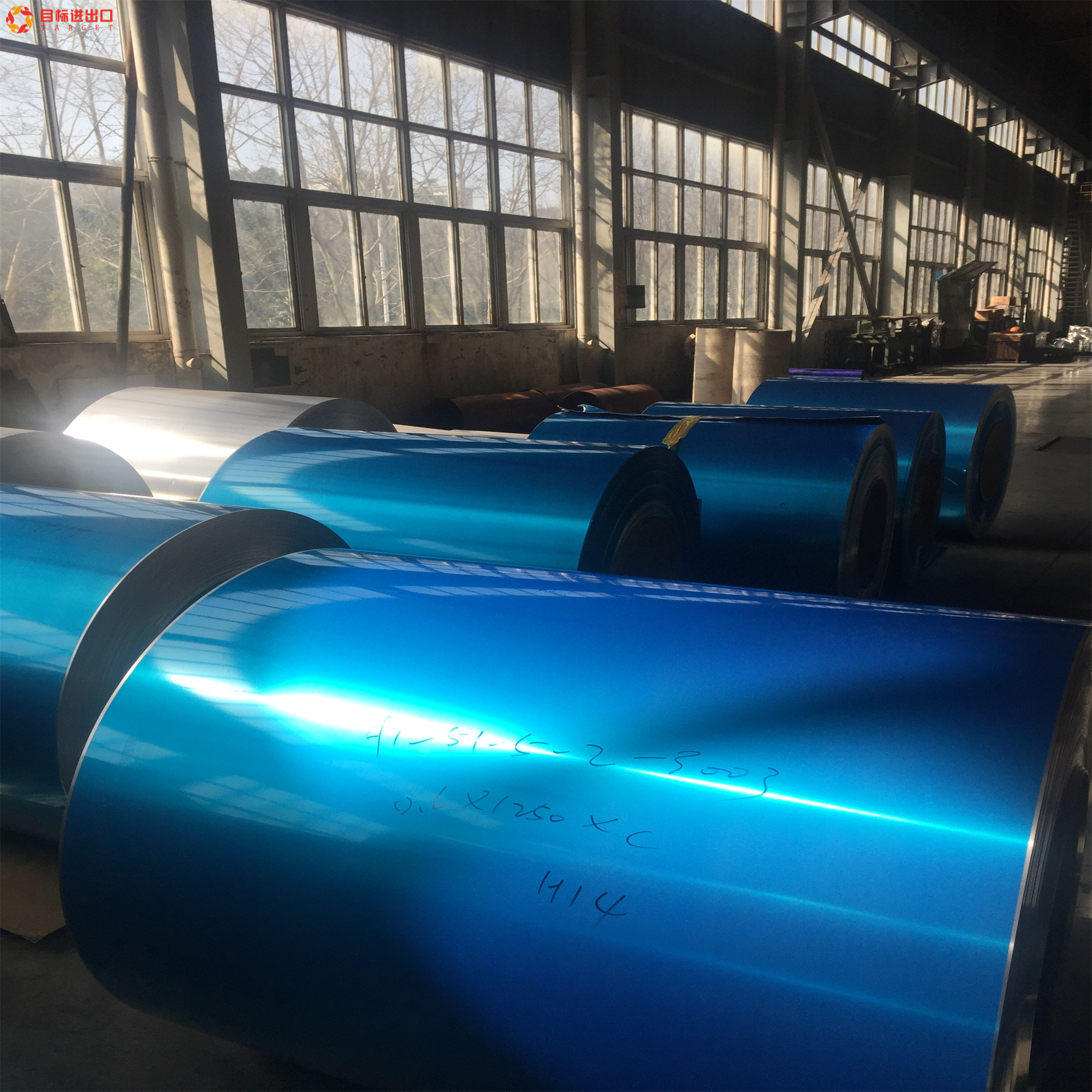
When extreme formability and workability take precedence over high structural strength, this alloy becomes the industry standard. It offers a perfect balance of moderate strength and exceptional fabrication characteristics, allowing shops to produce complex geometries rapidly.
Manganese acts as the primary alloying element, comprising approximately 1.2% of the material. This single addition fundamentally changes the metal's properties compared to commercially pure 1100 series aluminum. The manganese increases the baseline strength by about 20% without sacrificing the metal's inherent ductility. This precise chemical balance maintains extreme workability while providing enough rigidity for self-supporting components. It is a simple but highly effective metallurgical adjustment that controls the grain structure during the rolling process, ensuring consistent mechanical properties across large production batches.
The mechanical profile leans heavily toward ductility. Its yield strength typically ranges from roughly 40 MPa in the annealed (O) temper up to 210 MPa in highly strain-hardened states. While it cannot match the load-bearing capacity of the 5xxx series, it exhibits superior elongation characteristics. This high elongation percentage allows the metal to stretch and flow under pressure without tearing, making it ideal for severe forming operations. You can push this metal through complex die geometries that would tear stronger alloys to shreds. It yields predictably and consistently under the press.
This alloy dominates high-volume manufacturing sectors. Manufacturers frequently utilize a 3003 aluminum sheet for HVAC components, ductwork, and heat exchanger fins. The food service industry relies on it for cooking utensils, food handling equipment, and storage cabinets. For continuous production lines, a 3003 aluminum coil feeds stamping presses to create spun hollowware, deep-drawn housings, and decorative architectural trim. It is the undisputed workhorse of the sheet metal forming industry, providing reliable results shift after shift.
The primary limitation is its lack of structural rigidity. It remains unsuitable for high-stress structural applications or load-bearing framework. Under heavy mechanical stress, the material will yield and deform permanently. Additionally, it offers inferior performance in highly corrosive marine environments compared to magnesium-alloyed metals. Prolonged exposure to saltwater will cause pitting and rapid surface degradation. You would never specify this material for a boat hull or an offshore crane enclosure. It belongs in environments where formability outweighs the need for brute strength.
Comparing these two materials requires a detailed look at how they perform across specific engineering and fabrication metrics. Understanding these differences prevents costly specification errors on the shop floor and ensures the final product meets all operational requirements.
The strength disparity between these two alloys is significant. The magnesium-alloyed metal handles substantially higher mechanical stress and impact loads. When designing a panel that must resist wind loads or physical impacts, the higher yield strength allows engineers to specify a thinner gauge material, saving weight. Conversely, using the manganese-alloyed metal for the same panel would require a much thicker gauge to achieve the same structural rigidity.
Temper variations drastically affect load-bearing capabilities. An H32 temper provides a good balance of strength and formability for structural parts. However, even in its hardest temper, the 3xxx series alloy cannot match the baseline strength of the 5xxx series in a comparable state. Engineers must calculate the exact stress requirements before defaulting to the softer, more workable option. Overestimating the strength of a highly formable alloy leads to bent frames and collapsed enclosures in the field.
Bending characteristics dictate shop floor efficiency. The manganese-alloyed metal accommodates extremely tight bends. In annealed states, it can often be bent flat upon itself without fracturing. The magnesium-alloyed metal requires a much larger minimum bend radius. Forcing it into a tight 90-degree corner with sharp tooling will cause micro-fracturing along the outer grain of the bend, compromising the part's integrity. When bending the magnesium-alloyed metal, the neutral axis shifts differently than in softer metals. Operators must adjust their K-factor calculations to ensure accurate flat pattern layouts. Failing to account for this shift results in parts that are out of tolerance after forming.
Deep drawing heavily favors the 3xxx series. Its high elongation allows it to flow into complex die cavities without tearing. It remains the industry standard for spun parts and deep-drawn enclosures. Regarding machining, both materials can be gummy. However, the harder 5xxx series holds up slightly better under cutting tools. When milling the 3xxx series, the material tends to build up on the cutting edge of the endmill, a condition known as built-up edge. This ruins the surface finish and can snap small diameter tools. Operators must use highly polished, uncoated carbide tooling with high rake angles to shear the metal cleanly.
Atmospheric corrosion resistance is excellent for both materials. In standard outdoor environments, rain, and humidity, both alloys form a stable, protective aluminum oxide layer that prevents further degradation. They perform exceptionally well for architectural panels, roofing, and standard vehicle trim.
Marine performance reveals a massive divergence. The magnesium content in the 5xxx series actively prevents the rapid degradation and pitting caused by chloride ions in saltwater. It thrives in heavy marine exposure. The 3xxx series lacks this specific chemical defense. If deployed in a marine environment without heavy protective coatings, it will suffer from rapid pitting corrosion and eventual structural failure. You must match the alloy chemistry to the specific environmental threat.
Thermal management applications require specific material properties. The manganese-alloyed metal offers excellent thermal conductivity. This characteristic makes it the preferred choice for heat exchangers, radiator fins, and HVAC ducting. It transfers heat rapidly and efficiently across its surface area. The magnesium-alloyed metal has lower thermal conductivity. While it still dissipates heat better than steel, it cannot match the efficiency of the 3xxx series in dedicated thermal management systems. Engineers designing cooling fins or heat sinks must prioritize the higher conductivity option to ensure optimal system performance.
Both alloys are highly weldable using TIG and MIG processes, but they require different approaches. To prevent hot cracking, operators must select the correct filler metal. Welding the 5xxx series typically requires a 5356 filler rod, which matches the magnesium content and provides excellent joint strength. Welding the 3xxx series usually utilizes a 4043 filler rod, which offers great fluidity and minimizes crack sensitivity. Both alloys require 100% Argon shielding gas for standard TIG welding. However, for thicker plates of the 5xxx series, operators might switch to an Argon/Helium mix to achieve deeper penetration and a hotter puddle.
Anodizing outcomes also differ. Both accept anodized coatings well, providing enhanced surface protection. However, the aesthetic results vary. The 5xxx series can sometimes display a slight yellowish or dark tint during clear anodizing due to its alloying elements. The 3xxx series generally provides a more uniform, clearer finish when anodized, making it preferable for highly visible decorative components.
Technical Attribute | 5052 Aluminum | 3003 Aluminum |
|---|---|---|
Primary Alloying Element | Magnesium (approx. 2.5%) | Manganese (approx. 1.2%) |
Typical Yield Strength (H32/H14) | 193 MPa | 145 MPa |
Minimum Bend Radius (1/8" thick) | 1.5t to 2.5t | 0t to 1t |
Marine Corrosion Resistance | Exceptional | Poor |
Deep Drawing Capabilities | Limited | Superior |
Thermal Conductivity | Moderate | High |
Recommended Filler Metal | 5356 | 4043 |
Procurement teams must evaluate material costs alongside manufacturing efficiency. Baseline cost differences exist due to the complexity of the alloying and rolling processes. The 3xxx series is typically less expensive per pound. Its simpler chemical composition and easier rolling characteristics make it highly economical for large production runs.
Format availability impacts supply chain scalability. Heavy-gauge plates for structural applications are readily available in the 5xxx series, supporting heavy industry requirements. Conversely, high-volume manufacturing relies heavily on continuous coil formats. Procuring massive runs of the 3xxx series in coil form allows stampers to run progressive dies continuously, maximizing throughput and minimizing material handling time. You must match the material format to your specific production machinery.
Material utilization and scrap rates heavily influence final production costs. Specifying a cheaper, highly formable metal for a part that ultimately fails under load results in massive replacement costs and reputational damage. Similarly, over-specifying a high-strength marine-grade alloy for a simple indoor bracket wastes capital and increases tooling wear. You must align the material's cost directly with its required performance value. Efficient material selection minimizes scrap and maximizes the lifespan of your press brake tooling.
Introducing a new material into the production workflow carries inherent risks. Anticipating these challenges and implementing strict mitigation strategies ensures smooth fabrication and reliable final products.
Operators accustomed to softer metals often crack this higher-strength alloy during press brake operations. The material resists deformation and will fracture if forced over a sharp die. Mitigate this risk by strictly adhering to minimum bend radius charts specific to the material's temper. Furthermore, always orient critical bends perpendicular to the material's rolling grain direction. Bending parallel to the grain significantly increases the likelihood of micro-fracturing. Train your operators to identify grain direction before making the first bend.
Using a highly ductile material in a load-bearing application guarantees eventual failure. The metal will yield, stretch, and deform under continuous stress. Mitigate this risk by conducting rigorous Finite Element Analysis prior to specification. If the software indicates stresses approaching the material's yield point, you must upgrade to a stronger alloy or redesign the component with reinforcing geometries like ribs or flanges. Never rely on a highly formable alloy to support critical structural loads.
These two alloys look visually identical. An accidental mix-up on the shop floor can lead to disastrous forming failures or compromised field performance. Mitigate this by requiring strict Material Test Report tracking from receiving through fabrication. For unmarked drop stock, implement practical shop-floor identification methods. A scrap bend test is highly effective: the manganese alloy bends flat easily, while the magnesium alloy heavily resists and may crack. Chemical spot testing also provides definitive identification before a part hits the welding station.
Selecting the right aluminum grade dictates the success of your manufacturing process and the longevity of your product. The 5xxx series stands as the definitive choice for high strength, structural integrity, and harsh marine environments. Conversely, the 3xxx series remains the optimal choice for complex forming, deep drawing, and cost-sensitive non-structural applications.
Use this rapid decision matrix for immediate shortlisting: If the part requires a tight 90-degree bend, deep drawing, and faces no structural load, specify the 3xxx series. If the component faces saltwater exposure, requires high rigidity, or supports dynamic loads, specify the 5xxx series.
Take the following actions to finalize your material selection:
Acquire physical material samples of both alloys in your target thickness and temper to run test bends.
Conduct prototype forming tests on your actual shop floor equipment to verify tooling compatibility and springback.
Review Material Test Reports from your suppliers to confirm exact chemical compositions and mechanical properties.
Consult with a tooling engineer to calculate precise springback allowances and minimum bend radii for your specific part geometries.
A: Yes, you can weld these two dissimilar alloys together. The most common and recommended filler metal for this specific joint is 4043. It provides excellent fluidity, minimizes the risk of hot cracking, and yields a joint with adequate strength for most non-critical structural applications. Ensure both surfaces are thoroughly cleaned of oxides with a dedicated stainless steel wire brush before welding.
A: Yes, it is significantly harder to bend. It possesses a higher yield strength and greater structural rigidity. Fabricators must use larger punch and die radii to prevent the material from cracking along the bend line. It also exhibits more springback, requiring operators to over-bend the material slightly to achieve the desired final angle.
A: 5052 is vastly superior for marine applications. Its magnesium alloying provides exceptional resistance to the corrosive effects of saltwater and chloride ions. 3003 lacks this specific chemical resistance and will suffer from rapid pitting and degradation if exposed to harsh marine environments without heavy protective coatings.
A: Aluminum does not rust because it contains no iron. However, it does corrode. 3003 forms a natural, transparent aluminum oxide layer that protects it from standard atmospheric corrosion. While it will not develop red rust, exposure to harsh chemicals or saltwater can cause white powdery oxidation and surface pitting over time.
A: No, it is not recommended for structural automotive parts. Its yield strength is too low to safely support dynamic vehicle loads or impact stresses. It is better suited for decorative trim, heat shields, or non-load-bearing brackets. Structural automotive components require higher-strength materials like the 5xxx or 6xxx series.


