
English 
T: +86-571-8663-6649
E: hzbjys@hzbjys.com
E: hzbjys@hzbjys.com
7/F, 1st Building Of ZhongHao WangJiang International Center, NO.332 East WangJiang Road, HangZhou, ZheJiang, China.
Views: 0 Author: Site Editor Publish Time: 2026-07-14 Origin: Site


Manufacturing, engineering, and architecture rely heavily on copper. Synthetic and composite alternatives exist, but they often fail to meet strict project requirements. Procurement managers, engineers, and fabricators face a specific challenge. They must balance the initial material investment against demands for electrical conductivity, corrosion resistance, and aesthetic longevity. Specifying the wrong alloy or gauge leads to structural failures, galvanic corrosion, or severe inefficiencies in power transmission.
This technical evaluation guide breaks down current copper applications across multiple industries. It provides a clear framework for matching specific alloys and gauges to project demands. By understanding the metallurgical properties and fabrication limits of this metal, you can mitigate implementation risks and optimize material selection for both industrial and architectural environments.
Application Diversity: Copper Sheet remains irreplaceable in high-demand sectors, primarily electrical grids, EV manufacturing, HVAC, home appliances, and premium architectural construction.
Grade Dictates Function: Selecting between a standard flat copper sheet and a high purity copper sheet plate determines the material's viability for electrical versus structural applications.
Total Cost of Ownership: While initial procurement costs are high, copper's longevity, minimal maintenance, and high recyclability often yield a lower lifetime cost for commercial and industrial projects.
Specification Accuracy: Failure to properly specify gauge, temper, and alloy (e.g., C110 vs. C122) leads to structural failures, galvanic corrosion, or unnecessary material expenditure.
Copper sets the baseline for electrical conductivity in metallurgy. The International Annealed Copper Standard (IACS) assigns pure copper a baseline rating of 100%. By comparison, standard aluminum alloys hover around 61% IACS, and steel falls drastically lower, often below 10%. This massive disparity dictates material selection in power generation and distribution. Implementing a conductive copper sheet minimizes energy loss through electrical resistance. This prevents excessive heat generation in industrial motors, transformers, and heavy-duty distribution systems.
Thermal transfer efficiency mirrors this electrical performance. Copper moves heat rapidly away from sensitive components. In heat exchangers, industrial cooling applications, and localized electronic heat sinks, the material absorbs and dissipates thermal loads faster than almost any other commercial metal. This rapid thermal equalization prevents system throttling in high-performance computing and maintains optimal operating temperatures in commercial refrigeration cycles.
Metal Conductivity and Thermal Performance Comparison
Metal Type | IACS Electrical Rating | Thermal Conductivity (W/m·K) | Primary Industrial Use |
|---|---|---|---|
Pure Copper (C10100) | 101% | 391 | High-end electronics, EV busbars |
Standard Copper (C11000) | 100% | 388 | General electrical panels, roofing |
Aluminum (6101) | 61% | 218 | Lightweight transmission lines |
Carbon Steel (1018) | 9% | 51 | Structural framing, enclosures |
Bare copper exhibits exceptional natural resistance to atmospheric corrosion and moisture ingress. When exposed to the elements, the surface undergoes a chemical oxidation process. Instead of degrading the structural integrity of the metal, this oxidation forms a protective outer layer called a patina. This copper sulfate and carbonate barrier seals the underlying metal from further environmental degradation. It allows the material to survive harsh marine and industrial atmospheres for decades without structural loss.
Beyond weather resistance, bare copper surfaces possess EPA-registered antimicrobial properties. The metal actively disrupts the cellular structure of bacteria, viruses, and fungi upon contact. This oligodynamic effect causes rapid microbial death. Unsealed copper serves as an essential material for high-touch surfaces in healthcare facilities, public sanitation infrastructure, and cleanroom environments where passive infection control is required.
The physical workability of copper allows it to undergo severe deformation without fracturing. Its high ductility means fabricators can stretch, bend, and draw the material into complex geometries. You will see this in deep drawing processes used for manufacturing seamless enclosures, plumbing fixtures, and specialized industrial housings.
Temper directly impacts this workability. Copper is supplied in various tempers, primarily soft (annealed), half-hard, and hard (cold-rolled). Soft temper copper yields easily to hand-forming and intricate stamping. Hard temper copper sacrifices some ductility for increased tensile strength and rigidity. This ensures flat panels maintain their structural shape under mechanical loads or high-velocity airflow.
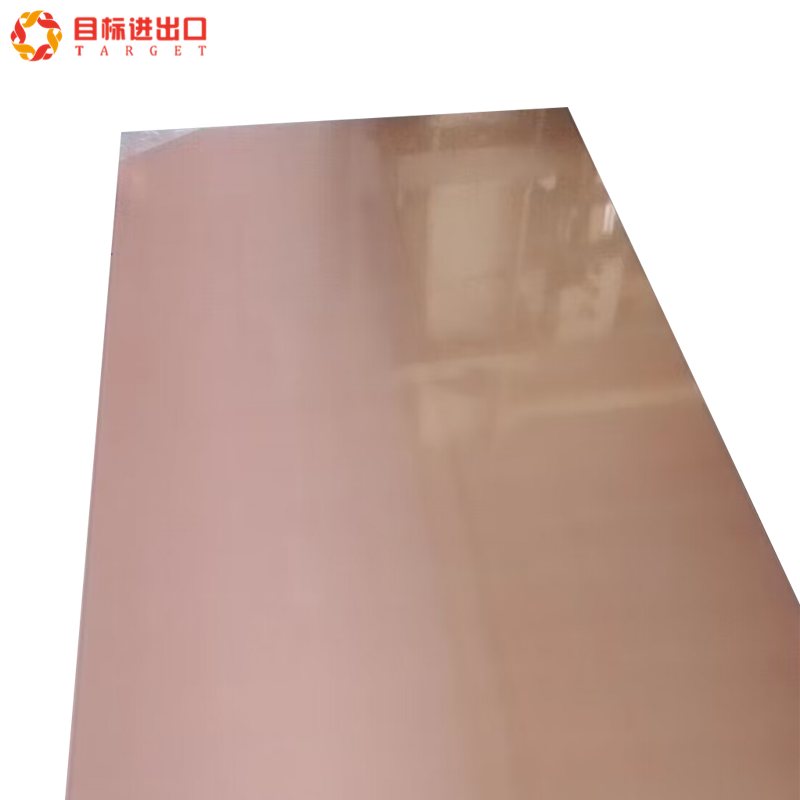
Modern electrical infrastructure relies heavily on the integration of high purity copper sheet plate. Oxygen-Free Electronic (OFE) copper, specifically grade C10100, dominates this sector due to its 99.99% purity and 101% IACS conductivity rating. Fabricators machine these thick plates into heavy-duty busbars, switchgear components, and electrical panel connections.
Success in electrical applications requires strict adherence to specific criteria. Oxygen impurities in standard copper can cause hydrogen embrittlement when exposed to high temperatures, leading to microscopic cracking. High-purity grades eliminate this risk.
Maximum Conductivity: The material must meet or exceed 100% IACS to prevent power loss over long distances.
Minimal Impurities: Oxygen content must be strictly controlled to prevent embrittlement during high-heat operation or brazing.
Precise Dimensional Tolerances: Thickness variations must be kept to a minimum to ensure consistent contact resistance at bolted joints.
Commercial HVAC units and consumer home appliances utilize copper to manufacture heat exchanger fins, internal tubing, and thermal management heat sinks. The material's ability to rapidly transfer heat between liquid refrigerants and ambient air dictates the energy efficiency rating of the entire system.
Engineers constantly evaluate the trade-offs between copper and aluminum in thermal management. Aluminum offers a significant weight reduction and lower raw material costs. However, copper provides superior thermal efficiency per square inch and resists the corrosive effects of condensation and chemical refrigerants far better than aluminum. For compact, high-efficiency systems where space is limited, copper remains the superior engineering choice.
The transition to electric vehicles has increased the demand for precision-rolled copper. EV manufacturing requires extensive use of thin-gauge material for battery cell connectors, terminal plates, and internal power routing. The metal handles the rapid charge and discharge cycles of lithium-ion battery packs without degrading or overheating.
Broader transportation equipment, including rail and aerospace sectors, utilizes copper for electromagnetic interference (EMI) shielding. Sensitive navigation and control electronics must be isolated from the magnetic fields generated by heavy electric motors. Copper enclosures and shielding panels absorb and redirect these fields, preventing data corruption and signal loss in transportation infrastructure.
Smartphones, laptops, and telecommunications hardware rely on ultra-thin copper for both power delivery and thermal management. Printed circuit boards (PCBs) use laminated layers of copper foil to create the intricate pathways that connect microprocessors, memory modules, and power supplies.
As consumer electronics become more powerful and compact, localized heat dissipation becomes a severe engineering constraint. Stamped copper heat spreaders and vapor chambers are integrated directly over CPUs and GPUs. These components pull heat away from the silicon die and distribute it across a larger surface area, preventing thermal throttling and extending the lifespan of the device.
Hospital-acquired infections (HAIs) pose a severe risk to patient safety and healthcare economics. Facility managers specify bare copper for high-touch surfaces, including push plates, bed rails, IV stand components, and overbed tables. The continuous, passive antimicrobial action of the metal significantly reduces the bioburden in patient rooms.
In medical device manufacturing, specialized copper alloys are used for surgical instruments, MRI machine shielding, and cleanroom equipment. The material's non-magnetic properties ensure it does not interfere with sensitive imaging equipment. Its high density provides effective shielding against stray radio frequencies in diagnostic environments.
Premium commercial building construction and high-end residential architecture frequently utilize flat copper sheet for roofing systems, step flashing, gutters, and downspouts. When installed correctly using standing seam or flat seam techniques, a copper roof provides a functional lifespan exceeding 100 years.
The lifecycle benefits heavily outweigh the initial installation costs. The natural patina acts as a self-healing weather barrier, eliminating the need for periodic painting or coating. Copper withstands extreme temperature fluctuations, high wind loads, and heavy snow accumulation without becoming brittle or degrading under intense ultraviolet exposure. Installers must use sliding cleats rather than hard-nailing the panels to accommodate the natural thermal expansion and contraction of the metal.
Architects and interior designers specify copper for high-end commercial kitchens, bar tops, and residential interiors driven by its unique aesthetic profile. The material introduces a warm, dynamic color palette that evolves over time. A freshly polished sheet starts with a bright salmon hue, transitioning through deep browns and eventually developing a distinct green or blue-green verdigris.
Specifying copper indoors requires a clear understanding of maintenance realities. Clients must choose between a living finish and a sealed surface. A living finish remains unsealed, allowing the metal to react with oils, acids, and oxygen, creating a unique, ever-changing patina. Sealed surfaces require the application of specialized lacquers or polyurethanes to lock in a specific color phase. These coatings require periodic stripping and reapplication to prevent flaking.
Industrial prototyping relies on copper for precision machining and proof-of-concept modeling. The material cuts cleanly on CNC routers and waterjets, allowing engineers to test complex geometries before committing to expensive hard tooling for mass production.
The arts and crafts market, alongside custom architectural detailing, utilizes bare copper for repoussé, chasing, and custom sculpture. Fabricators approach the material using specific tooling requirements.
Cutting: Requires aviation snips, specialized metal shears, or fine-tooth bandsaws to prevent edge distortion and work-hardening.
Smoothing: Involves deburring tools, files, and fine-grit abrasives to remove sharp edges left by shearing.
Joining: Requires a heat source capable of reaching high temperatures for silver brazing or TIG welding. Standard lead-free soldering provides limited structural strength and is reserved for watertight roofing seams rather than structural joints.
Selecting the correct alloy is the most critical step in the procurement process. Electrolytic Tough Pitch (ETP - C11000) is the industry standard, offering 99.9% purity and excellent conductivity. This makes it suitable for most general electrical and architectural applications. However, ETP contains trace amounts of oxygen, making it unsuitable for high-heat welding or brazing.
Phosphorus-Deoxidized copper (DHP - C12200) removes this oxygen. This slightly lowers conductivity but greatly improves welding and brazing characteristics. C12200 serves as the standard for plumbing, HVAC tubing, and welded architectural panels. Oxygen-Free High Conductivity (OFHC - C10100/C10200) represents the highest purity level, reserved for advanced electronics, high-vacuum environments, and specialized scientific equipment.
Copper Alloy Decision Matrix
Alloy Grade | Common Name | Primary Characteristic | Ideal Application |
|---|---|---|---|
C11000 | Electrolytic Tough Pitch (ETP) | High conductivity, general purpose | Electrical panels, roofing, general fabrication |
C12200 | Phosphorus-Deoxidized (DHP) | Excellent weldability, formability | Welded assemblies, HVAC, plumbing fixtures |
C10100 | Oxygen-Free Electronic (OFE) | 99.99% purity, immune to embrittlement | High-tech electronics, vacuum systems, EV batteries |
Copper thickness is measured using three different systems depending on the industry. Roofing uses ounces per square foot (oz/sq ft). General fabrication uses American Wire Gauge (AWG). Precision engineering uses decimal inches or mils. For example, a standard 16 oz copper sheet equals exactly 0.0216 inches in thickness.
Calculating the required thickness depends heavily on the application. Structural loads, such as wind uplift on a roof, dictate a minimum of 16 oz or 20 oz material. Electrical applications require calculating the cross-sectional area to ensure the sheet can carry the required amperage without exceeding safe operating temperatures. Fabrication limits also dictate thickness. Exceeding the tonnage capacity of a press brake will result in tooling damage or incomplete bends.
Standard Copper Sheet Gauge Conversions
Weight (oz/sq ft) | Thickness (Inches) | Approximate AWG | Common Field Application |
|---|---|---|---|
12 oz | 0.0162" | 26 AWG | Light decorative flashing, crafts |
16 oz | 0.0216" | 24 AWG | Standard roofing, gutters, wall panels |
20 oz | 0.0270" | 22 AWG | Heavy-duty roofing, commercial flashing |
32 oz | 0.0431" | 18 AWG | Custom range hoods, structural pans |
Temper defines the hardness and yield strength of the copper. Annealed (soft) copper is heated and slowly cooled, relieving internal stresses and maximizing ductility. This temper is mandatory for hand-forming, deep drawing, and intricate architectural flashing where the metal must fold back on itself without cracking.
Cold-rolled (hard) copper achieves its strength through mechanical compression during the rolling process. This temper resists bending and denting, making it ideal for flat panels, CNC routed components, and stamped electrical contacts. Attempting to bend hard temper copper past a 90-degree angle often results in stress fractures along the bend line. Fabricators must match the temper to the specific downstream manufacturing process to avoid material failure.
Copper is a highly volatile global commodity. Prices fluctuate daily based on mining outputs, geopolitical stability, and macro-economic demand from the EV and renewable energy sectors. This volatility poses a significant risk to project budgets, especially for large-scale construction or long-term manufacturing contracts.
Procurement managers mitigate these price fluctuations through strategic planning. Bulk ordering locks in material costs for the duration of a project. Establishing strategic supplier partnerships ensures priority allocation during supply chain shortages. Implementing strict scrap recycling programs allows manufacturers to recover a significant portion of the material cost, as clean copper scrap retains high market value.
When copper is installed in direct contact with dissimilar metals—such as aluminum, zinc, or galvanized steel—in the presence of an electrolyte like rainwater, galvanic corrosion occurs. Copper is highly cathodic on the galvanic scale. It will rapidly accelerate the corrosion of anodic metals it touches, leading to the structural failure of fasteners, adjacent panels, or mounting brackets.
Mitigating galvanic corrosion requires complete electrical isolation between the metals. Installers use dielectric unions in plumbing, heavy-duty isolation tapes or elastomeric coatings in architectural assemblies, and series-300 stainless steel fasteners. Stainless steel sits close enough to copper on the galvanic scale to prevent rapid degradation, ensuring the assembly remains secure over time.
The chemical process of oxidation begins the moment bare copper is exposed to the atmosphere. While architects often desire this patina, industrial and electronic applications require the metal to maintain its raw surface conductivity and appearance. Oxidation increases surface electrical resistance, which interferes with grounding connections and electronic contact points.
Evaluating the trade-offs between natural weathering and surface protection is essential. To maintain conductivity and prevent tarnishing, manufacturers apply industrial clear coats, specialized waxes, or electroplating. Tin or silver plating is frequently applied to copper busbars and electrical contacts. This plating prevents oxidation while maintaining excellent surface conductivity, ensuring long-term reliability in harsh industrial environments.
Copper sheet remains a non-negotiable material for applications demanding peak electrical conductivity, rapid thermal transfer, or multi-generational architectural longevity. Alternative materials offer upfront cost savings, but they consistently fail to match copper's comprehensive performance profile in extreme industrial and environmental conditions.
When specifying material for your next project, follow a strict shortlisting logic. First, identify the core requirement. Determine if the application is primarily electrical, thermal, or structural. Next, select the appropriate alloy grade, prioritizing C11000 for general use, C12200 for welding, or C10100 for high-purity electronics. Finally, determine the exact gauge and temper required to survive both the fabrication process and the final operating environment.
Consult with a metallurgist or trusted materials supplier to verify your alloy selection against your specific operating environment.
Request Material Test Reports (MTRs) during procurement to guarantee the purity and mechanical properties of the delivered batch.
Order small sample sheets to conduct in-house prototyping, testing bend radiuses, and verifying joining methods before committing to full-scale production.
Review your assembly designs to ensure proper galvanic isolation is implemented wherever copper interfaces with steel or aluminum components.
A: The difference lies entirely in the thickness of the material. Industry standards define copper sheet as any flat rolled product under 0.188 inches (3/16 inch) thick. Once the material reaches or exceeds 0.188 inches, it is classified as copper plate, which is typically used for heavy structural or high-amperage electrical applications.
A: Oxygen-Free Electronic (OFE) copper, specifically grade C10100, is the best choice, offering a 101% IACS rating. Electrolytic Tough Pitch (ETP) C11000 is also excellent for general electrical applications, providing a 100% IACS rating, though it contains trace oxygen making it less suitable for high-heat environments.
A: Yes, but the alloy matters. Standard ETP copper (C11000) is difficult to weld because internal oxygen causes hydrogen embrittlement and cracking under high heat. For welding, Phosphorus-Deoxidized copper (DHP - C12200) is preferred, as the removal of oxygen allows for strong, clean welds without structural degradation.
A: To prevent tarnishing and oxidation, the bare metal must be sealed from oxygen and moisture. This is achieved by applying specialized clear lacquers, industrial polyurethanes, or micro-crystalline waxes. For electrical applications, the surface is often electroplated with tin or silver to prevent tarnishing while maintaining conductivity.
A: The architectural industry standard for roofing, flashing, and weatherproofing is 16 ounce (0.0216 inches thick) or 20 ounce (0.0270 inches thick) copper sheet. These gauges provide the optimal balance of structural rigidity to resist wind uplift while remaining malleable enough for hand-forming on site.
A: No, copper is a diamagnetic material, meaning it weakly repels magnetic fields and does not retain magnetization. This non-magnetic property makes it highly effective for electromagnetic interference (EMI) shielding in electronic products, MRI rooms, and sensitive industrial motors.


