
English 
T: +86-571-8663-6649
E: hzbjys@hzbjys.com
E: hzbjys@hzbjys.com
7/F, 1st Building Of ZhongHao WangJiang International Center, NO.332 East WangJiang Road, HangZhou, ZheJiang, China.
Views: 0 Author: Site Editor Publish Time: 2026-05-26 Origin: Site


Selecting the right filler metal for industrial fabrication goes far beyond simply matching the base material. It requires deep metallurgical foresight and precision. For procurement managers and lead engineers, specifying the wrong material brings severe consequences. It often results in immediate hot cracking, compromised shear strength, or costly feeding failures like birdnesting on the production floor.
A reliable manufacturing decision demands evaluating specific end-use environments. We must carefully consider operating temperatures, structural shear loads, and post-weld surface treatments. Moving past general-purpose advice is crucial for long-term structural integrity. You cannot treat every joint identical to the last.
This guide evaluates the top five industrial applications for Aluminum Welding Wire. You will see exactly how to map specific alloy families to their strict operational requirements. We will outline the implementation realities of each choice to streamline your procurement process and protect your final assemblies.
Shear vs. Tensile Strength: For lap and fillet welds, 5356 wire offers nearly 50% higher shear strength than 4043.
Thermal Limitations: Components operating above 150°F require 4043 (or specialized alloys) to prevent stress corrosion cracking inherent in 5xxx series wires.
Aesthetic Predictability: 5356 is mandatory for post-weld anodizing; the silicon in 4043 causes welds to turn dark gray or black during the anodic process.
Feeding Infrastructure: Soft aluminum wire requires dedicated equipment—Teflon liners, U-groove drive rolls, and oversized contact tips—to prevent micro-arcing and feeding failures.
Welded assemblies operating above 150°F face severe environmental stress. Engine blocks, exhaust routing systems, and industrial heat exchangers are highly susceptible to stress corrosion cracking. You must choose your filler metal carefully. If you use the wrong alloy, the joint will eventually fail under sustained heat exposure. Industrial engineers see this failure mode frequently when operators ignore ambient operating limits.
Magnesium-alloyed wires, such as ER5356, become highly unstable at elevated temperatures. They undergo microscopic structural changes over time. This metallurgical instability makes them highly prone to spontaneous cracking. The material literally degrades from the inside out under thermal load.
Conversely, silicon-alloyed wires like ER4043 excel in these demanding environments. They offer excellent puddle fluidity and high resistance to thermal cracking. Engineers strictly recommend them for continuous high-temperature service. Performance data strongly backs up this choice across numerous sectors.
The 4043 alloy provides a reliable tensile strength ranging between 21,000 and 33,000 psi. It maintains core structural integrity during prolonged heat exposure without embrittlement. This stability makes it the absolute default choice for thermal applications. You will find it extensively used for 6xxx series base metals undergoing rigid post-weld heat treatments. It handles the thermal cycling without compromising joint safety.
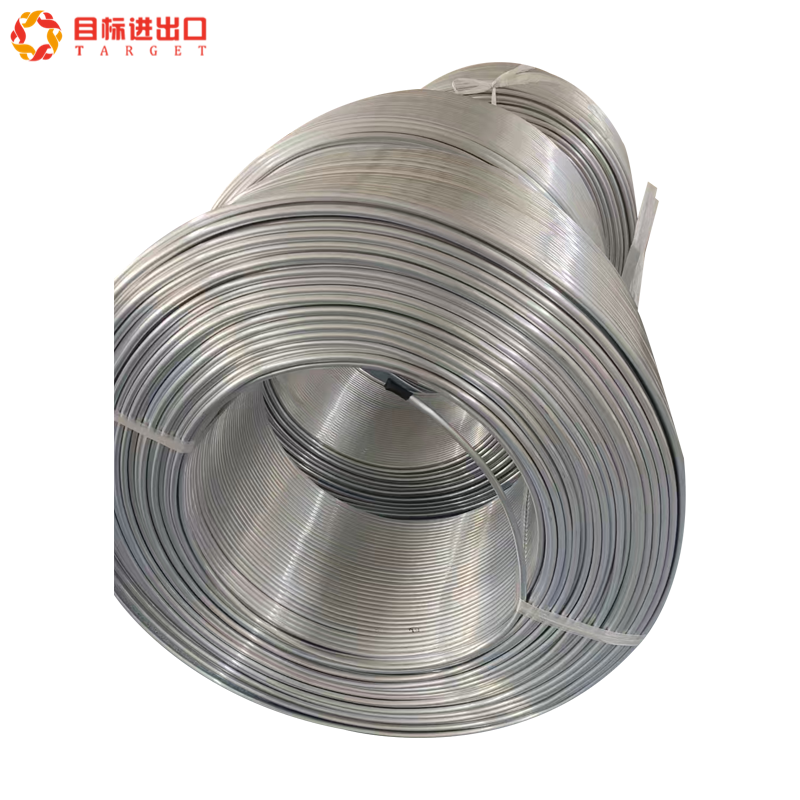
Heavy industry demands maximum joint strength to survive daily abuse. Shipbuilding, offshore oil platforms, and heavy-duty trailer manufacturing operate under brutal dynamic conditions. These environments also require aggressive resistance to saltwater corrosion. Standard fabrication materials rust and degrade rapidly in these marine zones.
In this category, puddle fluidity takes a backseat. Penetration depth and raw shear strength become your top priorities. Structural lap and fillet welds heavily rely on shear force resistance. Shear force acts as the primary failure vector for these specific load-bearing joints. You need a filler metal built for absolute toughness and flexibility.
ER5356 heavily dominates this demanding structural category. It features a precise 5% magnesium additive. This formulation delivers much higher ductility than competing alloys. It produces an impressive tensile strength spanning 29,000 to 45,000 psi. Marine engineers trust it to withstand continuous wave impact and constant structural flexing without snapping.
However, you must practice strict risk mitigation. While 5356 provides superior saltwater corrosion resistance, it carries a fatal temperature flaw. You must never specify it for components crossing the 150°F threshold. Elevated heat will cause rapid stress corrosion cracking in these magnesium-rich alloys. Always verify the maximum ambient temperature before signing off on 5356.
Feature | ER4043 (Silicon-Alloyed) | ER5356 (Magnesium-Alloyed) |
|---|---|---|
Primary Additive | 5% Silicon | 5% Magnesium |
Tensile Strength Range | 21,000 - 33,000 psi | 29,000 - 45,000 psi |
Temperature Limit | Stable above 150°F | Fails above 150°F |
Marine Corrosion Resistance | Moderate | Superior |
Aerospace and defense sectors push modern materials to their absolute breaking points. They frequently utilize complex, high-strength base metals. These include copper-alloyed and zinc-alloyed aluminum variations. Historically, engineers considered these materials "unweldable" due to severe crack sensitivity. They demand highly specialized filler metals to form viable, flight-ready joints.
Standard 4xxx and 5xxx fillers fall extremely short here. They are vastly insufficient for extreme-stress flight applications. Procurement teams must source filler metals meticulously. They must match the base alloy perfectly to prevent catastrophic failures. For instance, welding high-strength zinc-alloyed base metals requires specialized chemistry. You often need High Quality Pure Aluminum Wire 7xxx Series equivalent fillers. These specialized products prevent dangerous hot cracking within the Heat Affected Zone (HAZ) during the cooling phase.
Similarly, copper-alloyed base metals pose unique aerospace manufacturing challenges. Sourcing compatible High Purity Aluminum Wire 2xxx Seriess fillers is absolutely critical. Defense contractors rely entirely on them to maintain strict strength-to-weight ratios. The wrong filler instantly ruins the structural integrity of the entire expensive assembly.
These specialized wires share a harsh implementation reality on the shop floor. They have zero tolerance for any surface contamination. Base metals must undergo rigorous mechanical and chemical cleaning. Operators must use industrial acetone and dedicated stainless steel brushing. You must complete this preparation immediately prior to arc initiation to prevent microscopic porosity.
Visual appearance matters deeply for consumer-facing products. Architectural building facades, custom automotive parts, and high-end bicycle frames routinely require anodizing. This chemical bath process improves both surface durability and visual aesthetics. However, using the wrong filler wire leaves a visually ruined, blackened weld seam right down the middle of your product.
Engineers often fall into the common silicon trap. The 4043 wire is notoriously easy to weld. It remains highly fluid and forgiving for manual operators. Yet, it contains substantial silicon additives. During the anodic process, this silicon chemically reacts to the bath. It turns dark gray or pitch black almost instantly. This reaction creates a stark, ugly contrast against the clean silver base metal.
The perfect color-match solution relies entirely on magnesium additives. The 5356 wire oxidizes uniquely during chemical treatment. It produces a bright silver or clean white finish. This perfectly matches 6061 and other standard base metals after anodizing completes. It essentially renders the weld bead invisible to the naked eye.
This establishes a firm decision rule for your fabrication team. If the manufacturing blueprint calls for post-weld anodizing, ER5356 becomes the non-negotiable standard. You must specify it strictly. Always remember to ensure the operating temperature safely remains under 150°F to avoid the cracking risks mentioned earlier.
High-volume automotive manufacturing relies heavily on automated MIG welding. Automotive assembly lines frequently process thin-gauge aluminum body panels. This fast-paced environment is constantly plagued by two major production issues. Operators battle frustrating wire tangling—known in the industry as birdnesting—and frequent material burn-through.
Feeding soft filler material through a traditional MIG gun is notoriously difficult. Process engineers often describe it as "pushing a wet noodle through a straw." The wire buckles under minimal resistance. It jams inside the drive mechanism and halts the entire assembly line.
A smart sizing strategy solves many of these daily feeding problems. Selecting proper aluminum welding wire sizes is highly critical. Thicker diameters offer far greater column strength. For example, a 3/64-inch wire is physically stiffer. It feeds significantly better through long, twisting cables than a much thinner 0.030-inch wire.
Thicker wires introduce a new risk: burning massive holes through thin base metals. To prevent thin-metal burn-through, facilities must upgrade their power sources. They must adopt Pulsed MIG systems operating strictly in Spray Transfer mode. Avoid traditional short-circuit welding entirely for this material. Pulsed MIG allows for high deposition rates. Crucially, it manages this without injecting excessive, destructive heat input into the thin panels.
Premium filler metals cannot fix bad delivery systems. Even the absolute highest-grade aluminum wire will fail in production. It simply cannot survive inside equipment designed for rigid carbon steel. You must upgrade your machine consumables to match the softer material.
Implementing mandatory consumable upgrades prevents daily downtime and material waste. Every minute spent clearing a birdnest costs real money. Standardizing your equipment saves thousands in lost productivity.
Drive Rolls: You must strictly use U-groove rolls. Standard V-groove rolls will aggressively shave soft aluminum wire. This mechanical action creates fine metallic dust. The dust clogs liners and causes erratic micro-arcing at the contact tip.
Liners: Teflon or Nylon liners are absolutely mandatory. They heavily reduce internal cable friction. Standard steel spiral liners will rapidly scratch and destroy the sensitive outer wire surface.
Contact Tips: Aluminum expands much more than steel when heated. You must use larger bore contact tips specifically rated for aluminum. This precise clearance prevents catastrophic burnback and permanent tip fusion.
Delivery Systems: Reliable feeding requires specialized delivery guns. Budget for Spool Guns if you need low initial cost and expect frequent wire changes. Choose Push-Pull guns for high capital expenditure but maximum continuous productivity.
Shortlisting the right filler metal is an exercise in engineering compromise. For high heat environments and thermal crack resistance, default to 4043. For demanding structural shear strength, punishing marine environments, and perfect anodizing color matches, 5356 remains the industry standard. For highly specialized defense aerospace applications, you must specify exact 2xxx or 7xxx series matches.
Take actionable next steps to improve your production floor immediately.
Audit your current scrap bins and joint failure rates to identify recurring issues.
Investigate frequent wire feeding jams; they usually indicate a mismatch between your wire alloy, wire diameter, and feeding consumables.
Verify your maximum operational temperatures before approving magnesium-rich alloys for production.
Consult your metallurgical supplier to firmly validate your choice against the specific base metal blueprint.
A: There is no true "all-purpose" wire. ER4043 and ER5356 cover 80% of industrial needs. However, newer alloys like 4943 are emerging as high-strength alternatives. They do not rely on base metal dilution to achieve excellent high tensile strength across various structural applications.
A: Commercially, flux-cored aluminum wire is virtually non-existent for standard fabrication. Aluminum fluxes are highly corrosive and aggressively absorb atmospheric moisture. Furthermore, the base wire material is simply too soft to feed reliably as a hollow tubular structure through standard guns.
A: Yes. Aluminum filler metal oxidizes rapidly when exposed to ambient air and normal humidity. This thick oxide layer has a melting point three times higher than the actual aluminum. It leads to erratic arcs and severe weld porosity. Keep wire in sealed, climate-controlled storage.
A: Birdnesting is directly caused by excessive friction or improper drive roll tension. You must ensure you are using U-groove drive rolls and a smooth Teflon liner. Keep the gun cable as straight as possible. If issues persist, consider upgrading to a push-pull system or using a thicker diameter.


