
English 
T: +86-571-8663-6649
E: hzbjys@hzbjys.com
E: hzbjys@hzbjys.com
7/F, 1st Building Of ZhongHao WangJiang International Center, NO.332 East WangJiang Road, HangZhou, ZheJiang, China.
Views: 0 Author: Site Editor Publish Time: 2026-10-07 Origin: Site


Specifying sheet metal that balances tight-tolerance formability with long-term structural integrity remains a persistent engineering challenge. Selecting the wrong aluminum grade for fabrication leads to costly failures on the shop floor and in the field. Harder alloys frequently crack during press brake operations, while softer alloys yield prematurely under load. You need a reliable baseline material to prevent these manufacturing defects and ensure product longevity.
A technical evaluation of 5052 aluminum determines if its specific magnesium-chromium composition makes it the optimal choice for custom sheet metal fabrication, enclosures, and marine applications. We will analyze how this alloy responds to bending, welding, and harsh environments. This guide provides the exact parameters needed to optimize your shop floor operations and improve product durability without relying on trial and error.
Optimal Formability: 5052 aluminum offers exceptional workability, allowing for tight bend radii without fracturing, making it highly suited for complex sheet metal forming.
Superior Corrosion Resistance: Its high resistance to saltwater and industrial atmospheres eliminates the need for protective coatings in many harsh environments.
High Fatigue Strength: Exhibits higher fatigue strength than most other aluminum alloys, making it ideal for components subjected to excessive vibration.
Non-Heat Treatable: Strength is achieved through cold working (strain hardening) rather than thermal treatment, which dictates specific procurement tempers (e.g., H32).
Cost-to-Performance Ratio: Offers a highly competitive price point and widespread supply chain availability compared to specialized aerospace or marine-only grades.
Fabrication shops constantly fight the battle between material strength and workability. Pure aluminum forms easily but lacks the structural integrity required for load-bearing applications. Conversely, structural alloys like 6061 provide massive strength but crack violently under standard press brake operations. You need a predictable metal that handles complex geometries without fracturing. The ideal material must also resist environmental degradation without requiring secondary surface treatments like anodizing or powder coating. 5052 solves these competing demands through its specific metallurgical design, acting as the bridge between extreme malleability and rigid strength.
The performance of this alloy relies heavily on its exact chemical makeup. It contains nominally 2.5% magnesium and 0.25% chromium. Magnesium serves as the primary solid solution strengthener. It significantly increases the overall tensile strength without destroying the metal's inherent ductility. Chromium acts as a supplementary hardening agent. It improves the material's resistance to stress corrosion cracking, especially in marine environments. Trace amounts of iron and silicon are tightly controlled during the smelting process to prevent brittleness. This precise elemental balance dictates the metal's physical behavior during heavy mechanical deformation on the shop floor.
Material selection always involves a compromise between yield strength and elongation. 5052 achieves a higher yield strength than standard 3000-series alloys while maintaining the essential ductility required for extensive press brake and stamping operations. The metal elongates uniformly under tension. This uniform elongation prevents localized necking and tearing during deep drawing processes. Fabricators can achieve sharp bend radii that would easily fracture a 6000-series alloy. The strain-hardening characteristics mean the metal actually gains strength as it deforms over the tooling. When you bend a piece of 5052-H32, the corner becomes harder and stronger than the surrounding flat material.
Standard gauge ranges for sheet material typically fall between 0.020 inches and 0.249 inches. This thickness range dominates the custom fabrication industry. Primary applications include electronic enclosures, medical equipment housings, and automotive interior panels. Food-grade processing equipment also relies heavily on this format due to its smooth surface finish and easy cleaning properties. Tooling considerations for standard sheet bending require specific V-die selections. Operators generally use a die opening six to eight times the material thickness to achieve a perfect air bend. Specifying 5052 aluminum sheet ensures consistent dimensional stability across large flat patterns, reducing scrap rates on the laser bed.
Gauge | Decimal Thickness (in) | Typical Application | Recommended V-Die Opening |
|---|---|---|---|
20 Ga | 0.032 | Light electronic enclosures | 0.250" |
16 Ga | 0.050 | HVAC ducting, instrument panels | 0.375" |
11 Ga | 0.090 | Cabinetry, heavy brackets | 0.750" |
0.125" | 0.125 | Marine consoles, fuel tanks | 1.000" |
Thickness parameters for plate material begin at 0.250 inches and extend upward. You must evaluate structural limits carefully when specifying heavy gauges. You can confidently use 5052 aluminum plate for standard marine decking, unpressurized tank walls, and heavy-duty architectural panels. However, heavy load-bearing applications may require an upgrade. If the component faces massive shear forces or requires deep threaded holes, a 6000-series or 5083 plate becomes necessary. Plate material requires significantly higher press brake tonnage. Bending plate also demands larger punch radii to prevent outer fiber cracking. You cannot use a sharp punch on a 0.250-inch plate without splitting the grain wide open.
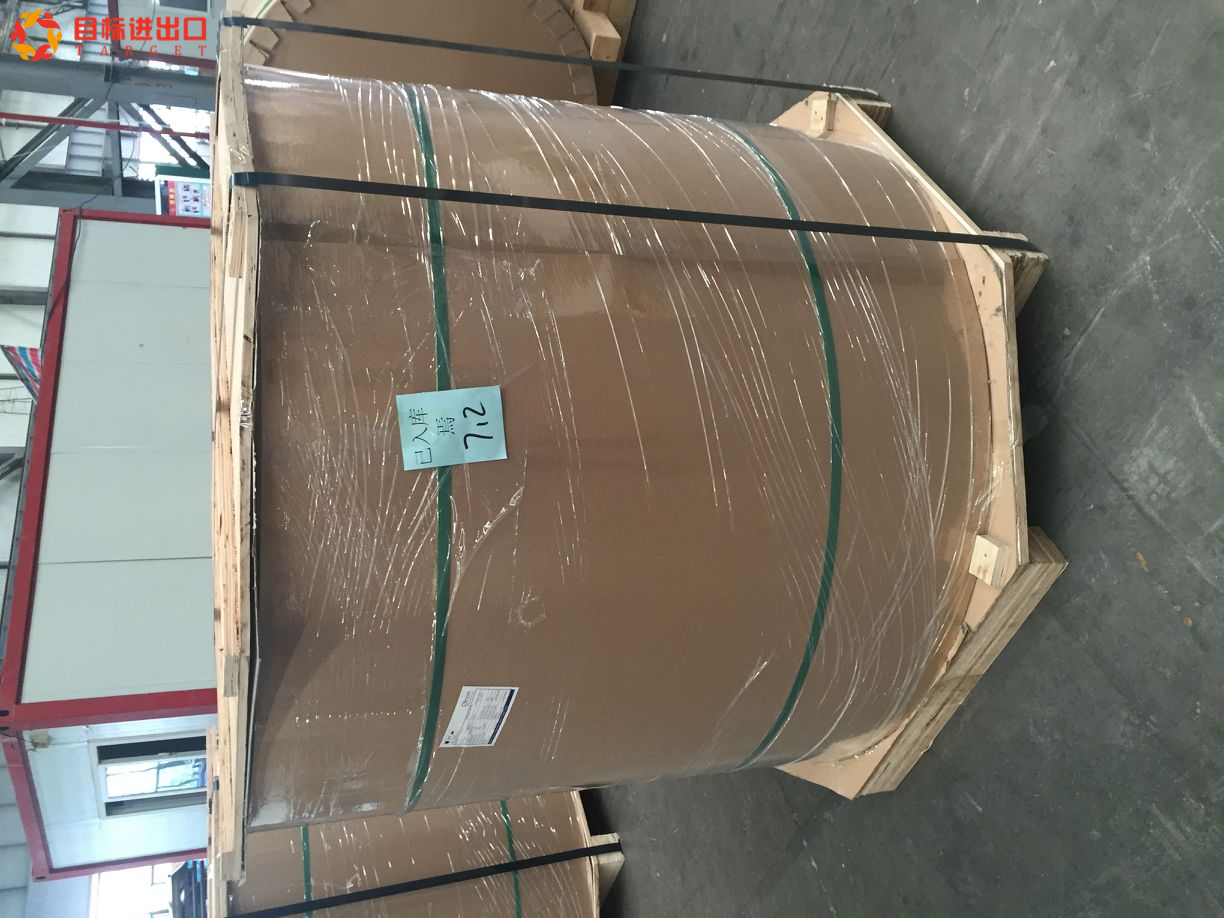
Procurement advantages drive the adoption of coil formats for high-volume manufacturing. Continuous feed systems eliminate the handling time associated with loading individual flat sheets onto a turret punch. This format is highly suitable for continuous roll forming and progressive die stamping. High-speed presses rely on consistent material properties to prevent die jams and maintain tight tolerances. Managing coil set is a mandatory pre-fabrication step. Operators must use precision leveling machines to flatten the material before it enters the cutting envelope. Utilizing 5052 aluminum coil streamlines production for massive runs, significantly reducing material waste and operator fatigue.
This alloy demonstrates exceptional performance in saltwater exposure. The magnesium content creates a robust, self-healing oxide layer that blocks further oxidation. It withstands industrial chemical environments that rapidly degrade lesser metals. You can deploy it in offshore applications without heavy protective coatings. Galvanic corrosion requires careful consideration during assembly. Mating this metal with stainless steel or copper in a conductive electrolyte causes rapid pitting. You must specify isolation gaskets, nylon washers, or dielectric pastes when joining dissimilar metals. Using 5052 aluminum coil for boat hulls guarantees long-term hull integrity against harsh saltwater spray.
Modern fabrication relies heavily on automated cutting systems. Behavior under fiber lasers differs significantly from older CO2 lasers. Fiber lasers process this material at extreme speeds due to their specific wavelength absorption. Operators must manage thermal distortion on thin gauges by optimizing cutting paths and leaving micro-joints to stabilize the sheet. High-pressure nitrogen assist gas prevents edge oxidation and yields a weld-ready edge straight off the machine. The material exhibits clean shearing and punching characteristics. It produces minimal burr formation compared to softer alloys like 3003. Proper punch-to-die clearance ensures a clean fracture zone.
Maintain a punch-to-die clearance of 15% to 20% of the material thickness for optimal edge quality.
Use high-pressure nitrogen (typically 150-200 psi) to blow molten material through the kerf rapidly.
Apply a light vanishing oil during CNC punching to prevent aluminum galling on the tooling.
Program the laser to cut internal features first to maintain sheet rigidity during the cutting cycle.
Fabricators frequently join this material using TIG (GTAW) and MIG (GMAW) welding processes. It offers excellent weld pool fluidity and arc stability. Selection of appropriate filler metals prevents weld cracking and ensures structural integrity. You typically specify 5356 filler wire for maximum strength and an excellent color match after anodizing. You can also use 4043 filler wire for better crack resistance at elevated temperatures, though it leaves a dark gray weld bead if anodized. The alloy suffers a loss of strength in the Heat-Affected Zone (HAZ). Because it is non-heat-treatable, the welded area reverts to the fully annealed (O) temper state. Joint design must account for this localized strength reduction by placing welds in low-stress areas.
CNC machining exposes the primary weakness of this alloy. It exhibits a notoriously gummy nature during milling and turning operations. The soft matrix tends to adhere to the cutting tool, causing poor surface finishes and tool breakage. Tooling geometry requires high positive rake angles to shear the metal cleanly rather than plowing through it. Polished carbide flutes help evacuate chips rapidly before they can weld to the cutter. Coolant strategies must focus on high-pressure flood or mist to prevent built-up edge (BUE). Achieving acceptable surface finishes requires high spindle speeds and relatively low feed rates. It is not the optimal choice for complex, heavily machined aerospace components.
Selecting the correct material requires comparing baseline properties against alternative options. The following table outlines the mechanical differences between common sheet metal grades to help you make informed engineering decisions.
Alloy Grade | Yield Strength (psi) | Formability | Weldability | Primary Use Case |
|---|---|---|---|---|
3003-H14 | 21,000 | Excellent | Good | Deep drawing, chemical equipment |
5052-H32 | 28,000 | Very Good | Excellent | Sheet metal enclosures, marine |
6061-T6 | 40,000 | Poor | Excellent | Structural framing, machined parts |
5083-H116 | 33,000 | Fair | Excellent | Heavy marine vessels, pressure tanks |
Choose 3003 when you need to downgrade for specific manufacturing processes. It excels in deep drawing applications where 5052 might gall or tear under extreme stretching. It also serves well for budget-constrained projects with low structural requirements. Specify 3003 when structural strength is secondary to extreme formability. It bends slightly easier but dents much faster in the field. If you are manufacturing spun aluminum pots or light-duty ductwork, 3003 provides a more forgiving forming experience.
Choose 6061 when the application requires extensive CNC machining. It chips beautifully and leaves a mirror surface finish when milled with proper tooling. Upgrade to 6061 for structural load-bearing capabilities and rigid framework. It responds well to post-weld heat treatment to recover joint strength lost during the welding process. You must accept the trade-off of poor bendability. Attempting a 90-degree bend on 6061-T6 usually results in immediate catastrophic fracture along the bend line. If you must bend 6061, you have to form it in the annealed (O) state and heat treat it afterward, which adds significant time and expense.
Choose 5083 for extreme marine environments and heavy pressure vessels. It provides higher tensile strength before welding, which is strictly required for commercial shipbuilding and military applications. The higher magnesium content makes it incredibly tough and highly resistant to impact. Note that 5083 is significantly harder to form on a press brake. It requires much larger bend radii and massive tonnage to achieve the desired angles. You will wear out standard press brake tooling much faster when forming 5083 compared to 5052.
Successful forming requires calculating minimum bend radii based on material thickness and temper. For the standard H32 temper, a safe rule is a bend radius equal to the material thickness. Harder tempers like H34 require larger radii to prevent surface cracking. Accounting for springback in press brake programming is mandatory. 5052 exhibits more springback than 3003 but less than 6061. Operators must over-bend the material slightly so it relaxes into the target angle. Grain direction considerations heavily influence flat pattern layout. Always orient bends perpendicular to the rolling direction to prevent micro-fractures along the bend line.
Identify the material thickness and temper from the mill certification.
Determine the grain direction by inspecting the surface finish lines on the raw sheet.
Calculate the K-factor (typically 0.33 to 0.45 for 5052) to determine the exact bend deduction.
Select a punch radius that matches or slightly exceeds the material thickness.
Perform a test bend on a scrap piece to measure the exact springback angle.
Adjust the CNC press brake parameters to over-bend by the measured springback amount.
The chemical composition directly affects cosmetic outcomes. The magnesium content alters the results of clear and color anodizing. It often produces a slightly yellowish or cloudy tint compared to the bright, clear finish of 6061. You must set proper cosmetic expectations with end-users before production begins. The slightly porous oxide layer provides excellent adhesion properties for powder coating. Wet painting applications also bond aggressively to properly prepped surfaces. Specifying surface protection is critical for handling. Always request PVC masking during transit and fabrication. This prevents severe scratching of the relatively soft surface during turret punching, press brake handling, and final assembly.
Specify the H32 temper on your purchase orders to guarantee optimal bendability for sheet metal enclosures.
Request Material Test Reports (MTRs) from your supplier to verify the exact magnesium and chromium content for marine applications.
Update your CAD software's sheet metal rules with a K-factor of 0.40 to ensure accurate flat pattern generation.
Design all welded joints in low-stress areas to account for the strength reduction in the Heat-Affected Zone.
A: The general rule for 5052-H32 is a minimum bend radius of 1 to 1.5 times the material thickness. Harder tempers require larger radii. Always bend perpendicular to the material's grain direction to prevent outer-fiber cracking and ensure structural integrity.
A: Yes, it offers excellent weldability using both Gas Tungsten Arc Welding (TIG) and Gas Metal Arc Welding (MIG). Fabricators typically use 5356 filler wire for maximum strength or 4043 filler wire to improve crack resistance at elevated temperatures.
A: No, it is a non-heat-treatable alloy. It cannot be hardened through thermal processes. Strength is achieved entirely through cold working and strain hardening, which is why it is sold in specific tempers like H32 or H34.
A: The H32 temper is quarter-hard and stabilized, offering an excellent balance of strength and formability for tight bending. The H34 temper is half-hard, providing slightly higher tensile strength but significantly reduced bendability, making it prone to cracking on sharp radii.
A: It performs exceptionally well and is classified as a marine-grade alloy. The magnesium content helps form a robust oxide layer that resists saltwater corrosion, allowing it to be used in harsh marine environments without requiring paint or protective coatings.
A: No. Like all aluminum alloys, 5052 is completely non-magnetic. This property makes it an excellent choice for sensitive electronic enclosures, medical imaging equipment, and navigational housings where magnetic interference must be strictly avoided.


