
English 
T: +86-571-8663-6649
E: hzbjys@hzbjys.com
E: hzbjys@hzbjys.com
7/F, 1st Building Of ZhongHao WangJiang International Center, NO.332 East WangJiang Road, HangZhou, ZheJiang, China.
Views: 0 Author: Site Editor Publish Time: 2026-05-05 Origin: Site


Transitioning from an engineering drawing to a procurement order requires translating dimensions into weight. Accurate weight calculation forms the baseline for anticipating freight costs. You need this data for machining setup limits. It also dictates your total project budgets. Whether you estimate a single prototype or evaluate bulk freight for a production run, accuracy matters greatly. Relying solely on basic volume formulas can lead to costly procurement errors. You cannot ignore specific alloy densities. You must also account for distinct manufacturing realities. Many buyers overlook these minor density variations. They assume all metals weigh exactly the same. This mistake causes massive budget overruns. You need precise numbers before requesting formal quotes. This guide breaks down the exact math. We explore the variables altering final weights. Finally, we show you how to use this data. You will learn to evaluate suppliers properly. You can then finalize your purchasing decisions with total confidence.
Core Formula: Total weight is the product of cross-sectional area, length, and the specific density of the alloy.
Shape Matters: A Hot Extrusion Alloy Round Bar Aluminum Rod requires different baseline volume calculations (using Pi) than rectangular or hex bars.
Alloy Variations: Standard aluminum density is often cited as 2.7 g/cm³ (0.0975 lb/in³), but actual weights fluctuate depending on the specific alloy series (e.g., 6061 vs. 7075).
The Tolerance Gap: Theoretical weight calculations always differ slightly from actual scale weight due to standard manufacturing extrusion tolerances.
Inaccurate weight estimates directly impact bottom-line project costs. You cannot afford guesswork during industrial procurement. Every millimeter of material translates to pounds on a scale. We see buyers lose money by ignoring basic weight math. You must understand how physical mass shapes business outcomes.
Cost estimation requires exact figures. The final aluminum bar price relies heavily on weight calculations. Metal service centers use commodity pricing per pound or kilogram. They then add processing fees like cutting and chamfering. If you overestimate weight, you pay inflated prices. If you underestimate, unexpected invoices ruin your budget entirely.
Logistics depend entirely on accurate mass. You must determine the correct freight class before shipping. Less-than-truckload (LTL) shipping imposes strict weight limits. Facilities need to know handling capabilities immediately. A standard forklift has absolute load limits. Exceeding these limits creates severe safety hazards on your floor.
Precise calculation reduces physical waste. You can optimize cut-to-length orders easily. Machining setups often demand highly specific material dimensions. We use weight data to minimize costly scrap rates. Every wasted piece of metal hurts your operating margins. You protect your profits by calculating everything upfront.
The universal formula solves this estimation problem. You just multiply three core variables together. Weight equals Cross-sectional Area times Length times Alloy Density. We will break this down for different structural shapes. Mastering these formulas removes dependency on automated calculators.
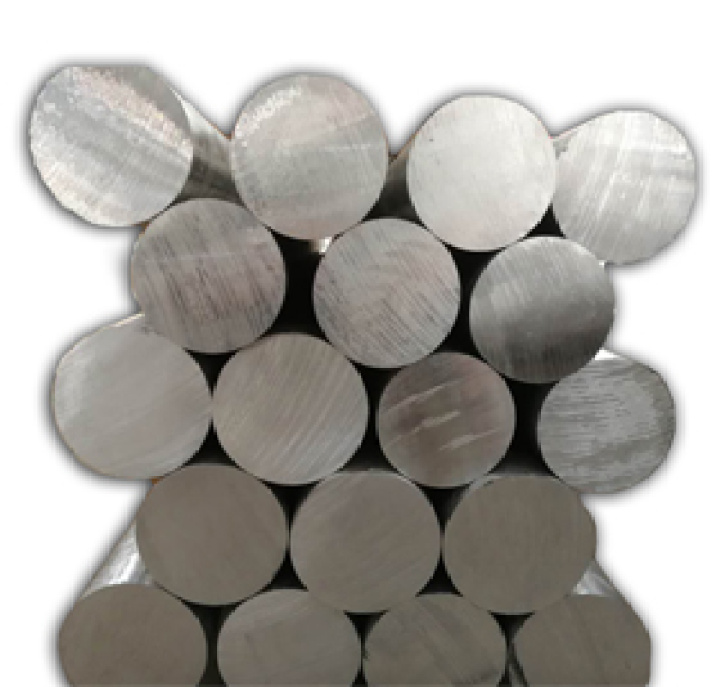
Calculating a Hot Extrusion Alloy Round Bar Aluminum Rod requires specific math. You must use Pi to find the baseline volume. Round shapes demand this exact geometric approach. The area formula is π times the squared radius (Diameter divided by 2).
Let us walk through a realistic engineering example. Imagine you need a 2-inch diameter bar. The required length is 12 feet. Follow these exact steps:
Convert all measurements to inches. The 12-foot length becomes 144 inches.
Divide the 2-inch diameter by 2. This gives a 1-inch radius.
Square the radius. One times one equals one.
Multiply by Pi (3.14159). The cross-sectional area is 3.14159 square inches.
Multiply the area by the 144-inch length. Your total volume is 452.39 cubic inches.
Multiply the volume by the alloy density. Assuming standard 6061 alloy (0.0975 lb/in³), the final theoretical weight is 44.11 pounds.
Square and rectangular bars use simpler math. The area formula is Width times Thickness. You do not need Pi here. Imagine a rectangular bar measuring 0.5 inches thick and 4 inches wide. You need a length of 10 feet. First, convert 10 feet to 120 inches. Calculate the area by multiplying 0.5 by 4. The area is 2 square inches. Multiply this by the 120-inch length. You get a volume of 240 cubic inches. Multiply this volume by the density to find the total weight.
However, maintaining consistent units remains critical. Always convert feet to inches. Convert meters to millimeters before applying density. Mixing units guarantees incorrect results. We see this costly mistake constantly.
Industrial calculations require reliable conversion multipliers. Converting dimensions properly prevents major procurement disasters. We mapped out the most common ones below.
From Unit | To Unit | Multiplier / Formula |
|---|---|---|
Feet | Inches | Multiply by 12 |
Meters | Millimeters | Multiply by 1000 |
Cubic Inches (in³) | Pounds (lbs) | Multiply by Density in lb/in³ |
Cubic Centimeters (cm³) | Grams (g) | Multiply by Density in g/cm³ |
Kilograms (kg) | Pounds (lbs) | Multiply by 2.20462 |
Many buyers fall into a common evaluation trap. They use a generic aluminum density for all orders. This mistake skews everything. Elemental composition fundamentally changes metal weight. Magnesium, silicon, and zinc alter the specific gravity significantly.
We prepared a quick-reference list below. It shows precise densities for standard industrial alloys. You can see how elemental changes impact mass.
Alloy Series | Primary Alloying Element | Density (lb/in³) | Density (g/cm³) |
|---|---|---|---|
1100 Series | Commercially Pure (99% min) | 0.0975 | 2.70 |
2024 Series | Copper | 0.1000 | 2.78 |
6061 Series | Magnesium / Silicon | 0.0975 | 2.70 |
7075 Series | Zinc | 0.1015 | 2.81 |
Consider the impact on a massive production scale. Let us compare 6061 and 7075 alloys. They have a 4% density difference. This might seem negligible for one tiny prototype. It becomes critical for heavy bulk orders.
Imagine estimating a 10,000-pound bulk order using 6061 data. If you actually order 7075, the weight jumps. You suddenly have 10,400 pounds of material. That extra 400 pounds disrupts LTL shipping limits. It increases your freight class automatically. You face unexpected surcharge fees. Accuracy at the decimal level prevents these logistical nightmares entirely.
We must introduce a skeptical, real-world view. Math remains perfect on paper. Manufacturing operations never are. You must navigate actual production variances daily.
Die wear occurs constantly during the hot extrusion process. Thermal dynamics also shift continuously. Extruded metal shrinks and expands as it cools down. These factors create minor dimensional variances. You cannot bypass the laws of physics. Tools degrade slightly with every push.
Standard manufacturing tolerances dictate reality. A purchased aluminum bar rarely matches the calculator exactly. Industry standards like ASTM B221 govern these extruded variations. Mills oversize materials slightly on purpose. They ensure minimum viable dimensions for the end user. This practice adds unexpected ounces or pounds to the final pallet.
We strongly advise factoring in a standard variance percentage. Add 2% to 5% to your total calculations. The exact number depends on the specific mill and shape. Use this buffer when calculating load weights. It protects your critical shipping limits safely.
Best Practices for Tolerances:
Review ASTM B221 dimensional specifications before issuing purchase orders.
Ask your supplier for historical yield data on specific extruded profiles.
Build a 5% weight buffer into your transportation and handling calculations.
Common Mistakes to Avoid:
Using theoretical calculator numbers as exact commercial shipping weights.
Ignoring the difference between extruded tolerances and cold-finished tolerances.
Failing to update freight carriers when actual scale weight exceeds initial estimates.
You must transition smoothly from calculation to procurement. Use your calculated data properly. It serves as a powerful negotiation tool during discussions. You can spot bad deals quickly.
You can validate supplier quotes easily. Use your math to audit their numbers. A supplier might quote an unusually high price based on their weight estimate. This indicates a internal calculation error. It might also show a difference in assumed manufacturing tolerances. Low quotes sometimes hide missing freight fees. Verify the per-pound cost manually.
Always assess supplier capabilities carefully. Shortlist companies offering transparent breakdowns. They should tie price directly to specific weight metrics. Request mill test reports (MTRs) immediately. MTRs verify exact alloy compositions clearly. They list chemical breakdowns and mechanical properties. They prove you received the correct density material. We also recommend using custom cut-to-length services. This reduces shipped weight significantly.
Take your calculated specs forward. Request an exact RFQ from an inventory-holding supplier. Send them your required dimensions and estimated theoretical weights. Ask them to confirm the math against their actual scale history. This communication step guarantees a smooth purchasing experience.
Always verify the specific alloy density before calculating bulk weights.
Convert all dimensions to consistent units before running volume formulas.
Add a 2% to 5% tolerance buffer to account for extrusion realities.
Use theoretical weight calculations to audit supplier quotes and uncover hidden fees.
Partner with metal service centers supplying transparent pricing and verified Mill Test Reports.
A: Manufacturers apply standard positive manufacturing tolerances. They oversize the metal slightly during extrusion. This ensures the bar meets minimum viable dimensions after cooling. Die wear also contributes to thicker profiles over time. You are paying for actual scale weight, not perfect theoretical math.
A: The core volume formula remains absolutely identical. However, cold-finished bars generally feature much tighter dimensional tolerances. Their physical shape matches the drawing closer. Therefore, their theoretical weight sits much closer to the actual delivered scale weight compared to standard extruded products.
A: You must calculate the volume of the solid shape first. Then, calculate the volume of the inner void. Subtract the inner void volume from the outer volume. Multiply this remaining material volume by the alloy density. This gives you the precise weight of the hollow tube.


