
English 
T: +86-571-8663-6649
E: hzbjys@hzbjys.com
E: hzbjys@hzbjys.com
7/F, 1st Building Of ZhongHao WangJiang International Center, NO.332 East WangJiang Road, HangZhou, ZheJiang, China.
Views: 0 Author: Site Editor Publish Time: 2026-03-05 Origin: Site


Material comparisons often begin with a simple question, yet the real answer depends on application requirements rather than preference. The decision between materials becomes meaningful only when performance expectations are clearly defined. A Copper Foil solution may outperform alternatives in conductivity and stability, while aluminum foil may offer advantages in weight and cost efficiency. Understanding these differences allows engineers, product designers, and procurement teams to match materials to functional goals rather than rely on general assumptions. The most effective comparison therefore focuses on where each material performs best across real scenarios such as battery systems, EMI shielding, heat management, and flexible manufacturing.
Comparing copper foil and aluminum foil becomes clearer when viewed through application scenarios instead of material properties alone.
Lithium ion battery design uses copper foil and aluminum foil for different electrode roles. Copper foil typically serves as the current collector on the negative electrode because it provides high electrical conductivity and stable performance during repeated charging cycles. Aluminum foil is commonly used on the positive electrode due to its lighter weight and suitable electrochemical behavior.
This separation illustrates that the question is not which material is better overall but which is appropriate for a specific function within a system.
Electromagnetic interference shielding relies on conductivity, continuity, and surface uniformity. Copper foil offers strong shielding effectiveness because of its superior conductivity and ability to form continuous conductive layers. Aluminum foil can provide shielding as well but may require additional surface treatment or structural reinforcement depending on performance expectations.
Projects requiring consistent shielding performance across complex geometries often favor copper foil due to its stability.
Thermal management applications evaluate materials based on heat transfer efficiency, thickness limitations, and assembly methods. Copper foil conducts heat more effectively, making it suitable for high performance electronics. Aluminum foil may be selected when weight reduction is the primary concern.
The best choice depends on the balance between thermal efficiency and structural constraints.
Material comparison frequently centers on three core factors that influence engineering decisions.
Copper provides significantly higher electrical conductivity than aluminum. This advantage improves current distribution, reduces energy loss, and supports stable performance in high demand applications. Designs that prioritize electrical efficiency often benefit from copper foil.
Higher conductivity can also influence system reliability by reducing localized heating and improving signal integrity.
Aluminum foil offers lower density, which supports lightweight design strategies. Applications where structural weight influences performance, such as portable electronics or transportation systems, may prioritize aluminum.
Weight reduction can contribute to energy efficiency, especially in battery powered devices.
Material cost is only one component of overall project expense. Processing complexity, reliability risk, performance stability, and lifecycle durability all influence total cost. Copper foil may present higher initial material cost but can reduce long term performance risks in demanding applications.
Evaluating total cost rather than material price alone leads to more balanced decisions.
Material performance in real environments depends not only on conductivity or weight but also on surface behavior and joining methods.
Copper and aluminum respond differently to environmental exposure. Surface oxidation characteristics influence storage requirements and preparation before processing. Maintaining clean surfaces helps preserve bonding quality and electrical performance.
Handling procedures that protect surface integrity support consistent manufacturing results.
Joining methods such as soldering, lamination, or adhesive bonding require compatibility with surface properties. Copper foil generally provides strong bonding reliability across multiple processes. Aluminum may require additional preparation steps depending on the application.
Understanding joining behavior helps prevent assembly challenges and ensures long term stability.
Copper foil is available in multiple production forms that influence performance.
Electrodeposited foil and rolled annealed foil differ in grain structure and flexibility. Electrodeposited foil is widely used in electronics due to cost efficiency and consistent thickness control. Rolled annealed foil provides improved flexibility and fatigue resistance, making it suitable for dynamic applications.
Selecting foil type based on flexibility and mechanical requirements improves product performance.
Surface roughness affects adhesion, signal performance, and manufacturing consistency. Rougher surfaces may enhance bonding strength, while smoother surfaces support high frequency signal transmission. Matching surface profile to application requirements is essential for achieving expected performance.
Surface quality also influences downstream processes such as coating or lamination.
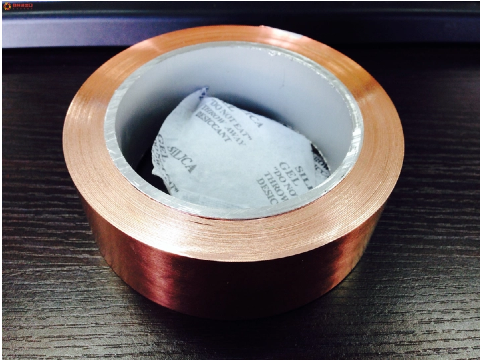
Providing clear specification details improves communication and reduces procurement risk.
Thickness range, width, and length define the basic specification. Tolerance expectations should also be included when dimensional accuracy is critical. These details help suppliers prepare suitable material and processing methods.
Quality indicators such as pinhole control, surface uniformity, and consistency across batches influence manufacturing reliability. Applications involving electronics or battery production often require stricter quality standards.
Communicating quality expectations ensures the supplied foil aligns with performance requirements.
Packaging influences surface protection during transport and storage. Foil materials are sensitive to contamination, deformation, and moisture exposure. Defining packaging requirements helps maintain material integrity before use.
Proper packaging supports consistent production results and reduces waste.
Flexibility is an important factor in applications involving bending, forming, or repeated mechanical stress. Copper foil typically offers strong flexibility when produced in appropriate temper and structure. This property supports flexible circuits, connectors, and precision components.
Manufacturing compatibility also includes forming behavior, cutting response, and integration with adhesives or coatings. Materials that support consistent processing reduce variability and improve production efficiency.
Evaluating flexibility alongside conductivity and weight provides a more complete comparison.
Reliability considerations often determine material selection in critical applications. Copper foil provides stable electrical performance across repeated cycles, which is important for energy storage systems and high reliability electronics.
Lifecycle performance includes resistance to fatigue, stable conductivity over time, and predictable behavior under environmental stress. Materials that maintain performance reduce maintenance requirements and support long term product quality.
Considering lifecycle factors helps align material selection with durability expectations.
The following table summarizes typical advantages across common applications.
Application | Copper Foil Advantage | Aluminum Foil Advantage | Recommended Choice |
Battery current collector | Higher conductivity and stability | Lower weight | Depends on electrode role |
EMI shielding | Strong shielding effectiveness | Lightweight option | Copper for high performance shielding |
Heat spreading | Superior thermal conductivity | Weight reduction | Copper for thermal efficiency |
Flexible electronics | Reliable electrical performance | Lightweight designs | Copper for performance focused design |
Lightweight structures | Stable performance | Lower density | Aluminum when weight dominates |
This comparison highlights that material selection should reflect performance priorities rather than general preference.
Material selection becomes more effective when integrated with supply planning. Defining thickness range, surface profile, and processing requirements allows suppliers to prepare material that aligns with production goals.
Hangzhou Target Import & Export Co., LTD. provides copper foil materials across multiple specifications designed for electronics, battery, and industrial applications. Aligning specification details with available supply options supports efficient procurement and consistent manufacturing outcomes.
Early specification clarity reduces delays and improves communication across engineering and purchasing teams.
The question of whether copper foil or aluminum foil is better depends on performance priorities such as conductivity, weight, thermal behavior, and manufacturing compatibility. Viewing material selection through application context provides clearer guidance than comparing properties in isolation. Hangzhou Target Import & Export Co., LTD. supplies copper foil solutions designed to support diverse applications including energy storage, shielding, and electronic manufacturing. When thickness, surface requirements, and application goals are clearly defined, selecting suitable copper film specifications becomes a practical step toward reliable performance and efficient production.
Contact us to share your application scenario, thickness range, and dimensional requirements so our team can recommend appropriate copper foil solutions and support your project with consistent material supply.
1. Is copper foil better than aluminum foil for batteries?
Both materials are used for different electrode roles. Copper foil is typically selected for negative electrode current collectors due to conductivity and stability.
2. Which material provides better EMI shielding?
Copper foil generally offers stronger shielding effectiveness because of higher conductivity and surface continuity.
3. When is aluminum foil preferred over copper foil?
Aluminum foil is often chosen when weight reduction is a primary design objective.
4. What factors should be specified when ordering copper foil?
Thickness, width, surface profile, quality expectations, and packaging requirements help ensure the supplied material meets application needs.


