
English 
T: +86-571-8663-6649
E: hzbjys@hzbjys.com
E: hzbjys@hzbjys.com
7/F, 1st Building Of ZhongHao WangJiang International Center, NO.332 East WangJiang Road, HangZhou, ZheJiang, China.
Views: 0 Author: Site Editor Publish Time: 2026-05-07 Origin: Site


Selecting the right non-slip material goes beyond simply finding a diamond pattern. The wrong alloy choice often leads to premature wear under heavy foot traffic. You might face cracked bends during fabrication or unexpected corrosion in harsh environments. We typically narrow the field down to 3003 and 5052. They stand as the two most heavily utilized non-heat-treatable alloys for chequer plates. Making the final decision requires you to balance material formability against raw fatigue strength. This guide provides procurement teams and engineers an evidence-based comparison. You will learn about mechanical limits, shop-floor processing realities, and procurement economics. We aim to help you secure the correct specification for your next major project. We will cover chemical compositions, fabrication constraints, and environmental durability. Finally, you will discover the hidden pricing dynamics governing bulk material purchases.
3003 (The Manganese Alloy): Prioritizes extreme formability and highly reflective finishes (often sold as "Brite Finish"). Ideal for decorative applications, food trucks, and custom-bent steps where high structural strength isn't required.
5052 (The Magnesium Alloy): Prioritizes high yield strength, marine-grade corrosion resistance, and vibration fatigue endurance. The standard for heavy-duty industrial flooring and marine applications.
The Cost Reality: 3003 is generally cheaper per pound, but a hidden "price-density paradox" slightly offsets volume savings compared to 5052.
The performance gap between these two alloys originates in their chemical makeup. Minor elemental shifts create vastly different mechanical properties on the factory floor.
Alloy 3003 relies on a 1.0% to 1.5% manganese addition. This element transforms the metal by increasing its tensile strength without sacrificing ductility. It provides a massive structural upgrade over baseline Aluminum Chequer Plate 1xxx Series materials. You gain roughly 20% more strength while maintaining comparable workability. Typical yield strength sits between 17,000 and 23,000 psi. This makes 3003 highly forgiving during complex forming operations.
Alloy 5052 takes a completely different metallurgical approach. It utilizes roughly 2.2% magnesium as a solid-solution strengthener. This specific addition dramatically increases the hardness and load-bearing capacity. The yield strength jumps to an impressive 33,000 to 42,000 psi. This is nearly double the yield capability of 3003. Furthermore, 5052 boasts an exceptional fatigue limit of up to 110 MPa. It heavily resists constant vibration, making it ideal for vehicle chassis and mobile platforms.
Mills rarely sell tread plates in a fully soft ("O") state. The raised diamond pattern requires a specific balance of rigidity and flexibility. Standard configurations include 3003-H22 and 5052-H32.
H22 Temper: Strain-hardened and partially annealed to a quarter-hard state. It bends easily without fracturing the raised diamonds.
H32 Temper: Strain-hardened and stabilized to a quarter-hard state. It prevents the magnesium-rich alloy from age-softening over time.
Property Parameter | 3003-H22 Aluminum | 5052-H32 Aluminum |
|---|---|---|
Primary Alloying Element | Manganese (Mn) | Magnesium (Mg) |
Typical Yield Strength | 17,000 – 23,000 psi | 33,000 – 42,000 psi |
Fatigue Endurance Limit | Approx. 60 MPa | Approx. 110 MPa |
Formability Rating | Excellent | Fair / Good |
Raw strength numbers only tell half the story. The true test of a tread plate occurs when fabricators attempt to cut, bend, and finish it.
Tread plate often requires extensive bending to form stairs, corner guards, or custom toolboxes. Your alloy choice dictates your tooling setup.
Alloy 3003 excels in deep drawing and sharp press brake bends. You can fold it into tight 90-degree angles safely. It rarely cracks along the outer bend radius. Operators prefer 3003 for highly customized profiles.
Alloy 5052 proves much harder. It easily fractures if the inner bend radius is too tight. Fabricators must use precise tooling calculations. You generally need a wider bottom die and a larger punch radius to successfully bend 5052 tread plates. Bending across the material grain becomes strictly mandatory here.
Engineers consistently notice distinct machining behaviors between the two metals.
Engineer's Note: Alloy 3003 remains relatively soft. It feels "gummy" during heavy milling. The metal chips often weld themselves to CNC flutes, causing galling. You need generous coolant and high-rake tooling to machine it cleanly. Conversely, 5052 produces crisp, clean chips. The higher hardness prevents the metal from sticking to cutting tools. You achieve superior machined edges faster.
Architects and designers must carefully consider surface finishing limitations.
3003 Finishes: It polishes exceptionally well. Suppliers often sell it as "Brite Finish" for food trucks and decorative panels. However, it performs terribly during anodizing. The high manganese content creates a muddy, grayish-yellow tint. It simply cannot produce a premium cosmetic anodized layer.
5052 Finishes: It accepts anodizing perfectly. The process yields a clear, uniform, and hard protective layer. You can easily dye it to match premium visible components.
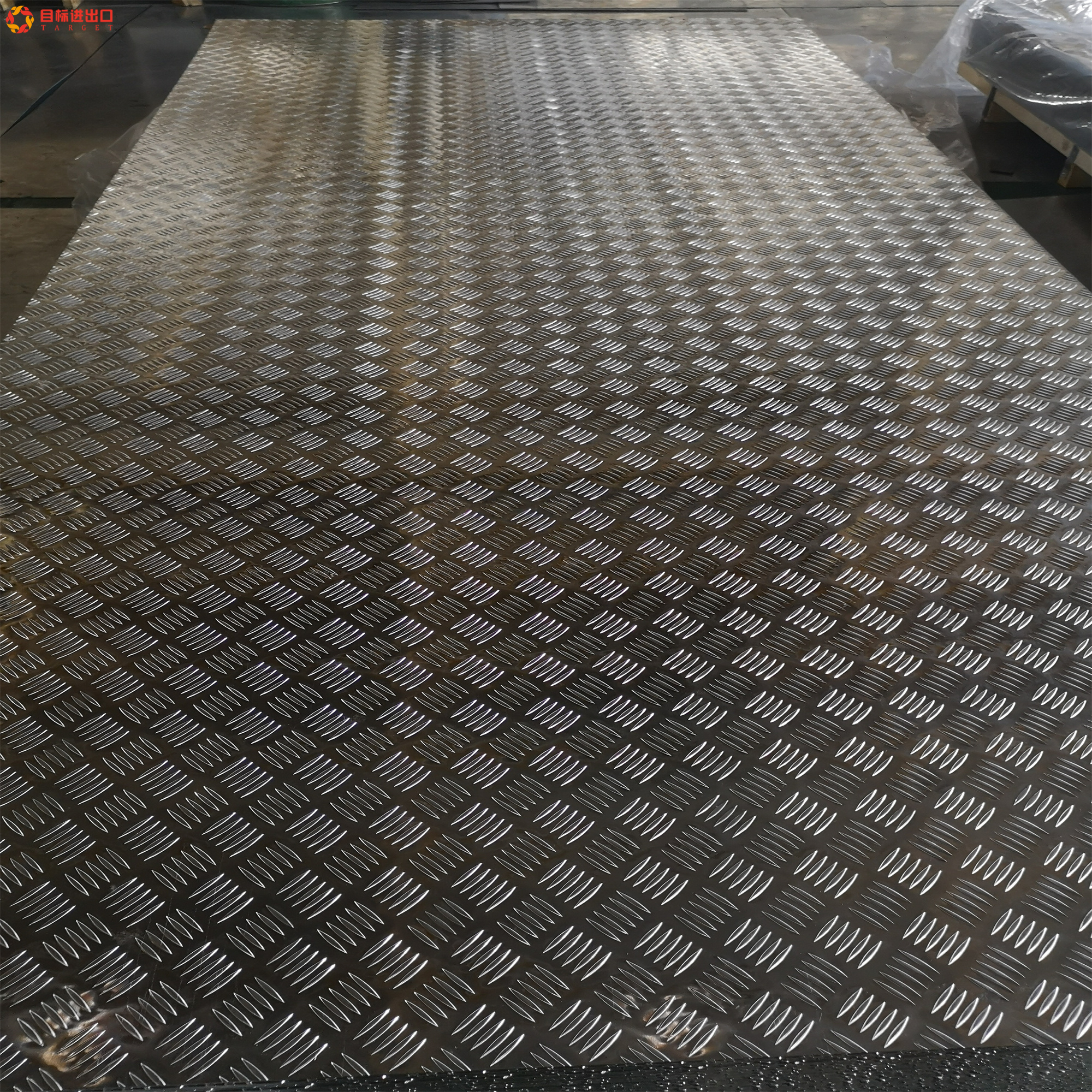
Aluminum naturally resists rust, but specific chemical environments attack different alloys aggressively. You must align your material choice with the installation site.
Alloy 3003 provides high resistance to general moisture. It handles rain, condensation, and mild, non-corrosive chemicals easily. This makes it perfect for indoor industrial walkways. It dominates the market for walk-in freezers, standard vehicle trailers, and warehouse wall protection. If your application stays inland and away from extreme caustics, 3003 offers decades of reliable service.
Saltwater fundamentally destroys lesser aluminum grades over time. We frame 5052 as the definitive 5xxx Series Anti-Slip Aluminum Tread Plate for Flooring in marine contexts. The heavy magnesium content virtually eliminates saltwater degradation. It serves as the non-negotiable standard for boat decks, offshore oil rigs, and coastal facility ramps. It withstands continuous ocean spray without pitting or compromising structural integrity.
Common Mistake: Never install 3003 tread plate on a coastal dock. The salt spray will cause rapid pitting. Always specify 5052 for any environment within five miles of saltwater.
Procurement teams usually gravitate toward the cheapest price per pound. However, aluminum purchasing requires a deeper volumetric understanding.
Market history shows 3003 consistently pricing 10% to 15% cheaper per pound than 5052. The simpler chemical composition and easier rolling process keep manufacturing costs low. On a basic quote sheet, 3003 looks like the obvious budget choice.
You must consider the density variance. You buy tread plate by the sheet (volume), but mills charge you by the pound (weight). These two alloys possess different physical densities.
3003 Density: 0.099 lb/in³
5052 Density: 0.097 lb/in³
Because 3003 is slightly denser, it weighs more per cubic inch. A standard 4x8 sheet of 3003 weighs roughly 2% more than the exact same size sheet of 5052. For bulk buyers, this weight penalty eats directly into the per-pound price advantage. The final cost gap remains narrower than it appears on paper. You might save less money than anticipated when ordering hundreds of full-sized sheets.
Comparison Metric | Alloy 3003 | Alloy 5052 |
|---|---|---|
Per Pound Price | Lower | Higher |
Material Density | 0.099 lb/in³ (Heavier) | 0.097 lb/in³ (Lighter) |
Volume-to-Weight Penalty | + 2% Weight | Baseline |
Final Bulk Value | Good for general use | Better than raw price suggests |
Engineering the correct specification eliminates costly field failures. Use this simple framework to finalize your material selection.
The plate must undergo complex, sharp press brake bending.
The application focuses on decorative or light-duty use, such as wainscoting or cosmetic flooring.
You need a high-shine "Brite Finish" surface straight from the mill.
The project environment lacks heavy salt spray or highly corrosive chemicals.
Budget constraints dominate the project requirements.
The component acts as a heavy-traffic structural overlay in an Aluminum Tread Plate application.
The installation will face constant dynamic vibration, like commercial vehicle chassis floors.
You require genuine marine-grade saltwater resistance.
The final product needs a clear, flawless anodized surface finish.
You plan to machine the plate heavily using CNC equipment.
Sometimes neither alloy fits perfectly. You must know when to step outside the 3003 and 5052 categories.
Step up to 6061-T6 if the plate itself must bear heavy structural spans without a supporting sub-floor. It offers immense strength but bends very poorly. Step down to low-cost 1xxx series plates for strictly zero-impact, decorative-only usage where strength simply does not matter.
Alloy 3003 remains the undisputed champion of extreme formability and baseline budget control. It handles intricate bends beautifully. Meanwhile, 5052 serves as your necessary insurance policy against harsh environmental exposure and severe mechanical stress. It survives marine conditions and intense vibrations that would quickly destroy lesser grades.
Follow these next steps to finalize your procurement strategy:
Audit your design prints to verify the required bend radii for all formed corners.
Evaluate your specific installation environment for salt spray or chemical exposure.
Calculate the actual sheet weights to determine your true bulk purchasing costs.
Request material samples from your metallurgical supplier to evaluate the finish before ordering.
A: Yes, you can weld them together successfully. Fabricators typically use standard 4043 or 5356 filler metals for this joint. However, you must remember that the final weld zone will only be as strong as the weaker 3003 base metal. Design your structural loads accordingly.
A: Cracking usually occurs due to an insufficient inner bend radius. Alloy 5052 strain-hardens rapidly. You must use a larger punch radius compared to softer alloys. Additionally, attempting to bend parallel to the material grain significantly increases fracture risk. Always fold across the grain.
A: It works perfectly as a cosmetic or light-duty overlay on top of existing wood or steel sub-floors. However, 3003 lacks the yield strength to act as a free-spanning structural floor grate. Heavy machinery or concentrated foot traffic will cause it to sag between supports.


