
English 
T: +86-571-8663-6649
E: hzbjys@hzbjys.com
E: hzbjys@hzbjys.com
7/F, 1st Building Of ZhongHao WangJiang International Center, NO.332 East WangJiang Road, HangZhou, ZheJiang, China.
Views: 0 Author: Site Editor Publish Time: 2026-06-19 Origin: Site


Material failure in high-temperature environments or during complex fabrication often stems from a fundamental misunderstanding of thermal limits. Specifying the wrong aluminum alloy for thermal applications leads to compromised structural integrity in the Heat-Affected Zone (HAZ), warping during machining, and catastrophic failure under operational thermal loads. Understanding the exact melting ranges—specifically the solidus and liquidus points—of different alloy series is critical for procurement and engineering teams evaluating the correct Aluminum Sheet /Plate for their specific manufacturing and operational requirements. We see this constantly on the shop floor. A fabrication team specifies a high-strength grade without checking the solidus point, and the material cracks during a standard TIG weld. You must match the thermal properties of the metal to the actual fabrication process and the final operating environment to ensure long-term structural reliability.
Pure aluminum melts at exactly 1,220.5°F (660.3°C), but commercial aluminum alloys melt across a temperature range (typically between 865°F and 1,220°F) depending on their specific alloying elements.
The 1xxx series offers the highest melting point and thermal conductivity, making it ideal for chemical and electrical applications, though it lacks structural strength.
High-strength alloys, such as the 7xxx series, have lower melting points and require precise thermal management during welding and heat treatment to prevent metallurgical degradation.
Selecting the optimal aluminum sheet /plate requires balancing thermal limits with mechanical properties, formability, and the specific thermal dynamics of the intended fabrication process.
The baseline melting point of 99.9% pure aluminum sits precisely at 1,220.5°F (660.3°C). This absolute threshold represents a pure phase change. The metal transitions directly from a solid to a liquid state without any intermediate phases. However, industrial applications rarely utilize pure aluminum because it lacks the tensile strength required for structural fabrication. Manufacturers add alloying elements to enhance mechanical properties, which fundamentally alters the thermal behavior of the metal.
Alloyed metals do not have a single melting point. They possess a melting range defined by two distinct temperatures. The solidus point marks the exact temperature where melting begins. The metal remains completely solid below this threshold. The liquidus point marks the temperature where the metal becomes entirely liquid. Between the solidus and liquidus points, the metal exists in a semi-solid, slushy state known as the mushy zone. This phase transition zone dictates how the material behaves during high-heat fabrication.
Adding elements like zinc, copper, magnesium, and manganese disrupts the pure aluminum crystal lattice. These additions depress the overall melting point and widen the gap between the solidus and liquidus temperatures. Zinc and magnesium create high-strength precipitates within the grain structure. However, they significantly lower the thermal threshold. This widened melting range complicates welding procedures. It increases the risk of partial liquefaction and hot cracking during high-heat applications because the metal loses its cohesive strength while still partially solid.
Understanding the eutectic composition of these alloys helps explain their behavior. A eutectic alloy melts at a single temperature, lower than the melting points of its individual constituents. Most commercial aluminum alloys are hypoeutectic, meaning they solidify over a range of temperatures. When you heat these alloys, the grain boundaries—where the alloying elements concentrate—often melt first. This localized melting causes the material to tear under its own weight or internal stress before the entire plate reaches the liquidus point.
Engineers frequently compare aluminum to structural steel. Standard carbon steel melts at roughly 2,500°F (1,370°C). Aluminum melts at a much lower temperature. Despite this lower absolute threshold, aluminum offers superior thermal management capabilities. Its exceptionally high thermal conductivity dissipates heat rapidly. Heat moves quickly away from localized sources, preventing localized melting. This rapid dissipation makes aluminum preferable for heat exchangers, heat sinks, and thermal management systems.
Aluminum also possesses a high specific heat capacity (roughly 0.90 J/g°C compared to steel's 0.49 J/g°C). This means aluminum absorbs more heat energy per gram before its temperature rises. When you apply a heat source to an aluminum plate, the energy spreads out quickly and the overall temperature increase is slower than it would be in a steel plate of the same mass. This property is highly advantageous in automotive and aerospace applications where managing engine or friction heat is a primary design constraint.
Alternative non-metallic materials present different thermal challenges. Fiberglass, polymers, and composite screens degrade at relatively low temperatures. They warp under moderate thermal stress and lose their structural rigidity long before they actually melt. Many composites emit toxic fumes when exposed to heat, creating severe safety hazards in enclosed environments. Aluminum maintains structural predictability up to its specific solidus point. It does not off-gas or suddenly shatter. This predictability makes it a safer, non-combustible choice. Architectural applications rely on this stability for exterior cladding. Industrial screening and structural framing benefit from its consistent thermal behavior under load.
Thermal Property Comparison of Common Industrial Materials
Material | Melting Point / Range | Thermal Conductivity (W/m·K) | Combustibility |
|---|---|---|---|
Pure Aluminum | 1,220.5°F (660.3°C) | 235 | Non-combustible |
Carbon Steel | ~2,500°F (1,370°C) | 45 | Non-combustible |
Fiberglass (FRP) | Degrades at ~400°F (204°C) | 0.04 | Combustible / Emits fumes |
Copper | 1,984°F (1,085°C) | 400 | Non-combustible |
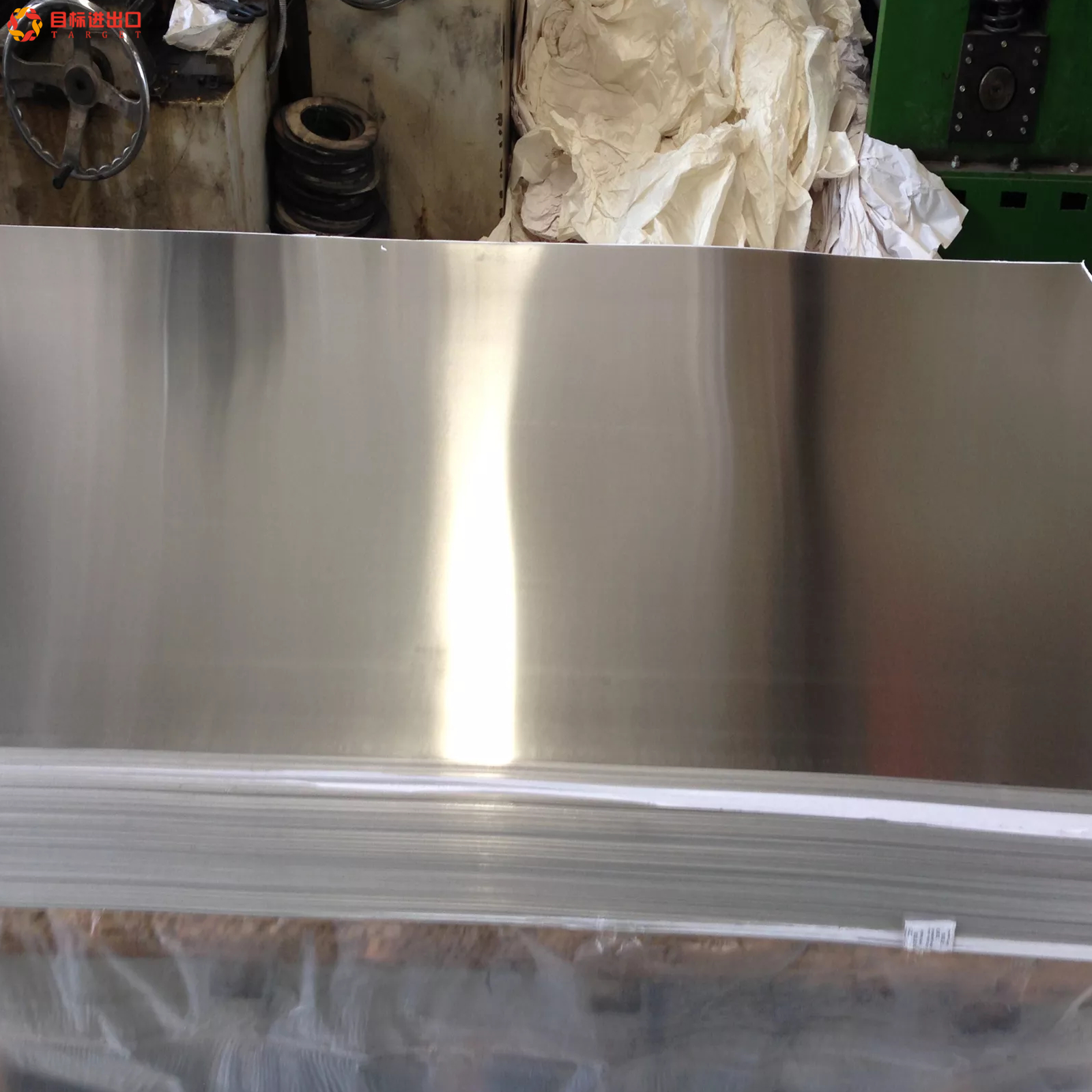
The 1xxx series represents commercially pure aluminum. It contains a minimum of 99% aluminum by weight. This high purity level results in a very narrow melting range. The material melts between 1,190°F and 1,220°F (643°C to 660°C). The absence of heavy alloying elements keeps the solidus point exceptionally high, making it the most thermally stable aluminum grade available.
This series delivers the highest thermal and electrical conductivity available. It also provides excellent corrosion resistance because there are no alloying elements to create galvanic cells within the microstructure. However, the lack of alloying elements means it cannot be heat-treated for strength. It remains relatively soft and deforms under heavy structural loads. You cannot rely on this grade for load-bearing applications.
You should specify 1xxx series aluminum sheet plate for chemical processing equipment. It excels in heat exchangers, electrical busbars, and spun hollowware. These applications require maximum thermal stability and conductivity. Structural load requirements remain minimal in these environments, allowing the pure aluminum to perform without risk of mechanical failure.
The 3xxx series utilizes manganese as its primary alloying element. This addition increases strength by about 20% over the 1xxx series without severely impacting the melting point. The typical melting range spans from 1,190°F to 1,210°F (643°C to 654°C). The solidus point remains high enough for most industrial applications involving moderate heat exposure.
This non-heat-treatable alloy offers moderate strength through strain hardening (cold working). It provides exceptional formability for complex bending, drawing, and stamping. The material remains highly stable during welding processes. The narrow melting range prevents excessive pooling in the weld zone, making it highly predictable for manual and automated welding operations.
Engineers rely on 3xxx series aluminum sheet plate as the standard for pressure vessels and storage tanks. It performs exceptionally well in chemical equipment fabrication where moderate heat and corrosive materials are present. Architectural applications use it for roofing, siding, and acoustic panels. It delivers consistent performance under moderate thermal stress without losing its structural integrity.
The 7xxx series achieves extreme strength through the addition of zinc and magnesium. These elements create a highly complex microstructure through precipitation hardening. This complexity significantly lowers the melting range. The material melts between 890°F and 1,175°F (477°C to 635°C). The solidus point drops drastically compared to pure aluminum, making it highly sensitive to heat.
This series yields the highest tensile strength of all commercial aluminum alloys, often rivaling structural steel. However, it is highly susceptible to thermal degradation. The wide melting range makes it prone to hot cracking during solidification. Elevated temperatures easily destroy the carefully engineered T6 temper, causing the strengthening precipitates to dissolve or over-age, which ruins the mechanical properties.
You must restrict 7xxx series aluminum sheet plate to high-stress structural applications. Aerospace frames, military vehicles, and high-performance automotive parts utilize this grade. Operating temperatures must remain well below the solidus point. Traditional arc welding is typically avoided because the heat input destroys the temper and causes severe cracking. If joining is required, it demands highly controlled friction stir welding techniques or mechanical fastening.
Melting Ranges and Characteristics of Standard Aluminum Alloys
Alloy Grade | Primary Alloying Element | Solidus Point | Liquidus Point | Weldability |
|---|---|---|---|---|
1100 | None (99% Pure) | 1,190°F (643°C) | 1,220°F (660°C) | Excellent |
3003 | Manganese | 1,190°F (643°C) | 1,210°F (654°C) | Excellent |
5052 | Magnesium | 1,125°F (607°C) | 1,200°F (649°C) | Good |
6061 | Magnesium & Silicon | 1,080°F (582°C) | 1,205°F (652°C) | Good (Requires filler) |
7075 | Zinc & Magnesium | 890°F (477°C) | 1,175°F (635°C) | Poor (Prone to cracking) |
Welding introduces extreme localized temperatures that exceed the liquidus point of the base metal. This thermal shock fundamentally alters the temper and strength of the surrounding material. The area adjacent to the weld is known as the Heat-Affected Zone (HAZ). The grain structure in the HAZ expands and weakens. The mechanical properties degrade significantly in this region, often becoming the weakest point in the entire assembly.
Different alloy series react differently to HAZ formation. The 3xxx and 5xxx series recover relatively well. Their non-heat-treatable nature means strength loss is manageable and predictable. Conversely, heat-treatable alloys like the 6xxx and 7xxx series suffer severe strength loss. The welding heat dissolves the strengthening precipitates. This degradation often requires complete post-weld heat treatment (solution heat treating and artificial aging) to restore structural integrity.
Success in welding requires selecting the correct filler alloy. The filler metal must have a lower melting point than the base material. This prevents the base metal from liquefying excessively and minimizes the size of the HAZ. For example, using a 4043 filler rod (which contains silicon to lower the melting point and increase fluidity) helps prevent hot cracking when welding 6061 plates. The filler metal stays liquid slightly longer than the base metal, feeding the weld pool as it shrinks during solidification.
High-speed CNC machining generates significant friction. This friction translates directly into heat at the cutting edge. Aluminum possesses a high thermal expansion coefficient (approximately 13 microinches per inch per degree Fahrenheit). As the material heats up during aggressive milling or turning, it expands rapidly. If this expansion is not accounted for, localized warping occurs. Dimensional accuracy suffers. A part machined to tolerance while hot will shrink out of tolerance as it cools on the bench.
Machinists must balance tooling trade-offs based on the specific alloy. Feed rates and spindle speeds require adjustment. Alloys with lower solidus points, like the 7xxx series, require more aggressive coolant application to prevent the chips from welding to the cutting tool (built-up edge). High thermal conductivity helps dissipate the heat, but high-pressure flood coolant remains necessary for precision cuts. Understanding the exact melting range and thermal expansion rate dictates the entire machining strategy, from roughing passes to final finishing.
Prolonged exposure to elevated temperatures causes high-temperature creep. This phenomenon occurs well below the actual melting point. Heat-treatable alloys begin losing their mechanical properties around 300°F to 400°F (150°C to 200°C). The artificial aging process reverses or over-ages. The metal slowly softens and deforms under continuous load, leading to sagging structures or blown pressure vessels.
Mitigation requires proper alloy selection for sustained heat environments. Do not rely on high-strength 7xxx or 6xxx series for hot applications. Instead, specify non-heat-treatable alloys. The 3xxx or 5xxx series maintain their mechanical properties much better at moderately elevated temperatures. Their strength relies on work hardening rather than thermal precipitation, making them far more stable when exposed to continuous heat.
Architectural and structural applications face environmental heat risks. Industrial scaffolding, exterior panels, and safety screens must maintain integrity during fire events. Exposure to extreme environmental heat compromises the material's load-bearing capacity. This failure happens long before the metal reaches its solidus point. At 400°F, many structural aluminum alloys lose up to 50% of their yield strength.
You must understand the specific fire rating requirements of your project. Aluminum is strictly non-combustible according to ASTM E136 standards. It will not fuel a fire. However, its lower melting point compared to steel presents structural risks. Structural components must be insulated. Specify appropriate thermal barriers, intumescent coatings, or fire-rated gypsum enclosures in fire-prone environments to delay heat transfer and maintain structural integrity long enough for evacuation.
High temperatures accelerate chemical reactions. This includes galvanic corrosion. Galvanic corrosion occurs when aluminum is fastened to dissimilar metals like steel or copper in the presence of an electrolyte (like saltwater or high humidity). Elevated temperatures increase the conductivity of the electrolyte and the kinetic energy of the electrons. The corrosion rate multiplies rapidly under thermal stress, eating away the aluminum at the fastening points.
Mitigation requires physical separation of the metals. Implement thermal barriers and dielectric coatings between joints. Use isolation washers, neoprene gaskets, or specialized coatings on all fasteners. Where chemical and thermal exposure overlap severely, specify high-purity 1xxx series alloys. Their lack of alloying elements makes them naturally more resistant to galvanic attack, as there are fewer internal micro-galvanic cells within the metal's structure.
The melting point of aluminum is not a single number. It is a dynamic range dictated by the specific alloy series and its chemical composition. Procurement decisions must rely on the precise solidus and liquidus points of the chosen grade. Ignoring these thermal limits leads to fabrication defects, machining inaccuracies, and catastrophic operational failures in the field.
To ensure structural integrity and manufacturing efficiency, follow these next steps:
Review the specific Material Safety Data Sheets (MSDS) and technical data sheets for the exact solidus and liquidus ranges of your shortlisted alloys.
Select 1xxx series alloys for maximum thermal conductivity, 3xxx series for weldability and moderate heat resistance, and 7xxx series strictly for temperature-controlled, high-strength applications.
Calculate the thermal expansion coefficients for your specific machining operations to prevent out-of-tolerance parts during high-speed CNC milling.
Specify filler metals with lower melting points than your base plates to minimize the Heat-Affected Zone (HAZ) and prevent hot cracking during welding.
Consult with a metallurgical engineer to validate your alloy choice against your specific operational temperatures and fire rating requirements.
A: Pure aluminum (99.9% purity) melts at exactly 1,220.5°F (660.3°C). At this specific temperature, the metal transitions directly from a solid state to a liquid state without a semi-solid phase.
A: Adding alloying elements like zinc, copper, or magnesium changes the metal's crystalline structure. This creates a solidus point (where melting begins) and a liquidus point (where it is fully liquid). The metal exists in a slushy state between these temperatures.
A: The 1xxx series has the highest melting point. Because it contains a minimum of 99% pure aluminum and lacks heavy alloying elements, its melting range remains very high, typically between 1,190°F and 1,220°F.
A: Aluminum begins to lose its structural strength well below its melting point. Heat-treatable alloys often start losing their temper and mechanical properties when exposed to sustained temperatures between 300°F and 400°F.
A: Steel melts at a much higher temperature (around 2,500°F). However, aluminum dissipates heat faster due to high thermal conductivity. Unlike fiberglass, which can warp or emit toxic fumes at low temperatures, aluminum remains non-combustible and structurally predictable up to its solidus point.
A: Welding creates a Heat-Affected Zone (HAZ) where temperatures exceed the liquidus point. To prevent the base metal from liquefying excessively and cracking, welders must select a filler alloy with a lower melting point than the base aluminum plate.
A: No. The 7xxx series contains zinc and magnesium, which significantly lowers its melting range (890°F to 1,175°F). It is highly susceptible to thermal degradation and loss of temper, making it unsuitable for high-temperature operational environments.


