
English 
T: +86-571-8663-6649
E: hzbjys@hzbjys.com
E: hzbjys@hzbjys.com
7/F, 1st Building Of ZhongHao WangJiang International Center, NO.332 East WangJiang Road, HangZhou, ZheJiang, China.
Views: 0 Author: Site Editor Publish Time: 2026-10-14 Origin: Site


Material selection dictates product longevity, manufacturing viability, and unit economics across aerospace, automotive, and consumer electronics. Engineering and procurement teams frequently over-specify materials. They default to exotic metals when advanced surface treatments on standard alloys would easily suffice. This practice extends lead times, complicates machining operations, and creates unnecessary production bottlenecks on the shop floor. To optimize the balance between weight and durability, teams must evaluate specific mechanical trade-offs. You must analyze how base metals and surface treatments perform in real-world environments under heavy stress. We need to look closely at how treated aluminum performs against heavier alternatives. By understanding the exact metallurgical limits of these materials, you can stop over-engineering parts. This approach streamlines your supply chain and reduces machining hours without sacrificing structural integrity or environmental resistance.
Anodizing transforms the surface of aluminum into a highly durable, corrosion-resistant anodic oxide finish, bridging the performance gap between standard aluminum and harder metals.
In the titanium vs aluminum debate, titanium offers superior raw tensile strength and extreme temperature resistance, while anodized aluminum provides superior thermal conductivity, lighter weight, and significantly lower machining and procurement costs.
Type III (Hardcoat) anodizing alters dimensional tolerances; engineers must account for coating thickness when specifying an anodized aluminum extrusion or profile.
Material selection should be dictated by environmental exposure, fatigue life requirements, and production scale rather than baseline tensile strength alone.
Anodizing is an electrochemical conversion process. It does not apply a coating to the surface like paint or powder coat. Instead, it changes the surface chemistry of the metal itself. The process converts the outer layer of the aluminum substrate into aluminum oxide. This oxide layer is fully integrated with the underlying metal. It cannot chip, flake, or peel under stress. The resulting structure is highly ordered, porous, and exceptionally hard.
The operation begins by submerging the machined aluminum component into an acid electrolyte bath, typically sulfuric acid. The aluminum part acts as the anode in an electrical circuit. Cathodes line the inside of the processing tank. We pass a direct electrical current through the bath. The current causes water in the electrolyte to break down, releasing oxygen ions at the surface of the aluminum part.
These oxygen ions combine with the aluminum atoms. This reaction forms a microscopic honeycomb structure of aluminum oxide. The structure consists of hexagonal cells, each containing a central pore. The depth and density of these pores depend entirely on the bath temperature, acid concentration, and applied voltage. After the oxide layer reaches the target thickness, we typically seal the pores using hydrothermal or chemical methods to lock out contaminants and improve corrosion resistance.
The chemical composition of the base metal dictates the success of the anodizing process. Alloying elements react differently to the electrical current and the acid bath. You must match the alloy to the desired finish.
1000-Series: Pure aluminum. It anodizes beautifully, creating a clear, highly reflective oxide layer. We use this for specialized optical reflectors.
2000-Series: Heavily alloyed with copper. Copper does not anodize; it dissolves in the acid bath. This leaves microscopic voids in the coating. The resulting finish is dark, porous, and offers poor corrosion resistance.
5000-Series: Alloyed with magnesium. These grades produce excellent, uniform coatings. They are the standard for marine hardware and architectural panels.
6000-Series: Alloyed with magnesium and silicon. This is the manufacturing workhorse. Alloys like 6061 yield consistent, hard, and visually appealing anodic layers.
7000-Series: Alloyed with zinc. These high-strength alloys anodize well, producing very hard coatings. However, the high zinc content can cause the finish to appear slightly yellow or gray rather than perfectly clear.
Industrial applications generally rely on two specific anodizing specifications. The choice depends entirely on the mechanical demands of the final part.
Type II anodizing utilizes a room-temperature sulfuric acid bath (around 68°F to 72°F) and relatively low voltage. This process builds an oxide layer between 0.0001 and 0.001 inches thick. It provides excellent corrosion protection and moderate wear resistance. The pore structure of Type II is highly receptive to organic dyes, making it the standard choice for colored components.
Type III anodizing, or hardcoat, requires a chilled acid bath (around 28°F to 32°F) and significantly higher voltage. The cold temperature prevents the acid from dissolving the oxide layer as it forms. This allows the coating to build up to 0.003 inches thick. The resulting surface is incredibly dense and boasts a hardness equivalent to tool steel. We specify Type III for sliding mechanisms, gears, and high-friction environments.
Anodizing alters the physical dimensions of the machined part. The aluminum oxide layer grows both into the substrate and out from the original surface. The standard rule of thumb is a 50/50 split. Half of the coating thickness penetrates the metal, and half builds outward.
You must calculate this growth during the CAD and CAM stages. If you specify a 0.002-inch Type III hardcoat on a part, the surface will grow outward by 0.001 inches. For a machined bore, this means the internal diameter will shrink by 0.002 inches total (0.001 inches per side). For a machined shaft, the outer diameter will increase by 0.002 inches. If you fail to adjust your pre-machining tolerances for this growth, your parts will fail inspection and will not assemble correctly.
Evaluating titanium vs aluminum requires a strict look at mechanical properties, thermal behavior, and shop-floor realities. Engineers often default to titanium for its reputation, but treated aluminum frequently provides a superior engineering solution.
Titanium alloys, specifically Ti-6Al-4V, deliver massive specific strength. They handle extreme tensile loads without yielding. High-grade aluminum alloys, such as 7075-T6, also provide excellent strength, though their raw tensile limits are lower than titanium. However, aluminum is roughly 40% lighter than titanium. When you design for aerospace or automotive applications where mass is the primary constraint, aluminum allows you to use thicker cross-sections. You can achieve the required structural rigidity while still maintaining a lower overall assembly weight compared to a thinner titanium alternative.
Bare titanium is notoriously susceptible to abrasive wear. It has a relatively low surface hardness (around 36 HRC) and tends to gall when sliding against other metals. Type III hardcoat anodized aluminum completely changes the wear dynamic. The hardcoat layer routinely exceeds 60 HRC equivalent. This ceramic-like surface provides exceptional sliding wear resistance. For pneumatic cylinders, linear guide rails, and rotating shafts, hardcoat aluminum outperforms bare titanium significantly.
Thermal management dictates material selection in electronics and high-speed machinery. Titanium is a thermal insulator. It has a thermal conductivity of roughly 6.7 W/m·K. It traps heat, which is useful for isolating hot components like exhaust manifolds. Aluminum is a thermal conductor, boasting a conductivity of around 167 W/m·K. It pulls heat away from processors and motors rapidly. Furthermore, the aluminum oxide layer acts as a strict electrical insulator. You can design an anodized aluminum heat sink that dissipates massive thermal loads while preventing electrical short circuits.
The shop floor dictates production viability. Machining titanium is slow and demanding. The metal work-hardens instantly if the tool rubs. It requires highly rigid machine setups, specialized carbide inserts, high-pressure coolant, and very low surface feet per minute (SFM). Tool wear is aggressive and constant.
Aluminum machines predictably and rapidly. You can run standard carbide end mills at massive spindle speeds and high feed rates. Chip evacuation is straightforward. The ability to machine aluminum parts in a fraction of the time it takes to cut titanium makes aluminum the only logical choice for high-volume production runs.
Mixed-metal assemblies create galvanic corrosion. When you place dissimilar metals in direct contact within a conductive environment like saltwater, the less noble metal acts as an anode and corrodes. Bare aluminum will corrode rapidly when bolted to titanium hardware. The anodic layer on treated aluminum solves this. The oxide coating is a dielectric barrier. It breaks the electrical circuit between the two metals, effectively neutralizing the galvanic corrosion risk in mixed-metal assemblies.
Mechanical Property | Titanium (Ti-6Al-4V) | Anodized Aluminum (7075-T6, Type III) |
|---|---|---|
Density | 4.43 g/cm³ | 2.81 g/cm³ |
Thermal Conductivity | 6.7 W/m·K | 130 - 167 W/m·K |
Surface Hardness | ~36 HRC | 60+ HRC (Ceramic equivalent) |
Machinability Rating | Poor (Requires low SFM, high rigidity) | Excellent (Allows high SFM, rapid feeds) |
Electrical Conductivity | Conductive | Surface is a Dielectric Insulator |
Galling Resistance | Very Poor | Excellent (Especially with PTFE seal) |
Beyond raw material comparisons, the anodizing process unlocks specific functional capabilities. These surface properties solve complex mechanical challenges that bare metals simply cannot address.
Bare aluminum forms a natural oxide layer instantly upon exposure to air, but this layer is only a few nanometers thick. It breaks down easily in harsh environments. Anodizing forces this oxide layer to grow thousands of times thicker. A properly sealed Type II anodized part can withstand hundreds of hours in an ASTM B117 salt spray test without pitting. This chemical resistance extends to many industrial solvents, hydraulic fluids, and cleaning agents, making it ideal for processing equipment.
Thread galling destroys assemblies. When you thread a titanium bolt into a titanium tapped hole, the friction causes the metals to micro-weld and seize. You must cut the parts apart. Anodized aluminum prevents this mechanical failure. The porous nature of the unsealed anodic layer allows us to impregnate the surface with secondary lubricants. We frequently use PTFE (Teflon) dips. The PTFE locks into the microscopic pores, creating a permanent, dry-lubricated surface that eliminates galling and drastically reduces the coefficient of friction on sliding rails.
The honeycomb pore structure created during Type II anodizing acts like a microscopic sponge. Before we seal the pores, we can submerge the part in organic or inorganic dye tanks. The dye penetrates deep into the oxide layer. Once sealed, the color is permanently locked beneath the hard ceramic surface. It will not flake, peel, or scratch off like paint. Functionally, we use matte black organic dyes for optical housings and aerospace cockpit components to eliminate light reflection and glare.
You must adjust your assembly methods for anodized parts. You cannot weld directly over an anodized surface. The aluminum oxide layer melts at roughly 3,700°F, while the base aluminum melts at 1,220°F. Attempting to weld through the coating will trap oxides in the weld pool, causing massive porosity and structural failure. You must machine or chemically strip the coating away from the weld zone.
Instead of welding, engineers rely on mechanical fasteners or structural adhesives. Unsealed anodized surfaces provide an incredible mechanical bonding profile for two-part epoxy adhesives. The adhesive flows into the microscopic pores, creating a shear strength that often exceeds the yield strength of the base metal itself.
Aluminum is infinitely recyclable without loss of mechanical properties. The anodizing process aligns with strict environmental regulations. Unlike chrome or nickel plating, which rely on highly toxic heavy metals and generate hazardous waste, anodizing uses simple sulfuric acid. We can easily neutralize the acid effluent. The final aluminum oxide finish is a naturally occurring, non-toxic compound. This makes anodized aluminum a highly sustainable choice for modern manufacturing.
The physical geometry of your raw material dictates how you manage the anodizing process. Sheets, profiles, and extrusions behave differently in the chemical bath. You must design your parts with these manufacturing realities in mind.
An anodized aluminum sheet serves as the foundation for architectural cladding, marine bulkheads, and electronic enclosures. When specifying sheet material, you must decide between batch anodizing and continuous coil anodizing.
Continuous coil anodizing runs massive rolls of aluminum through the chemical baths at a constant speed. This guarantees absolute color consistency across thousands of square feet of material. Batch anodizing dips individual cut sheets into tanks, which can result in slight color variations between batches.
You must also account for bend radii. The anodic layer is a hard ceramic. It does not stretch. If you attempt to bend an anodized sheet in a press brake, the oxide layer will craze and micro-crack along the bend line. This exposes the bare aluminum underneath and destroys the corrosion resistance. You must perform all forming, punching, and bending operations before sending the sheet to the anodizing line.
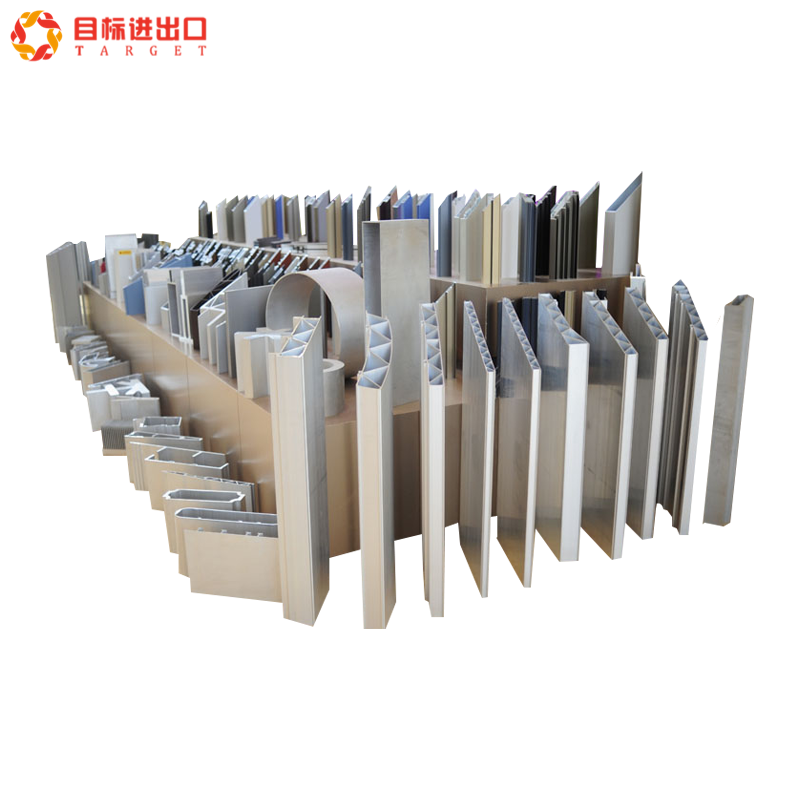
An anodized aluminum profile provides the structural framework for industrial automation, modular workstations, and heavy-duty heat sinks. The primary engineering challenge with profiles is managing electrical conductivity.
Because the anodized layer is a strict insulator, you cannot rely on surface contact for electrical grounding. If your machine frame requires a ground path, you must engineer a solution. You can specify precise masking during the anodizing process. We apply liquid maskants or custom silicone plugs to specific contact pads to prevent the oxide layer from forming. Alternatively, you can use specialized grounding fasteners. These bolts feature serrated undersides that physically cut through the hardcoat layer as you torque them down, establishing a secure electrical connection with the base metal.
Custom linear actuators, pneumatic manifolds, and structural rails rely heavily on an anodized aluminum extrusion. Managing the electrochemical process on complex extruded shapes requires careful planning.
First, you must manage racking marks. The extrusion must be physically clamped to a conductive rack (usually made of titanium or bare aluminum) to transfer the electrical current during the bath. The exact spots where the clamps touch the part will not anodize. You must design hidden tabs, specify non-critical surfaces, or allow for oversized stock that you cut away later to hide these bare contact points.
Second, you must account for the throwing power of the acid bath. Electrical current follows the path of least resistance. On a complex extrusion with deep internal channels, the exterior surfaces will draw more current and build a thicker coating than the internal cavities. If you require a uniform 0.002-inch hardcoat inside a deep pneumatic bore, your finishing partner must design custom auxiliary cathodes that run down the center of the extrusion to force the current into the cavity.
Material selection demands a rigid, data-driven framework. You must map your exact project requirements against the metallurgical realities of the metals. Do not rely on assumptions. Define your constraints and eliminate materials that fail the criteria.
Start by defining the absolute limits of your application. Determine the maximum allowable mass for the assembly. Identify the peak operating temperature the part will experience. Calculate the expected number of sliding wear cycles over the product's lifespan. Once you establish these hard numbers, the choice between titanium and treated aluminum becomes a simple engineering calculation.
Titanium is mandatory for specific extreme environments. You must specify titanium for applications subjected to extreme heat. Jet engine turbines, high-performance exhaust headers, and aerospace firewalls operate well above aluminum's melting point. Titanium is also required for absolute biocompatibility in long-term medical implants, as it osseointegrates with human bone. Finally, choose titanium when you face severe spatial constraints. If you need massive yield strength but physically cannot increase the cross-sectional area of the part to accommodate aluminum, titanium delivers the necessary strength density.
Default to anodized aluminum for the vast majority of structural and mechanical applications. It is the optimal choice when you need to minimize weight, maximize thermal dissipation, and maintain rapid machining cycles. If your primary requirement is surface hardness to prevent wear, Type III hardcoat delivers ceramic-level protection without the machining nightmares associated with titanium. It allows you to scale production rapidly, preserve your cutting tools, and meet aggressive manufacturing deadlines.
Anodizing introduces a specific mechanical risk: fatigue life reduction. The hard, brittle anodic layer can develop microscopic cracks under high-frequency cyclic loading. These micro-cracks act as stress concentrators. They can propagate through the oxide layer and into the softer aluminum substrate, leading to premature fatigue failure.
You can mitigate this risk through controlled surface treatments. Shot peening the bare aluminum part prior to anodizing induces deep compressive stresses in the surface layer. This compressive stress counteracts the tensile stresses that cause crack propagation, significantly restoring the fatigue life of the component. If extreme wear resistance is not strictly required, you can also specify a thinner Type II coating, which has a less severe impact on fatigue strength than a thick Type III hardcoat.
Follow these action-oriented next steps to optimize your material selection process and streamline your manufacturing workflow:
Audit your current engineering drawings to identify parts over-specified with titanium where surface hardness and weight reduction are the actual primary requirements.
Consult with your machining and finishing partners to select specific 6000 or 7000 series aluminum alloys that balance high-speed machinability with optimal anodic coating formation.
Recalculate all pre-machining CAD dimensions to explicitly account for the 50% inward penetration and 50% outward growth of Type III hardcoat finishes.
Designate specific, non-critical racking locations on your blueprints to ensure electrical contact marks do not interfere with sealing surfaces or aesthetic faces.
Implement shot peening protocols for any anodized structural components subjected to high-frequency cyclic loading to preserve the underlying fatigue life of the aluminum.
A: No. While the surface layer of hardcoat anodized aluminum is extremely hard and wear-resistant, the underlying aluminum substrate has a lower tensile and yield strength than titanium. Titanium maintains superior structural strength under heavy loads.
A: Yes, titanium can be anodized, but the process and results differ. Titanium anodizing is primarily used for color-coding via light refraction or for anti-galling purposes. It does not build a thick, porous protective oxide layer like aluminum anodizing does.
A: Yes. The anodic layer penetrates the substrate and builds outward. A standard Type III hardcoat of 0.002 inches will increase the part's overall dimension by approximately 0.001 inches per surface. You must account for this during machining.
A: Properly sealed architectural-grade anodized aluminum can last decades outdoors. It exhibits minimal fading or corrosion. The inorganic nature of the oxide layer makes it highly resistant to UV degradation and harsh weather conditions.
A: You cannot weld directly over the anodized layer. The oxide coating has a much higher melting point than the base metal and will contaminate the weld. You must mechanically or chemically strip the anodized layer from the specific weld zone first.
A: Color variation stems from several factors. Inconsistent alloy composition, varying cooling rates during extrusion, and slight fluctuations in the anodizing bath temperature or dye concentration can all cause slight color shifts between different batches of metal.


