
English 
T: +86-571-8663-6649
E: hzbjys@hzbjys.com
E: hzbjys@hzbjys.com
7/F, 1st Building Of ZhongHao WangJiang International Center, NO.332 East WangJiang Road, HangZhou, ZheJiang, China.
Views: 0 Author: Site Editor Publish Time: 2026-07-06 Origin: Site


Advanced manufacturing constantly wrestles with a core engineering dilemma. We need extreme structural strength and significant weight reduction without sacrificing functional material requirements. Marketing materials often claim carbon fiber is "50 times stronger" than steel. This hyperbole obscures engineering reality. Proper material selection demands a rigorous evaluation of tensile strength, yield strength, isotropy, and shear resistance. Furthermore, modern assemblies require seamless integration with conductive materials.
We must evaluate carbon fiber composites against steel for structural integrity. Structural choices directly dictate the selection of functional metals. For example, integrating a Copper Strip is absolutely essential for thermal management, grounding, and electrical connectivity in complex assemblies. This article breaks down the true mechanical differences between these materials and explains how to build reliable hybrid systems.
Tensile Strength Realities: Carbon fiber boasts a tensile strength of 3,500 to over 7,000 MPa, compared to steel’s 400 to 1,200 MPa, but this strength is highly directional (anisotropic) and primarily applies to tension, not shear.
Absolute vs. Specific Strength: While 1 kg of carbon fiber is vastly stronger than 1 kg of steel (specific strength), comparing a single raw strand of carbon fiber to a steel wire of the exact same cross-section (absolute strength) reveals a more nuanced structural reality.
System-Level Integration: Structural materials cannot operate in a vacuum; integrating carbon fiber or steel enclosures requires complementary functional metals, such as a high purity copper strip, to manage electrical and thermal loads.
Implementation Risks: Transitioning from steel to carbon fiber introduces new failure modes (delamination, brittle fracture, poor edge retention) and galvanic corrosion risks when paired with incompatible metals.
Engineers do not measure "strength" as a single, universal metric. We evaluate materials through specific mechanical lenses on the test bench. Ultimate tensile strength (UTS) measures resistance to being pulled apart before breaking. Yield strength defines the exact point of permanent, plastic deformation. Young's modulus dictates the stiffness of the material under load. Shear strength measures resistance to sliding failure planes. Understanding these distinct metrics is mandatory before replacing traditional metals with advanced composites on the shop floor.
Carbon fiber exhibits extraordinary raw performance metrics when pulled perfectly straight. Standard aerospace-grade carbon fiber easily achieves a tensile strength of 3,500 MPa. High-modulus variants can push past 7,000 MPa. The covalent bonds between carbon atoms aligned along the fiber axis create this immense resistance to tension. When you load a carbon tow in pure tension, it outperforms almost every other structural material available.
However, we must address the reality of a single strand versus a finished composite structure. Individual carbon fibers are exceptionally strong in tension. Yet, the final composite's overall strength depends heavily on the epoxy matrix holding it together. The fiber orientation dictates exactly where that strength lies. If you pull a carbon fiber composite in a direction not supported by the internal weave, its strength drops dramatically. The epoxy matrix will fracture long before the carbon fibers reach their tensile limit.
Steel offers a completely different structural paradigm. High-strength steel alloys typically range from 400 MPa to 1,200 MPa in tensile strength. While this appears lower on paper compared to raw carbon filaments, steel possesses a massive field advantage. It is an isotropic material. Its crystalline lattice structure provides consistent mechanical properties regardless of how you orient the part.
Isotropy means steel exhibits equal strength in all directions. You do not need to align a grain or weave to handle complex, unpredictable loads. This makes steel highly predictable for multi-directional load-bearing applications like vehicle chassis or heavy equipment frames. When a steel component faces unexpected twisting or bending forces, it relies on its uniform structure to distribute the stress evenly across the entire part.
The choice between these materials often comes down to load predictability in the field. Carbon fiber's directional strength requires precise layup engineering. You must anticipate every single force vector the part will experience during its operational lifespan. If you miscalculate, the anisotropic nature of the composite becomes a severe liability. Steel provides uniform structural reliability. It forgives minor engineering miscalculations because its strength does not depend on a specific directional weave. You can bolt into steel, weld it, and subject it to off-axis loads without immediate catastrophic failure.
Extreme tensile strength does not translate to shear resistance or edge retention. People frequently ask why cutting tools, drill bits, or swords are not made from carbon fiber. The answer lies entirely in shear forces. When you sharpen an edge, you expose the material to intense, concentrated shear stress. Carbon fiber is highly brittle under these conditions. The epoxy matrix shatters, and the fibers splinter immediately upon impact. Steel yields and holds a sharp edge because its metallic bonds can deform plastically without catastrophic failure. Steel pushes back against shear forces; carbon fiber simply snaps.
Raw strength only tells half the story in advanced manufacturing. We must analyze how weight reduction impacts overall system performance. Reducing mass improves fuel efficiency in vehicles. It increases payload capacity in aerospace applications. Specific strength measures a material's strength divided by its density, providing a true apples-to-apples comparison for weight-critical engineering.
The density differences between these materials dictate their use cases. Carbon fiber composites typically have a density of approximately 1.5 to 1.6 g/cm³. Steel sits at a heavy 7.8 to 8.0 g/cm³. This means carbon fiber is roughly five times lighter than an equivalent volume of steel. When you hold a carbon fiber driveshaft next to a steel one, the mass difference is immediately obvious.
This massive density difference creates a profound specific strength advantage. When you calculate the strength per kilogram, carbon fiber vastly outperforms steel. This provides a direct return on investment in aerospace and automotive manufacturing. Lighter aircraft burn less jet fuel. Lighter electric vehicles achieve longer battery ranges. You can build a thicker, more robust carbon fiber structure that still weighs significantly less than a thin-walled steel equivalent.
Stiffness is just as critical as ultimate strength in dynamic applications. Per unit of weight, carbon fiber composites offer an order of magnitude higher stiffness than steel. We measure this via Young's modulus. High stiffness prevents unwanted flex in critical aerodynamic components. A carbon fiber wing remains rigid under immense wind pressure, maintaining its aerodynamic profile. Achieving that same rigidity with steel would require a prohibitively heavy internal support structure, rendering the aircraft too heavy to fly efficiently.
Weight reduction is not always the ultimate goal on the job site. Identify scenarios where mass provides necessary functional benefits. Heavy industrial machinery requires mass to dampen severe vibrations generated by motors and cutting heads. Structural foundations rely on weight for stability against wind and seismic loads. In these applications, the heavy density of steel is an engineering asset, not a liability. Using carbon fiber here would result in unstable, vibrating equipment that fails prematurely due to a lack of dampening mass.
Specific Strength and Density Comparison
Material Type | Density (g/cm³) | Tensile Strength (MPa) | Specific Strength (kN·m/kg) |
|---|---|---|---|
Standard Carbon Fiber (Epoxy Matrix) | 1.55 | 1,500 - 2,500 (Composite) | ~967 - 1,612 |
High-Strength Steel Alloy (4340) | 7.85 | 1,000 - 1,200 | ~127 - 152 |
Mild Steel (A36) | 7.85 | 400 - 550 | ~50 - 70 |
Modern assemblies require a hybrid material approach. You cannot build an EV battery pack or an aerospace chassis using only structural materials. Structural components must be paired with highly conductive materials to function correctly. The enclosure provides the physical protection against impact and environmental degradation. The functional metals provide the operational lifeblood, carrying current and dissipating heat.
Carbon fiber suffers from poor electrical and thermal conductivity compared to traditional metals. The epoxy matrix acts as a complete insulator. The carbon fibers themselves only offer marginal conductivity, acting more like a semiconductor. This creates a massive design gap in electrified systems. If you build a drone chassis entirely out of carbon fiber, you have no natural ground plane for the electronics.
You must integrate functional metals to solve this physical limitation. A copper strip is essential for EMI shielding, grounding, and battery interconnects within carbon fiber or steel enclosures. Without this integration, electromagnetic interference would disrupt sensitive electronics. Heat would build up inside the insulating composite shell and destroy internal components. Copper provides the necessary pathways for both electrons and thermal energy.
Engineers must carefully specify the functional metals they integrate into these advanced structures. A high purity copper strip is required for applications demanding maximum electrical conductivity. These strips facilitate rapid thermal dissipation without adding excessive weight to the assembly. High purity variants ensure minimal electrical resistance, which is critical for high-voltage EV battery busbars housed inside lightweight composite casings. When you push hundreds of amps through a system, any resistance generates heat. High purity copper minimizes this thermal load, protecting the surrounding carbon fiber epoxy from heat degradation.
Not all functional integrations require pure conductivity. Some require mechanical resilience alongside electrical properties. We utilize a phosphor copper strip in electromechanical components, switches, and spring contacts. The addition of phosphorus increases wear resistance and structural fatigue resistance. This ensures the conductive pathways maintain their integrity over thousands of mechanical cycles, complementing the rigid structural frame. When a connector needs to be plugged and unplugged repeatedly within a carbon fiber housing, phosphor copper provides the necessary spring tension and durability that pure copper lacks.
Material selection extends far beyond mechanical properties on a spec sheet. We must evaluate production bottlenecks and manufacturing complexity on the factory floor. A material is only useful if you can scale its production reliably. The manufacturing floor dictates what is actually possible to build at volume.
If carbon fiber is so strong and light, why do aerospace and automotive industries not replace every steel part? The answer lies in localized high-stress, high-heat, or complex multi-axial load points. Metals remain vastly superior in these areas. Engine blocks, suspension linkages, and high-friction braking components require the thermal mass and isotropic strength of steel. Carbon fiber would melt, shatter, or degrade rapidly in these specific zones. You cannot tap threads directly into carbon fiber and expect them to hold under heavy torque; you must bond metal inserts into the composite.
Fabrication processes differ drastically between these two materials. Steel manufacturing relies on automated, high-volume stamping processes. A massive hydraulic press can stamp thousands of steel parts per hour with minimal human intervention. The tooling is expensive upfront, but the per-part production speed is unmatched.
Carbon fiber requires labor-intensive processes. Workers must lay up the carbon fabric by hand or use slow automated tape layers. The parts then require extended autoclave curing processes under high heat and pressure to consolidate the epoxy matrix. This drastically reduces production speed and increases manufacturing complexity. A single carbon fiber tub for a sports car might take 24 hours to cure. Steel remains the undisputed king of high-volume scalability.
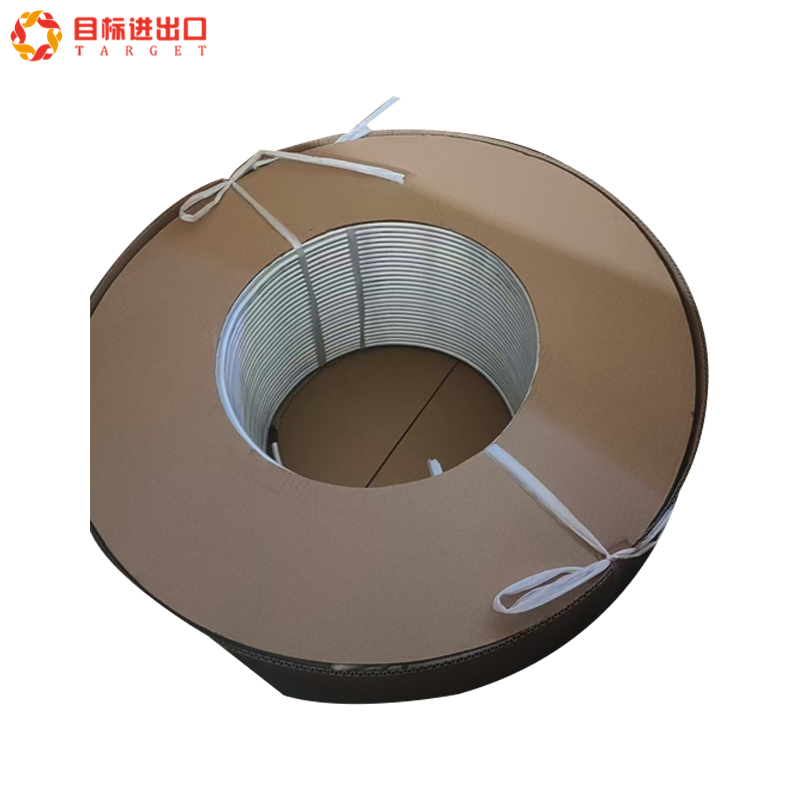
Continuous manufacturing processes demand reliable supply chains. When building hybrid assemblies, sourcing a high-quality copper coil strip is critical. Roll forming and automated stamping lines require continuous coils to maintain production speed. The functional copper components must be manufactured at the same pace as the steel structural components to prevent assembly line bottlenecks. If your copper stamping line goes down because of inconsistent material thickness, the entire hybrid assembly process halts.
Steel has a well-documented fatigue limit. Engineers can predict exactly when a steel part will yield based on cyclic loading data. It deforms plastically before failing, giving visual warning signs like bending or localized necking. Carbon fiber theoretically has an infinite fatigue life under specific, controlled loads. However, when it fails, it fails catastrophically. It shatters and splinters without warning. This makes maintenance inspections for carbon fiber significantly more complex, often requiring ultrasound or X-ray equipment to find internal damage that is invisible to the naked eye.
Replacing steel with carbon fiber introduces hidden engineering challenges. You cannot simply swap materials and expect identical system behavior. You must engineer specific mitigation strategies for the new risks introduced by composites.
Impact resistance is a major vulnerability for composites. Blunt force impact can cause invisible internal delamination in carbon fiber. The layers of fabric separate beneath the surface while the exterior looks perfectly intact. This is known as Barely Visible Impact Damage (BVID). It drastically reduces the structural integrity of the part. Steel, conversely, safely dents. It absorbs impact energy through plastic deformation. You can clearly see a dent in a steel panel and assess the damage immediately.
Integrating carbon fiber with metals creates severe chemical risks. Carbon fiber is highly cathodic (noble) on the galvanic scale. When it comes into direct contact with certain metals like aluminum or steel in the presence of an electrolyte (like saltwater or road grime), it causes severe galvanic corrosion. The metal part acts as the anode and will rapidly oxidize and disintegrate.
You must implement strict mitigation strategies to prevent your hybrid assembly from destroying itself. Follow these exact steps when joining carbon fiber to metal structures:
Apply a robust dielectric barrier, such as a layer of fiberglass or specialized adhesive, between the carbon fiber and the metal surface.
Utilize titanium fasteners, as titanium is galvanically compatible with carbon fiber and will not corrode.
Apply insulating sealants around all drilled holes to prevent moisture ingress from acting as an electrolyte.
Select compatible functional metals where appropriate, ensuring proper isolation of any integrated conductive strips.
Evaluate your specific load requirements by analyzing whether the application demands isotropic impact resistance (steel) or anisotropic weight reduction (carbon fiber).
Design hybrid assemblies that utilize carbon fiber for the primary lightweight shell while retaining steel for high-stress mounting points and threaded inserts.
Integrate high-grade copper strips into your composite designs to solve the inherent electrical and thermal management deficits of carbon fiber.
Implement strict galvanic corrosion mitigation protocols, including dielectric barriers and compatible fasteners, whenever joining carbon fiber to metallic structures.
Consult detailed material data sheets and contact your supplier to source specialized functional metals tailored to your exact manufacturing process.
A: No, this is a myth. While specific high-modulus carbon fibers can have a tensile strength 5 to 10 times higher than standard steel, the final composite structure is typically 2 to 5 times stronger by weight. It is never 50 times stronger in practical, real-world structural applications.
A: Tensile strength is different from shear strength. Carbon fiber is highly brittle under concentrated shear stress. The epoxy matrix shatters, and the fibers splinter when subjected to edge-cutting forces. It cannot hold a sharp edge, making it useless for blades compared to steel.
A: Carbon fiber has strict application-specific limitations. It performs poorly under complex, multi-directional stress. It cannot handle high-heat environments like engine blocks. Furthermore, the slow, labor-intensive manufacturing process makes it too expensive and unscalable for every single component.
A: No. Limitations regarding manufacturing complexity, poor impact resistance, and inability to handle multi-directional stress prevent total replacement. Steel remains essential for heavy machinery, structural foundations, and high-volume automotive frames where plastic deformation is a safety requirement.
A: Copper is integrated into carbon fiber assemblies for thermal management, electrical grounding, and EMI shielding. Because carbon fiber conducts electricity poorly, copper bridges the gap. However, proper dielectric isolation is required to prevent galvanic corrosion between the materials.
A: High purity copper is used when maximum electrical and thermal conductivity is the primary goal. Phosphor copper adds phosphorus to the alloy, which significantly enhances wear resistance, stiffness, and spring properties, making it ideal for mechanical switches and contacts.
A: Carbon fiber manufacturing involves high raw material costs and complex layup processes. The parts require extended curing times in expensive autoclaves under precise heat and pressure. Steel utilizes highly automated, rapid stamping processes that drastically reduce per-part costs.


