
English 
T: +86-571-8663-6649
E: hzbjys@hzbjys.com
E: hzbjys@hzbjys.com
7/F, 1st Building Of ZhongHao WangJiang International Center, NO.332 East WangJiang Road, HangZhou, ZheJiang, China.
Views: 0 Author: Site Editor Publish Time: 2026-03-10 Origin: Site


Production lines rarely fail because of design alone. Many yield problems begin with material inconsistency that appears minor at first but gradually affects performance. Copper foil may look like a standardized material, yet quality differences between suppliers become visible when stability, surface condition, or dimensional tolerance impacts manufacturing results. Selecting a Copper Foil partner therefore requires more than comparing price lists. Reliable supply depends on process control, measurable specifications, documentation transparency, and delivery consistency. Buyers who understand what defines a leading manufacturer can reduce risk, improve production stability, and ensure materials perform as expected across batches and over time.
Evaluating manufacturers begins with clarifying application requirements. A supplier cannot be considered leading without reference to the specific performance target.
Battery current collectors require extremely stable thickness control, strong mechanical consistency, and predictable electrochemical behavior. Shielding or PCB applications may prioritize surface profile, conductivity stability, and dimensional precision. Industrial uses might focus on durability, flexibility, or cost efficiency.
Defining the end use helps determine which performance indicators matter most when evaluating suppliers.
Thickness, width, tensile strength, elongation, and surface profile directly influence copper foil behavior during processing and operation. Small variations can affect lamination quality, electrical performance, or mechanical reliability.
Manufacturers that consistently control these parameters across production lots provide stronger assurance of stable downstream performance.
Material appearance alone rarely reveals production discipline. Consistency indicators provide stronger evidence of manufacturing capability.
Reliable manufacturers maintain strict control over incoming raw materials. Cleanliness discipline during production reduces contamination risk and improves surface consistency. Controlled input quality forms the foundation for predictable output performance.
Material traceability beginning at the raw copper stage supports consistent manufacturing outcomes.
Surface defects such as pinholes, dents, scratches, or oxidation spots can influence bonding performance and electrical behavior. Effective process monitoring minimizes these defects and ensures stable material performance.
Visual consistency across rolls often reflects the maturity of manufacturing processes.
Consistency across batches represents one of the most important indicators of manufacturing capability. Production environments that maintain stable process parameters produce copper foil with predictable behavior over time.
Manufacturers capable of repeatable output help reduce production variability and simplify quality control.
Clear specification language prevents misunderstanding between buyers and suppliers.
Industry reference frameworks define thickness tolerance, surface profile, and performance expectations. Recognizing these references helps buyers communicate requirements precisely and compare supplier capabilities more effectively.
Using standardized terminology improves clarity and reduces procurement risk.
Terms describing surface profile, such as standard profile or low profile categories, reflect differences in roughness that influence adhesion and signal performance. Understanding profile terminology allows buyers to match material properties to application needs.
Consistent specification language supports efficient communication and reduces iteration during sampling.
Comprehensive audits are not always feasible, yet practical validation methods can provide meaningful insight into supplier capability.
Requesting certificates of analysis, production records, and lot traceability information allows buyers to verify material consistency. Documentation demonstrates process transparency and supports quality assurance.
Traceability ensures that performance variations can be investigated effectively if issues arise.
Simple inspection methods such as visual examination, thickness uniformity measurement, and handling evaluation provide immediate feedback. Consistent surface appearance and dimensional stability often indicate reliable process control.
Routine checks performed during sample evaluation help identify potential concerns early.
Trial orders should be structured to evaluate consistency rather than only price. Ordering multiple rolls, comparing performance across batches, and monitoring processing behavior provide meaningful insight into supplier reliability.
A structured trial approach reduces risk before scaling production volume.
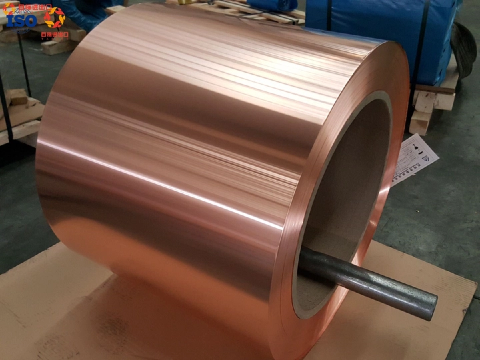
Material quality alone does not guarantee supply stability. Delivery performance plays a critical role in manufacturing continuity.
Reliable manufacturers maintain predictable lead times supported by production planning and inventory management. Consistent delivery schedules reduce uncertainty and support production planning.
Stable lead time performance often reflects mature operational processes.
Copper foil requires appropriate packaging to prevent contamination, mechanical damage, and environmental exposure. Effective packaging standards protect surface condition and maintain dimensional accuracy during transport.
Packaging quality is an important indicator of supplier attention to detail.
Many projects require slitting, cut to width preparation, or specialized surface treatment. Manufacturers capable of providing processing support simplify supply chains and reduce additional handling steps.
Clear communication of dimensional requirements enables suppliers to prepare material aligned with production needs.
Procurement risk decreases significantly when requirements are clearly defined. Providing thickness range, width tolerance, surface profile, and application details allows suppliers to recommend appropriate copper foil solutions.
Specification clarity reduces iteration during sampling and improves alignment between engineering expectations and supplied material. Consistent communication supports efficient decision making.
Manufacturers that provide technical guidance alongside supply help buyers identify suitable material options earlier in the process.
Process transparency distinguishes mature manufacturers from transactional suppliers. Documentation covering production parameters, inspection results, and quality control procedures reflects structured manufacturing practices.
A strong documentation culture supports traceability, simplifies quality verification, and builds confidence in long term supply relationships. Buyers benefit from suppliers who provide accessible technical information and consistent reporting.
Transparency also facilitates collaboration when specification adjustments are required.
As production volume increases, supplier capability must scale without compromising consistency. Reliable manufacturers maintain stable quality across expanded output and multiple production cycles.
Scalability includes process repeatability, capacity planning, and consistent material performance over time. Suppliers that support gradual scale up reduce risk during product commercialization.
Long term cooperation benefits from suppliers who combine manufacturing capability with communication reliability and technical support.
Hangzhou Target Import & Export Co., LTD. supports customers with copper foil materials across multiple specifications while providing documentation, processing support, and coordinated delivery solutions designed to improve supply stability.
The following table provides a practical framework for evaluating copper foil manufacturers.
Category | What to ask for | How to verify | Why it matters |
Specification fit | Thickness, width, surface profile | Compare samples to requirements | Ensures performance alignment |
Quality documentation | Certificates and traceability | Review consistency across batches | Confirms process transparency |
Lot consistency | Multiple sample comparison | Evaluate repeatability | Reduces production variability |
Surface control | Defect monitoring approach | Visual inspection and testing | Supports bonding and reliability |
Packaging and logistics | Protection methods and lead time | Inspect packaging and delivery records | Maintains material condition |
Custom processing support | Slitting and preparation capability | Trial order evaluation | Simplifies supply chain |
This structured approach helps buyers move beyond general claims and evaluate measurable capability.
A leading copper foil manufacturer is defined by the ability to deliver consistent material performance aligned with specification, supported by transparent documentation and reliable delivery. Evaluating suppliers through the lens of risk control allows buyers to prioritize stability, traceability, and long term reliability rather than short term cost alone. Hangzhou Target Import & Export Co., LTD. provides copper foil solutions supported by processing capability, specification guidance, and coordinated supply designed to meet diverse application requirements. When thickness, surface profile, and quality expectations are clearly defined, selecting suitable copper strip solutions becomes a practical step toward stable production and predictable performance.
Contact us to share your application details, required thickness and width, and specification language so our team can recommend appropriate copper foil materials and provide documentation to support evaluation.
1. What defines a reliable copper foil manufacturer?
Reliable manufacturers demonstrate consistent thickness control, surface quality stability, traceability, and predictable delivery performance.
2. Why is lot consistency important for copper foil?
Consistency across batches ensures stable processing behavior and reduces production variability.
3. What documents should buyers request when evaluating copper foil?
Certificates of analysis, traceability information, and specification documentation help verify material quality.
4. Can copper foil be supplied with custom processing?
Yes. Providing width, thickness, and processing requirements allows suppliers to prepare copper foil aligned with production needs.


