
English 
T: +86-571-8663-6649
E: hzbjys@hzbjys.com
E: hzbjys@hzbjys.com
7/F, 1st Building Of ZhongHao WangJiang International Center, NO.332 East WangJiang Road, HangZhou, ZheJiang, China.
Views: 0 Author: Site Editor Publish Time: 2026-02-24 Origin: Site


A pipe hidden behind walls rarely attracts attention until it disrupts operations. What professionals and property owners truly want is not endless durability but predictable performance without sudden failures. The question behind longevity is therefore practical rather than theoretical: how long can a Copper Pipe maintain stable performance in real conditions? Copper has earned its reputation for reliability across plumbing, HVAC, and industrial systems, yet lifespan varies widely depending on environment, installation quality, operating pressure, and specification decisions. Understanding the factors that influence service life helps buyers avoid premature replacement, reduce maintenance costs, and select copper piping solutions that align with real project demands rather than assumptions.
Copper piping is widely associated with long service life, and in many applications it performs reliably for several decades. When water chemistry remains stable, installation follows proper practices, and flow conditions are well controlled, copper pipe systems frequently operate for roughly 50 to 70 years. This expectation has become the commonly referenced lifespan range across building infrastructure and engineering discussions.
However, lifespan estimates differ because copper pipe is used in highly varied environments. Residential plumbing, commercial HVAC circulation, refrigeration systems, and industrial fluid transport all expose piping to different stresses. Temperature fluctuations, water composition, pressure cycling, and mechanical vibration influence wear over time.
This explains why some copper piping systems exceed expectations while others experience earlier deterioration. Longevity is less about the inherent durability of copper and more about how well the selected specification matches the operating environment. A pipe designed for moderate residential conditions may not perform the same way in an industrial setting with higher velocity or aggressive chemistry.
Therefore, lifespan should be viewed as a performance range shaped by application variables rather than a fixed number.
Early failures often result from conditions that appear minor but accumulate impact over time. These drivers are frequently overlooked during specification stages.
Water chemistry is one of the most influential factors affecting copper pipe lifespan. Slightly acidic water can gradually weaken the protective oxide layer that normally shields copper surfaces. Extremely soft water may increase susceptibility to pinhole leaks, while high mineral content can create deposits that alter flow behavior and corrosion patterns.
Because these chemical effects progress slowly, they are often unnoticed until visible symptoms emerge. Matching copper pipe specification to local water conditions significantly improves long-term reliability and reduces unexpected maintenance.
Excessive flow velocity can accelerate erosion corrosion. Fast-moving fluid removes protective surface layers, particularly in areas where turbulence occurs. Direction changes, fittings, and pump connections tend to concentrate this effect.
Even a high-quality copper pipe may experience localized wear if system design allows persistent high velocity. Correct pipe sizing, pressure management, and flow distribution are therefore essential to preserving lifespan.
Electrical conditions represent another underestimated risk. Stray currents or improper grounding can trigger electrochemical reactions that accelerate corrosion. This type of degradation is often misinterpreted as material weakness, when in reality it is a system design issue.
Facilities with complex electrical equipment, mixed material piping networks, or industrial processes should consider electrical isolation and grounding verification as part of long-term reliability planning.
Copper piping rarely fails without indicators. Identifying early warning signs allows maintenance teams to intervene before disruption occurs.
Surface discoloration around joints often signals minor corrosion activity. Blue or green staining may indicate internal surface changes. A metallic taste in water can reflect early chemical interaction within the pipe. Repeated pinhole leaks in similar locations frequently point to environmental or flow-related causes rather than isolated defects.
Failures also tend to appear in predictable zones. Elbows, pump discharge areas, high-velocity segments, and locations exposed to temperature cycling experience higher stress. Monitoring these sections during routine inspection provides valuable insight into system condition.
Pattern recognition is more useful than reacting to single incidents. When similar symptoms appear repeatedly, the focus should shift toward identifying underlying operating conditions.
Decision-making after a leak should be guided by cause rather than urgency alone.
Localized damage caused by mechanical impact or installation defects can often be resolved through targeted repair. Replacing a short section is appropriate when surrounding pipe remains stable and inspection confirms no systemic issues.
However, recurring pinhole leaks across multiple areas typically indicate broader factors such as water chemistry, velocity, or electrical influences. In these situations, repeated local repairs may only delay ongoing deterioration.
Reducing recurrence involves adjusting pressure, improving flow design, verifying grounding, and selecting a more suitable pipe specification. These preventive measures frequently extend remaining service life and stabilize performance.
Full system replacement is generally justified only when deterioration becomes widespread or when operating conditions significantly exceed the original specification. Evaluating failure patterns rather than reacting to individual leaks leads to more effective lifecycle decisions.
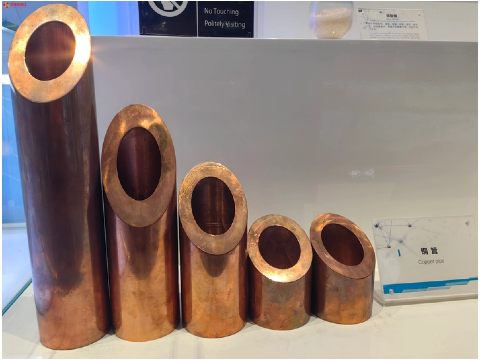
Specification decisions made during procurement have a lasting impact on copper pipe lifespan.
Wall thickness is one of the most practical variables affecting durability. Thicker wall copper pipe offers greater resistance to erosion, pressure stress, and localized corrosion. In plumbing systems exposed to variable water conditions, increased wall thickness can significantly extend service life.
Application matching is equally critical. Plumbing systems prioritize corrosion resistance and long-term stability. HVAC applications may emphasize thermal cycling performance. Industrial environments often require higher mechanical strength and resistance to aggressive media. Selecting copper pipe designed for the intended use improves reliability and reduces lifecycle costs.
Surface quality also plays a role. Consistent internal and external surface condition supports reliable joining, minimizes contamination risk, and contributes to stable long-term performance. Small variations during manufacturing or handling can influence durability, particularly in precision installations.
For demanding environments, corrosion-resistant thick-wall copper pipe provides a practical balance between performance and maintenance cost. Matching specification to real operating conditions ensures that durability expectations translate into actual service life.
Even the correct copper pipe specification may underperform if installation practices introduce stress or contamination. Handling damage, improper cutting, inadequate support spacing, or excessive bending can create stress points that accelerate deterioration.
Joining quality is especially important. Clean surfaces, correct preparation, and controlled heating during brazing or soldering influence joint integrity. Poorly executed joints may become the earliest failure locations regardless of pipe material quality.
Proper storage and transport also affect performance. Exposure to moisture, contaminants, or mechanical deformation before installation can impact surface condition and long-term reliability. Ensuring consistent handling procedures protects the inherent durability of copper.
Projects that integrate specification, installation standards, and handling control typically achieve more predictable lifespan outcomes.
Copper pipe longevity is not only a technical consideration but also an economic one. Longer service life reduces replacement frequency, labor costs, downtime risk, and operational disruption.
Selecting slightly higher specification copper pipe often results in lower total lifecycle cost, particularly in commercial or industrial environments where maintenance access is complex. Predictable performance also supports planning, allowing facility managers to schedule upgrades rather than react to failures.
From a sustainability perspective, longer lifespan contributes to resource efficiency. Durable copper piping reduces material waste and supports long-term infrastructure stability.
Evaluating lifespan as part of lifecycle cost analysis encourages more informed procurement decisions and aligns specification with long-term operational goals.
The following table summarizes common conditions that influence copper pipe lifespan and recommended responses.
Condition | Typical Symptoms | Risk Level | Recommended Action | Suggested Copper Pipe Option |
Neutral water chemistry | Stable performance | Low | Routine inspection | Standard copper pipe |
Soft or acidic water | Pinhole leaks | Medium | Monitor chemistry, consider thicker wall | Thick-wall copper pipe |
High flow velocity | Localized wear | Medium to High | Adjust sizing and flow control | Increased wall thickness |
Temperature cycling | Joint stress | Medium | Improve installation and support | Application-matched copper tube |
Industrial environment | Mixed corrosion factors | High | Select corrosion-resistant specification | Thick-wall corrosion-resistant copper pipe |
Using this checklist allows engineers and buyers to evaluate risks early and align pipe specification with operating conditions before installation.
Copper pipe lifespan is the result of material quality, operating conditions, installation practices, and specification decisions working together. Understanding how water chemistry, velocity, handling, and system design influence durability allows projects to achieve predictable performance rather than relying on general lifespan estimates. Hangzhou Target Import & Export Co., LTD. supplies a comprehensive range of copper piping solutions, including standard copper tube and corrosion-resistant thick-wall options designed for different application environments. When operating requirements such as pressure, water conditions, and service expectations are clearly defined, selecting the appropriate copper piping specification becomes a practical step toward long-term reliability.
Contact us to discuss your application scenario, technical requirements, and expected service life. Our team can recommend suitable copper pipe specifications and supply solutions that support stable performance and reduced maintenance risk.
1. How long do copper pipes typically last in buildings?
Copper pipes commonly last several decades when water chemistry, installation, and flow conditions are properly controlled. Lifespan varies by application.
2. What is the main cause of copper pipe failure?
Water chemistry, excessive flow velocity, and electrical influences are among the most common causes affecting copper pipe durability.
3. Does thicker copper pipe increase lifespan?
In demanding environments, thicker wall copper pipe improves resistance to wear and corrosion, helping extend service life.
4. When should copper piping be replaced instead of repaired?
Replacement is usually considered when leaks occur repeatedly across multiple areas or when system conditions exceed the original pipe specification.


