
English 
T: +86-571-8663-6649
E: hzbjys@hzbjys.com
E: hzbjys@hzbjys.com
7/F, 1st Building Of ZhongHao WangJiang International Center, NO.332 East WangJiang Road, HangZhou, ZheJiang, China.
Views: 0 Author: Site Editor Publish Time: 2026-08-16 Origin: Site


Material selection in electrical engineering and contracting dictates project viability, directly impacting material budgets, labor hours, and long-term system reliability. The historical volatility of copper prices forces project managers, electricians, and DIYers to evaluate alternatives for large-scale wiring, but substituting materials introduces concerns regarding conductivity, thermal expansion, and code compliance. This guide provides an evidence-based comparison of aluminum wire and copper wire, analyzing metallurgical properties, application-specific performance, and total cost of installation to determine the optimal choice for specific project requirements. We look at how these metals behave under heavy loads, how they handle environmental stress, and what you need to know before pulling them through underground conduit. You will learn exactly when to specify each metal to keep your installations safe, efficient, and fully code-compliant.
Conductivity vs. Sizing: Copper offers superior conductivity per volume, but aluminum provides better conductivity per pound, requiring a gauge increase (typically two AWG sizes) to match copper's ampacity.
Cost and Weight Efficiency: Aluminum wire is significantly lighter and more cost-effective than copper, making it the industry standard for long-distance transmission, service entrances, and heavy feeder lines.
Modern Alloy Reliability: Historical safety issues with aluminum wiring were tied to older alloys and improper terminations; modern installations utilize specific alloys and AL/CU-rated connectors to ensure safe, code-compliant connections.
Application-Driven Selection: Neither material is universally "better." Copper remains the standard for branch circuits and space-constrained enclosures, while aluminum dominates high-ampacity, long-run applications like detached outbuildings and subpanels.
Copper serves as the international standard for electrical conductivity. Engineers establish this baseline at 100% according to the International Annealed Copper Standard (IACS). This baseline means copper provides the least resistance to electrical current flow among all non-precious metals. Aluminum possesses a conductivity rating of approximately 61% of the copper standard. While this appears to be a significant downgrade on paper, the practical outcome simply dictates a change in physical dimensions during the design phase.
To carry the exact same electrical current safely without overheating, an aluminum conductor must have a cross-sectional area roughly 1.5 times larger than a copper conductor. For example, if a specific electrical load requires a 2/0 AWG copper wire, you would typically need to step up to a 4/0 AWG aluminum wire to achieve the same ampacity. This physical size difference directly influences conduit fill calculations. When you up-size the wire, you often have to up-size the PVC or EMT conduit to maintain the allowable fill percentages dictated by the National Electrical Code (NEC) Chapter 9 tables. You must account for this increased pipe size when planning knockouts and enclosure dimensions.
When comparing material density, aluminum holds a massive structural advantage. It weighs roughly 30% of an equivalent volume of copper. This drastic weight reduction fundamentally alters labor dynamics and logistics on job sites. A standard commercial spool of large-gauge copper can easily weigh over a thousand pounds, requiring specialized heavy-duty rigging, motorized tuggers, and significant manpower to move and pull. The equivalent ampacity spool in aluminum weighs a fraction of that, allowing smaller crews to handle the material safely.
Lighter materials reduce installer fatigue during long, complex conduit pulls. They also require significantly less structural support for overhead aerial lines, cable trays, and conduit hangers. Regarding tensile strength, copper is inherently stronger. It resists stretching or snapping under high-tension mechanical pulls much better than aluminum. However, large-gauge copper conductors are notoriously stiff. Bending a 500 kcmil copper wire inside a tight switchgear enclosure often requires hydraulic bending tools. Despite requiring a larger gauge to achieve the same ampacity, stranded large-gauge aluminum is highly flexible. You can often route it through tight conduit bends and terminate it by hand. Installers just need to handle it carefully, as the softer metal is more susceptible to nicking during the insulation stripping process.
All metals expand when heated and contract when cooled, but they do so at different rates. Aluminum has a significantly higher coefficient of thermal expansion than copper. When subjected to the continuous temperature cycling of heavy electrical loads turning on and off, aluminum experiences a phenomenon known as cold flow, or creep. The material slowly deforms under mechanical stress inside the termination lug. Historically, this expansion and contraction cycle led to loose connections in older residential installations, which caused arcing and fires.
Furthermore, oxidation characteristics differ drastically between the two metals. When bare copper is exposed to oxygen, it oxidizes, but the resulting copper oxide remains electrically conductive. It does not impede the flow of electricity. When bare aluminum oxidizes, the resulting aluminum oxide forms a highly resistive, invisible insulating layer on the outside of the wire. If you do not remove this layer, it creates massive electrical resistance at the connection point, generating extreme heat. This fundamental chemical difference necessitates strict, specialized termination protocols to ensure long-term safety and performance.
The negative reputation surrounding aluminum electrical conductors stems directly from the legacy 1350 series used extensively in residential branch wiring during the 1960s and 1970s. This nearly pure aluminum alloy was highly susceptible to creep, thermal expansion, and metal fatigue. It simply could not handle the thermal cycling of standard household receptacles, leading to loose connections and widespread fire hazards.
Modern electrical codes solved this problem by mandating the use of 8000 series aluminum alloys for all building wire. These advanced alloys incorporate trace amounts of iron, copper, and magnesium. This specific metallurgical blend drastically improves creep resistance, tensile strength, and overall flexibility. Modern 8000 series aluminum mirrors the reliable mechanical performance of copper, completely eliminating the cold flow issues that plagued installations fifty years ago.
The 5xxx series utilizes magnesium as its primary alloying element, creating a material known for exceptional durability in harsh environmental conditions. This specific composition provides outstanding corrosion resistance, particularly against saltwater exposure, high humidity, and industrial chemicals. Because of its moderate-to-high strength and resistance to degradation, 5xxx series aluminum wire is frequently deployed in marine cabling armor, structural marine applications, and environments where standard conductors would rapidly corrode. It bridges the gap between mechanical strength and environmental survivability, making it a staple in coastal infrastructure projects.
Alloys within the 3xxx series rely on manganese as the primary alloying addition. This chemical makeup results in excellent workability and high formability while maintaining a moderate strength profile that is roughly 20% stronger than pure 1xxx series aluminum. The high corrosion resistance and extreme malleability make 3xxx series aluminum wire highly desirable for manufacturing complex components. Engineers specify this alloy for specialized conductive applications requiring tight physical tolerances, custom busbars, and heat exchanger tubing where thermal conductivity and formability must align perfectly without cracking under stress.
The 2xxx series utilizes copper as the primary alloying element, fundamentally shifting the material's mechanical properties. This combination yields incredibly high yield strength and excellent machinability, making it suitable for high-stress mechanical environments. While it sacrifices a degree of corrosion resistance compared to the 5xxx or 3xxx series, 2xxx series aluminum wire is heavily utilized in aerospace applications, heavy-duty mechanical fasteners, and specialized high-strength conductive components. In these specific engineering designs, extreme weight savings over solid copper are absolutely critical to the structural integrity of the aircraft or vehicle.
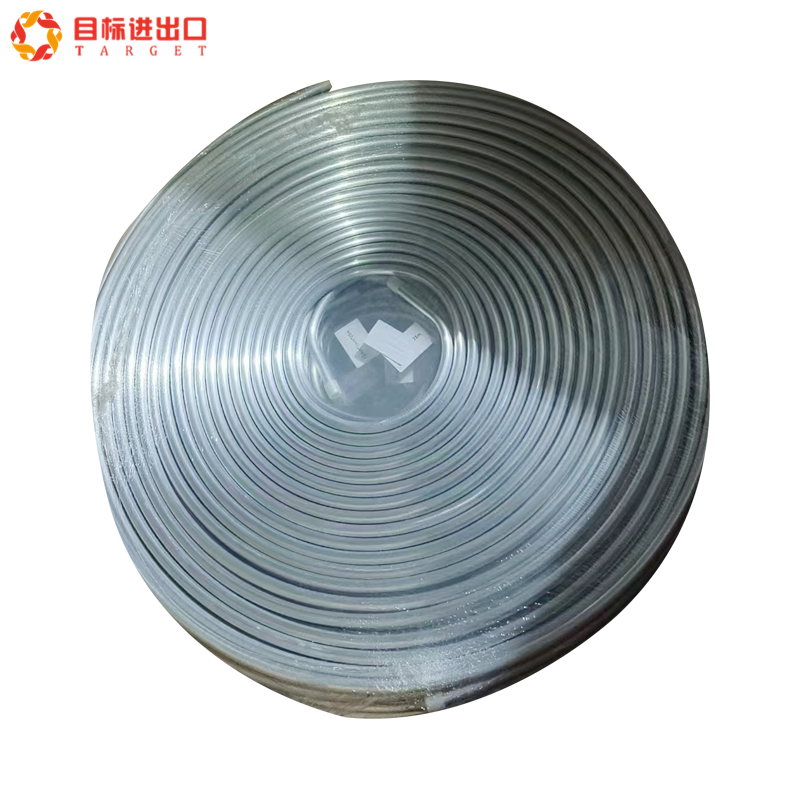
Copper is a highly sought-after global commodity. Its market value is deeply tied to the rapid expansion of green energy grids, electric vehicle manufacturing, and global infrastructure development. This intense, continuous demand creates severe market fluctuations and historically high procurement costs for electrical contractors. Mining and refining copper is a slow, resource-heavy process that struggles to keep pace with global consumption.
Conversely, aluminum is one of the most abundant metals on Earth, derived from readily available bauxite ore. This abundance results in a much more stable and significantly lower price point. Aluminum consistently remains a fraction of the cost of copper. On high-amperage, long-distance electrical runs, such as feeding a 200-amp agricultural panel or a commercial warehouse subpanel, the savings generated by choosing aluminum make the project financially feasible. Relying on copper for these massive runs often breaks the material budget before the project even begins.
Consumers and project managers frequently encounter a common scenario: receiving two vastly different quotes from an electrical contractor for powering a distant subpanel, detached garage, or workshop. One quote utilizes copper feeders, and the other utilizes aluminum feeders. When analyzing the return on investment for a run exceeding 75 feet, the material savings provided by aluminum almost always outweigh any secondary costs.
You do have to purchase slightly larger PVC conduit to house the up-sized aluminum wire. You also have to purchase specialized AL/CU termination lugs. However, the cost difference between the raw wire itself is so massive that the extra pipe and lug costs are negligible. The longer the underground trench, the more financially dominant the aluminum option becomes. For a 150-foot run to a detached garage, choosing aluminum over copper can save enough money to cover the cost of the trenching equipment rental entirely.
Evaluating true installation economics requires looking beyond the raw price per foot of the conductor. You must factor in the labor hours required to install it. Pulling lighter, more flexible stranded aluminum through a long underground trench requires less physical exertion and fewer man-hours than wrestling with stiff, heavy copper. A two-man crew can often pull a 100-amp aluminum feeder by hand, whereas the copper equivalent might require setting up a mechanical tugger and pulley system.
The only added labor involves the termination process. Electricians must spend a few extra minutes at each end of the run to properly prepare the aluminum. This involves stripping the insulation carefully, aggressively wire-brushing the exposed aluminum strands to remove the invisible oxide layer, applying a liberal coat of anti-oxidant compound, and utilizing a calibrated torque wrench to lock the lugs down to the manufacturer's exact specifications. This extra five minutes of labor per panel is a tiny trade-off for the massive material savings.
Copper remains the undisputed standard for specific applications where its physical and chemical properties provide clear advantages. It is the default choice for all residential and commercial internal branch wiring. If you are wiring 15-amp, 20-amp, and 30-amp circuits for lighting, standard wall receptacles, and small appliances, you use copper. Standard devices like light switches and outlets are primarily designed for copper connections.
Copper excels in environments with severe space constraints. Crowded junction boxes, small-diameter conduits, and complex motor control centers require the smaller physical footprint that copper provides. Using bulkier aluminum in these scenarios would easily exceed allowable conduit fill capacities and make box makeup nearly impossible. Additionally, copper is preferred in high-vibration environments, such as industrial manufacturing floors, where aluminum's softer nature might eventually lead to metal fatigue or loose connections at the terminal blocks.
Aluminum dominates heavy infrastructure and long-distance power distribution. It is the universal standard for utility distribution networks and overhead high-voltage transmission lines due to its incredible weight-to-conductivity ratio. Hanging heavy copper from utility poles over long spans would require massive, expensive structural reinforcements that are simply not practical.
Inside residential and commercial properties, Aluminum Wire is the standard for main service entrances connecting the utility meter to the main breaker panel. It is also the superior choice for heavy feeder lines running to subpanels, detached garages, and sheds. For direct burial applications, utilizing properly rated underground cable (like URD) trenched to code-compliant depths allows property owners to mitigate voltage drop over long distances without absorbing the prohibitive costs of heavy-gauge copper.
Material Application Overview
Specification Category | Copper Conductor | Aluminum Conductor |
|---|---|---|
Conductivity (Volume) | 100% IACS (Standard Baseline) | 61% IACS (Requires up-sizing) |
Weight Profile | Heavy (High density) | Lightweight (~30% of Copper) |
Flexibility (Large Gauge) | Stiff, high resistance to bending | Highly flexible, easier conduit pulls |
Primary Applications | Branch circuits, tight enclosures, motors | Service entrances, subpanels, long feeders |
Termination Requirement | Standard mechanical lugs | Anti-oxidant paste, AL/CU rated lugs, precise torque |
The critical failure point of any aluminum electrical installation is the termination. To mitigate the rapid formation of insulating aluminum oxide, installers must rigorously wire-brush the stripped conductor. You cannot skip this step. Immediately after brushing, you must apply a specialized anti-oxidant paste (commonly referred to as Noalox or Penetrox) to the bare strands. This paste prevents oxygen from reaching the metal and improves conductivity.
Furthermore, the National Electrical Code mandates the exclusive use of receptacles, breakers, and mechanical lugs specifically rated for dual-metal use. These are clearly designated by AL/CU (Aluminum/Copper) or CO/ALR markings stamped directly into the metal. Connecting aluminum to a copper-only device guarantees galvanic corrosion and eventual failure. Finally, securing these connections requires a calibrated torque screwdriver or wrench. Guessing the tightness by hand feel leads to under-torquing (causing arcing) or over-torquing (crushing the soft aluminum strands). Both errors create severe fire hazards. You must torque the lug to the exact inch-pound specification printed on the breaker or panel label.
Navigating the National Electrical Code is mandatory when substituting materials. Installers must reference NEC ampacity charts, specifically Table 310.16, to correctly up-size aluminum conductors based on the required amperage and the temperature rating of the insulation (typically 75°C or 90°C columns). A direct gauge-for-gauge swap between copper and aluminum is a severe code violation that will result in melted insulation and electrical fires.
Additionally, while the NEC permits modern 8000 series aluminum for interior wiring, local jurisdiction variations frequently exist. Certain municipal building departments maintain strict local amendments that restrict aluminum wiring in specific commercial or residential applications, regardless of what the national code allows. Contractors must verify local allowances with the Authority Having Jurisdiction (AHJ) before purchasing materials or pulling permits.
Calculate the exact ampacity requirements and potential voltage drop for your specific run length before selecting a wire gauge.
Consult your local municipal building codes to verify if any regional amendments restrict the use of aluminum feeders in your specific application.
Source comprehensive quotes for both the conductor and the appropriately sized conduit to accurately evaluate the true installation cost difference.
Procure a calibrated torque wrench and verified AL/CU-rated termination hardware before beginning any aluminum wiring installation.
A: Yes, modern 8000 series aluminum wire is entirely safe and code-compliant for residential use, provided it is installed correctly with AL/CU-rated connectors and proper torque specifications. It is the industry standard practice for main service entrances and heavy appliance circuits.
A: For long runs exceeding 75 feet to a detached building, aluminum is highly recommended. The cost of copper at the gauge required to prevent voltage drop over that distance is often prohibitive. Ensure you use direct-burial rated aluminum cable and trench it to the code-required depth.
A: As a general rule, you must increase the aluminum wire by two AWG sizes to match the ampacity of copper. For example, a 60-amp circuit might require 6 AWG copper but would necessitate 4 AWG aluminum to safely carry the same electrical load.
A: Yes. You must use lugs, breakers, and wire nuts specifically rated for aluminum, typically marked AL/CU or CO/ALR. Using copper-only connectors on aluminum wire creates a severe fire hazard due to galvanic corrosion and differing thermal expansion rates.
A: Copper is a denser, highly sought-after global commodity with limited mining output compared to aluminum, which is one of the most abundant metals on Earth. Copper's superior conductivity and heavy utilization in green energy and small electronics drive up its market demand and price.
A: No, you cannot twist bare aluminum and copper wires together. The dissimilar metals will cause rapid galvanic corrosion, leading to high resistance and potential fires. You must use specialized, code-approved splicing devices, such as AlumiConn connectors or Polaris insulated mechanical lugs, to keep the metals physically separated.


